Inspired by the Prime Minister’s vision, initiative paves the way for a greener, ecologically resilient Ladakh: LG Saxena
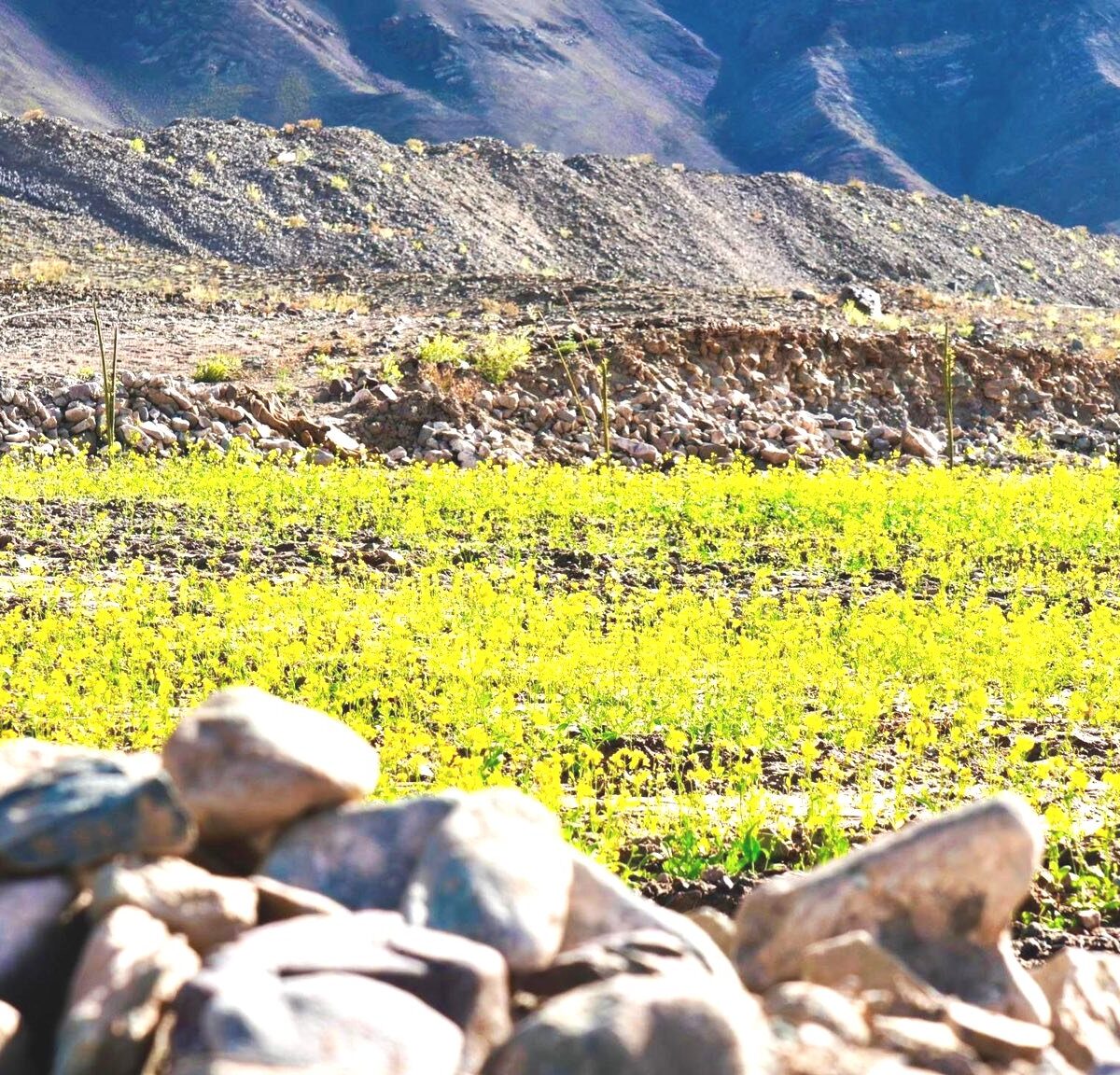
LEH: The ambitious ecological restoration initiative launched by the Union Territory Administration to reclaim nearly 800 acres of barren land in Ladakh has started delivering encouraging results, with vast stretches of previously arid terrain now covered in fresh green vegetation within just over a month, Lieutenant Governor Vinai Kumar Saxena announced.
Sharing the development on social media, the Lieutenant Governor said the project employs a simple and cost-effective freshwater engineering technique to revive degraded land. According to him, barren soil was treated with fresh glacier water for a few days before mustard seeds were sown across the reclaimed tracts.
The intervention has led to widespread germination in a little over a month, transforming what were once dry, barren wastelands into thriving green cover. The rapid vegetation growth is being viewed as a significant milestone in the administration’s efforts to combat land degradation in the high-altitude cold desert.
Calling the results “remarkable,” Saxena said the project demonstrates how scientific yet uncomplicated techniques can effectively address complex environmental challenges. He noted that the success of the initiative offers hope for restoring degraded landscapes in Ladakh while promoting ecological balance and sustainable land use.
The Lieutenant Governor said the ecological restoration drive draws inspiration from Prime Minister Narendra Modi’s vision of reversing land degradation and desertification. He said the initiative reflects the administration’s commitment to environmental conservation, sustainable agriculture and long-term ecological regeneration in the Union Territory.
The project is expected to contribute not only to increasing green cover but also to improving soil health, enhancing moisture retention and creating opportunities for sustainable agricultural practices in Ladakh’s fragile ecosystem. Environmental experts have long identified desertification and land degradation as major challenges in the cold desert region, where harsh climatic conditions and limited water availability restrict natural vegetation.
The latest development comes amid a series of environmental initiatives undertaken by the Ladakh Administration to promote climate resilience, water conservation and ecosystem restoration. Officials believe the successful greening of degraded land through glacier-fed freshwater irrigation could serve as a replicable model for reclaiming similar barren landscapes across the region.
The administration has reiterated that ecological regeneration remains a key priority, with efforts focused on building a greener, more sustainable future for Ladakh while preserving its unique and fragile Himalayan environment.