BY SHIVANG SATYA GUPTA
Education is never just about textbooks. It is about the values a nation quietly passes on to its children. Every book placed in a school library tells students what deserves to be remembered, admired and debated. That is why the selection of books under government-funded education programmes must meet the highest standards of academic integrity, constitutional values and transparency.
Recent developments concerning book procurement under the Samagra Shiksha programme in Jammu and Kashmir raise serious questions that deserve public discussion.
According to publicly available information and documents cited by critics of the procurement process, books on important national subjects—including India’s Independence Movement, the life and philosophy of Deendayal Upadhyaya, and the Indus Waters Treaty—were reportedly not selected for government-supported school libraries.
At the same time, another book allegedly approved for procurement contained profiles or favourable descriptions of individuals such as Syed Ali Shah Geelani, Yasin Malik, Masarat Alam Bhat and Shabir Shah. These are individuals whose political movements directly challenged India’s constitutional position over Jammu and Kashmir, and whose activities have remained matters of intense legal, political and national security concern.
If these claims are accurate, the issue extends far beyond a disagreement over literature. It becomes a question of educational philosophy.
What Message Are We Sending?
A government-funded educational scheme exists to strengthen learning, critical thinking and constitutional awareness. Taxpayer-funded libraries are expected to introduce students to India’s civilisational journey, democratic institutions, scientific achievements and constitutional framework.
When books explaining India’s freedom struggle or important national policy issues are excluded, while books presenting separatist figures receive official space, many citizens naturally ask whether the priorities of the selection process are aligned with the objectives of public education.
This is not about preventing students from studying controversial history. Democracies do not fear difficult conversations. They encourage evidence-based learning.
However, there is a significant difference between studying conflict objectively and presenting individuals associated with separatist movements in a manner that appears celebratory or uncritical.
That distinction is crucial.
The Curious Case of the Indus Waters Treaty
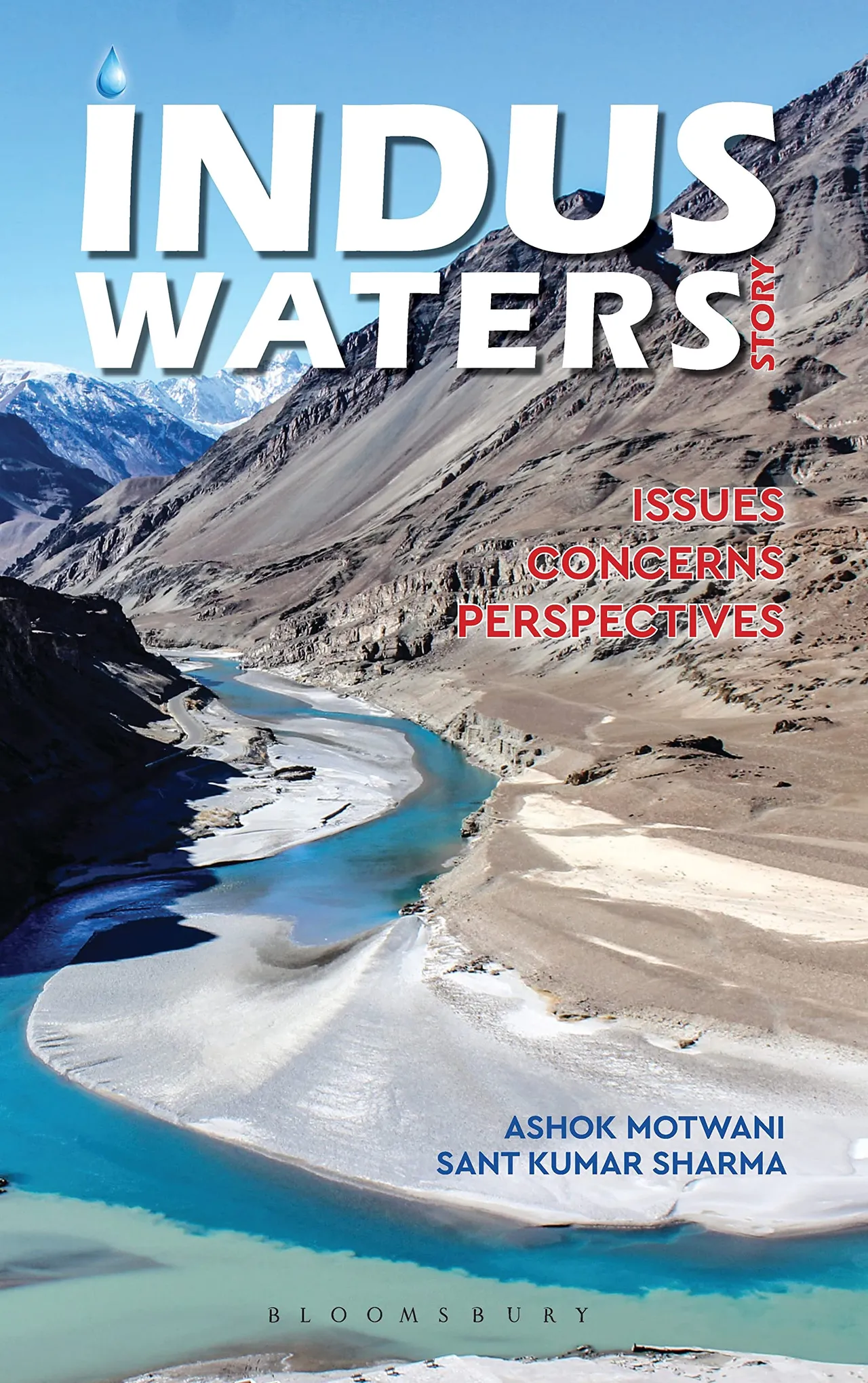
Among the reported rejections is a book titled Indus Waters Treaty: Mirroring the Facts, written in Jammu and released on 19 July 2025 by the Lieutenant Governor of Jammu and Kashmir, Manoj Sinha.
The subject itself could hardly be more relevant.
The Indus Waters Treaty has shaped India’s water policy with Pakistan for over six decades. In recent years, particularly after major security developments and India’s decision to place implementation of the treaty in abeyance, the treaty has once again become central to strategic and public policy discussions.
The Government of India has simultaneously invested tens of thousands of crores of rupees in infrastructure, irrigation, hydropower and development projects across Jammu and Kashmir. Understanding the historical, legal and strategic dimensions of the treaty is therefore directly relevant to students interested in geography, international relations, public administration and regional development.
If a serious work on this subject was rejected without transparent academic reasons, it raises legitimate questions about the criteria used in evaluating educational material.
The Need for Transparency
The issue should not become a political contest. Instead, it calls for institutional transparency.
Questions that deserve public answers include: What objective criteria were used for selecting and rejecting books?; Who constituted the expert committee?; Were independent historians and subject experts consulted?; Were constitutional values explicitly included in the evaluation process?; Are detailed evaluation reports available for public scrutiny?; and Were authors informed about the reasons for rejection?
Transparency protects both the integrity of the committee and the confidence of the public.
Education Shapes National Consciousness
Children often encounter complex historical personalities for the first time through school books. The language used, the context provided and the balance maintained all influence how future generations understand their nation.
Educational institutions should encourage questioning, debate and critical inquiry.
But they also carry a constitutional responsibility.
India’s educational framework cannot become indifferent to questions of national unity, democratic institutions and constitutional sovereignty.
Students deserve to know about the Independence Movement, the making of the Constitution, national integration, India’s strategic challenges and major policy decisions such as the Indus Waters Treaty. These subjects are not partisan; they are part of the country’s collective historical experience.
A Call for Independent Review
Rather than allowing allegations and counter-allegations to dominate public discourse, an independent academic review of the procurement process would benefit everyone.
Such a review could examine whether books were evaluated solely on educational merit, historical accuracy and pedagogical value, or whether inconsistencies emerged in the selection process.
If mistakes were made, they should be corrected. If the committee acted fairly, transparency will strengthen public trust. Either outcome serves education.
Ultimately, the debate is not about one committee, one book or one author. It is about a larger principle.
Government-funded education should help young Indians understand their nation with honesty, intellectual rigour and constitutional clarity. Every decision on school libraries must reflect that responsibility, because the books we choose today help shape the citizens India will have tomorrow.