HM urges states to dismantle entire terror ecosystem, target financial lifelines and strengthen intelligence coordination; says 303 fugitives brought back from 36 countries since 2019
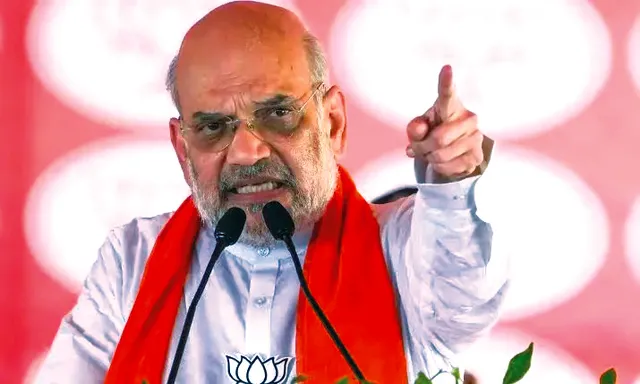
NEW DELHI: Union Home Minister Amit Shah on Thursday called for an aggressive, coordinated and intelligence-driven offensive against terrorism, asserting that India must dismantle the entire terror ecosystem rather than limit its response to individual terrorist attacks or arrests.
Setting out a strong counter-terrorism agenda at the inaugural session of the two-day National Counter-Terrorism Conference in New Delhi, Shah said the country would have to attack every link in the terrorist network, from its financial resources and logistical support to recruitment, radicalisation and operational capabilities.
“Unless we attack the entire network of terrorism together, we will not get success,” he asserted, calling for closer coordination between the Centre, states, intelligence agencies, police forces and financial investigation agencies.
Emphasising that the success of counter-terrorism operations should be measured by the prevention of attacks rather than merely by arrests made after incidents, Shah said a successful agency was one that identified and apprehended terrorists before they could execute their plans.
He urged every state police force to study successful counter-terrorism models and replicate them, stressing that intelligence gathering at the police station level must be effectively channelled through successive levels up to the Director General of Police to ensure timely operational action.
The Home Minister also called for a fundamental change in the working approach of security agencies, arguing that legal powers alone would not be sufficient without institutional coordination, technological modernisation and clearly defined accountability.
Underlining the need to strengthen the country’s counter-terrorism architecture, Shah said the Centre and states must work as part of a unified security ecosystem. He identified three critical areas requiring further strengthening: institutional information-sharing, operational capabilities of security agencies and coordinated action against terrorist financing.
He particularly stressed the need to strengthen the cyber capabilities of state Anti-Terrorism Squads (ATS), pointing out that technology was increasingly being exploited by terrorist and organised criminal networks.
Shah also called for establishing a quadrilateral regional security grid involving border states, while emphasising that all state ATS units must enhance their investigative and operational capabilities.
In a strong message on the importance of accountability, he said counter-terrorism objectives must be shared by all participating agencies, with specific responsibility for achieving them. Without a common goal and clearly defined accountability, he cautioned, coordinated success would remain difficult.
The Home Minister said the government had adopted a policy of zero tolerance towards terrorism under Prime Minister Narendra Modi’s leadership and claimed that a series of legislative, institutional and operational measures undertaken since 2019 had strengthened the country’s response.
Citing the crackdown against the Shahzad Bhatti network, Shah said more than 40 modules had been dismantled across the country, over 100 cases registered and more than 271 arrests made. He said the network had been designated a terrorist organisation under the Unlawful Activities (Prevention) Act (UAPA).
He also highlighted the dismantling of the Popular Front of India (PFI) network through simultaneous operations in 11 states, describing it as an example of effective coordination among police forces.
On international cooperation, Shah disclosed that 303 fugitives had been brought back to India from 36 countries since 2019. He said the government had strengthened its efforts to track down offenders taking refuge abroad, adding that bringing the perpetrators and masterminds of terrorism, organised crime and drug networks before Indian courts was essential to tackling these threats.
Outlining the institutional expansion of the National Investigation Agency (NIA), he said 16 new branch offices and two zonal offices had been approved, while 70 NIA Special Courts had been established across the country.
He also referred to amendments to the NIA Act and UAPA in August 2019, which expanded the agency’s jurisdiction and strengthened its powers to investigate terrorism-related offences and seize properties linked to terrorists.
Shah said the functioning of the Multi-Agency Centre (MAC) had been reorganised to incorporate cybersecurity, narcotics, organised crime and emerging radicalisation hotspots. Its systems were further restructured in 2023 through advanced technology, alongside the establishment of a National Memory Bank and efforts towards developing a centralised database.
Calling for the conference to produce tangible outcomes, Shah said the fight against terrorism could not be left to individual agencies working in isolation and required a collective national response backed by modern technology, effective intelligence and operational preparedness.
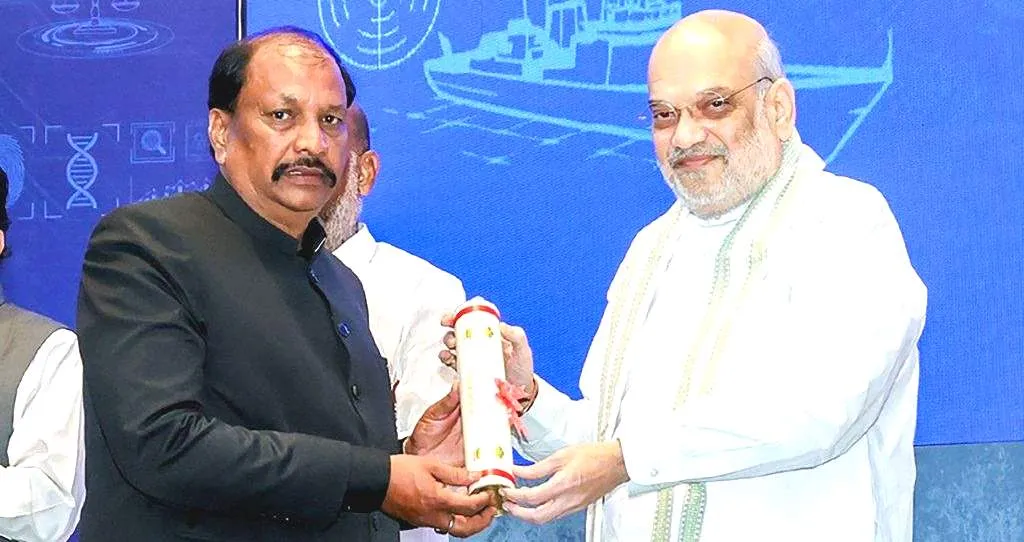
During the inaugural session, Shah released the NIA publication *Fail-Safe Investigation*, laid the foundation stone of the agency’s office complex in Chandigarh and inaugurated its residential complex at Maidangarhi in Delhi. He also e-launched the NIA’s ‘Pushti’ portal and presented decorations to seven NIA officers and personnel.
The conference is being attended by senior police officers from states and Union Territories, counter-terrorism agencies and experts from law, forensics and technology.