After facing political headwinds over incumbency and Ladakh’s unresolved demands, BJP recalibrates its electoral strategy; former MP’s entry from Solar Colony adds leadership weight as development agenda reshapes campaign narrative
YASH KHAJURIA
LEH: The electoral battle for the Ladakh Autonomous Hill Development Council (LAHDC), Leh, is beginning to acquire a new political dimension, with the BJP attempting to turn what appeared to be a difficult contest into an opportunity for a renewed political comeback.
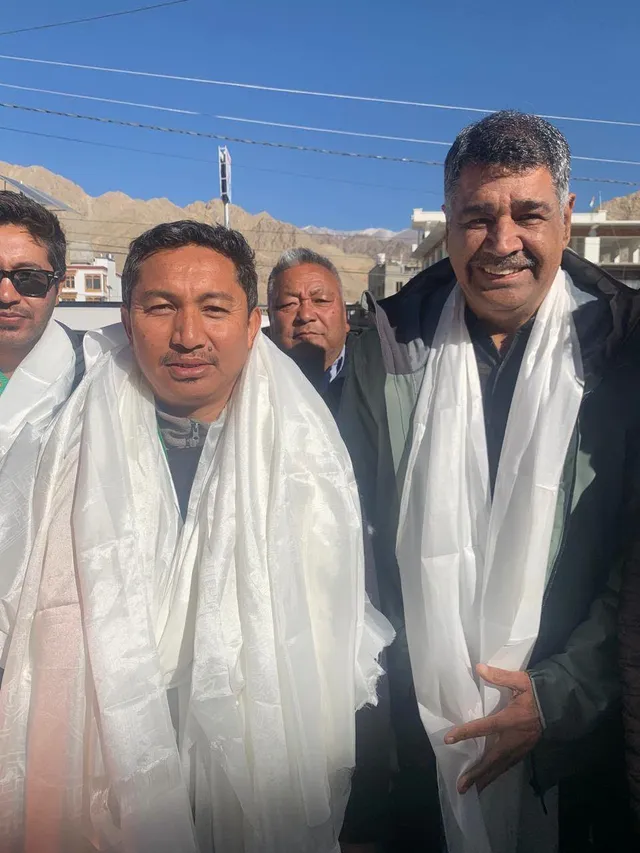
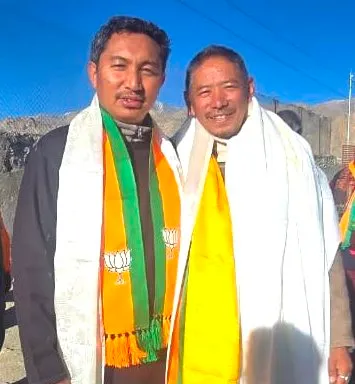
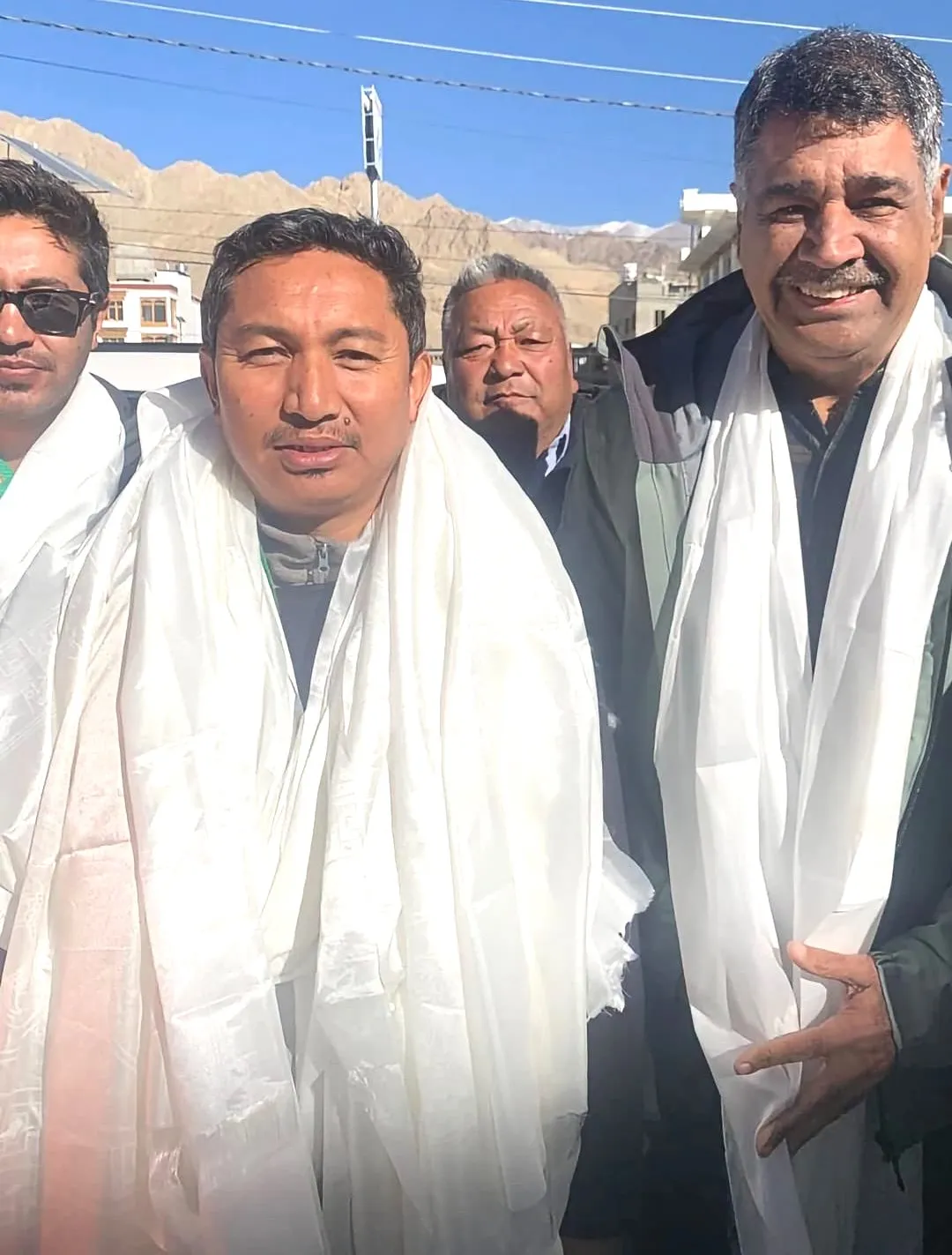
The entry of former Ladakh Member of Parliament and former Chairman and Chief Executive Councillor (CEC) Jamyang Tsering Namgyal from Solar Colony has emerged as one of the most consequential developments in the party’s electoral preparations, adding a prominent face and a potential leadership dimension to its campaign.
The BJP, which had been facing the twin challenges of anti-incumbency and a politically charged atmosphere following the protests led by the Leh Apex Body (LAB), is now seeking to shift the electoral conversation towards development, governance and leadership. The return of Namgyal to grassroots electoral politics, after his tenure in the Lok Sabha, has provided the party with an additional political focal point at a time when the contest is becoming increasingly competitive.
What makes the development particularly significant is that Namgyal is not merely another candidate entering the fray. Having served as CEC of LAHDC Leh before being elected to the Lok Sabha in 2019, he brings experience of both local council administration and national-level politics. His candidature could therefore have implications beyond the Solar Colony constituency, particularly in shaping the BJP’s campaign narrative and its preparations for the leadership of the next Hill Council.
Namgyal’s nomination from Solar Colony is being viewed within political circles as a morale booster for the BJP’s rank and file. His political stature, organisational connections and familiarity with the functioning of the Hill Council give the party a recognisable face around whom it can consolidate its campaign.
His return is also significant in the context of the BJP’s electoral strategy. Instead of relying entirely on its organisational machinery and local candidates, the party has brought a former MP and former CEC directly into the electoral contest, signalling the importance it attaches to the Leh Council elections.
The possibility of Namgyal emerging as a central figure in the next Council’s leadership is also likely to add another layer to the electoral calculations. Although the CEC’s eventual selection will depend on the composition of the elected Council and the party’s internal decisions, his candidature has inevitably brought the question of future council leadership into the political conversation.
For BJP workers, his participation offers an opportunity to campaign around a leader with an established electoral and administrative background. It also gives the party a platform to connect its previous tenure in the Hill Council with its current political agenda.
The BJP’s renewed campaign push comes against the backdrop of a series of major infrastructure and development initiatives undertaken in Ladakh over recent years, several of which have reached important milestones in 2026.
The inauguration and dedication of development projects worth approximately ₹3,350 crore by Prime Minister Narendra Modi on October 15 has provided the party with substantial material for its development-oriented campaign.
The new Leh Airport terminal, constructed at an approximate cost of ₹640 crore, commenced flight operations on October 16. The Nimmu-Padum-Darcha road has opened an alternative connectivity route to Ladakh, reducing the journey between Leh and Zanskar from nearly 12 hours to around three hours. The commissioning of the 9 MW Hanu Hydropower Project has also strengthened the region’s power infrastructure.
The inauguration of India’s first Petroglyph Conservation Park in Leh and the dedication of 40 reservoirs under Project Amrit Sarovar further add to the development narrative.
While these projects cover different parts of Ladakh and cannot be attributed exclusively to the Leh Hill Council, their visibility and potential impact provide the BJP with an opportunity to foreground the Centre’s infrastructure and development initiatives during the campaign.
For the party, the challenge will be to translate these larger infrastructure achievements into a political message that resonates with local voters, particularly on employment, livelihoods, basic amenities and development at the constituency level.
The BJP’s renewed electoral positioning should also be viewed against the political circumstances that had placed it under pressure in Ladakh.
The unresolved demands for Statehood and constitutional safeguards, including Sixth Schedule protection, have remained major issues in the region. The agitation led by the Leh Apex Body, with prominent participation from climate activist Sonam Wangchuk, has created a politically charged environment in which the Centre’s approach towards Ladakh has been subjected to sustained public scrutiny.
The Leh Apex Body and Kargil Democratic Alliance have also opposed the timing of the December 4 Hill Council elections, raising concerns over winter conditions and the possibility of reduced voter participation due to seasonal migration.
These developments have presented the BJP with a political challenge, particularly because its position in Ladakh is closely associated with the decisions taken by the Union Government following the creation of the Union Territory in 2019.
However, the BJP appears keen to ensure that the Hill Council election does not become exclusively a referendum on the wider agitation and constitutional demands. By bringing development, infrastructure, local leadership and administrative experience to the forefront, the party is seeking to widen the scope of the electoral debate.
Whether this strategy succeeds in overcoming anti-incumbency and the political sentiment surrounding the Apex Body’s demands will be one of the defining questions of the Leh election.
The final candidate position following withdrawals presents an interesting picture of the electoral contest in Leh.
Of the 22 constituencies, the BJP has fielded candidates in all 22, while the Congress has candidates in 21. Independents are also contesting in 22 constituencies, making them an important factor in several local contests.
The constituency-wise distribution shows that the BJP and Congress are evenly matched in terms of the number of candidates fielded, while independent candidates add another dimension to the electoral arithmetic.
The presence of multiple independent candidates in constituencies such as Stok, Matho, Martselang, Sakti and Lingshed could make local electoral calculations more complicated. In some constituencies, the contest is no longer confined to the two principal national parties.
The absence of the Jammu and Kashmir National Conference from the Leh candidate list is another feature of the electoral landscape, leaving the principal party contest largely between the BJP and Congress, alongside independents.
The final candidate-position statement records 65 contestants across Leh’s 22 constituencies, comprising 22 BJP candidates, 21 Congress candidates and 22 independents.
The BJP’s campaign in Leh is also taking place alongside its efforts to establish a presence across the newly constituted eight Hill Councils of Ladakh. The party has already secured an unopposed victory in the Samad-Kharnak constituency of Changthang, where its candidate Dorjey Angchuk emerged as the sole contestant. Namgyal himself described the development as a positive beginning to the party’s electoral campaign.
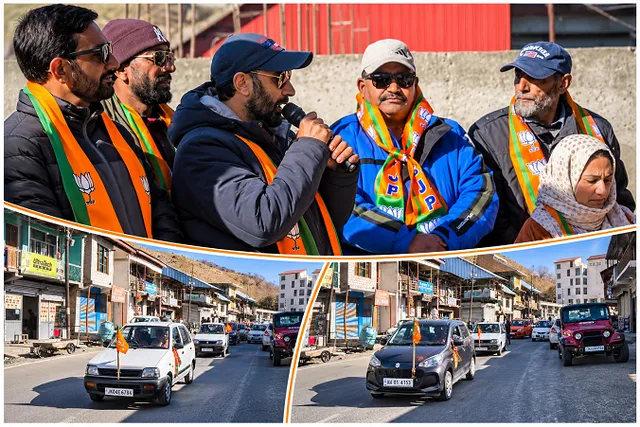
His own entry into the Solar Colony contest has further underlined the importance the party attaches to the Leh Council elections. The party’s approach appears to combine organisational mobilisation, prominent leadership participation and a development-focused campaign narrative. The strategy is aimed at giving its candidates a common political platform while retaining the flexibility to address constituency-specific issues.
The coming days will reveal whether the BJP can convert its renewed campaign momentum into electoral support. Namgyal’s candidature has undoubtedly added an important element to the contest, but the party will still have to contend with local anti-incumbency, the continuing political debate over Ladakh’s constitutional future and the strength of independent candidates.
For Congress, the challenge will be to consolidate its support across the district and capitalise on dissatisfaction with the existing political and administrative arrangements. The independents, meanwhile, could influence the outcome in constituencies where local personalities and community equations are particularly important.
Nevertheless, the political narrative in Leh has acquired a new twist. A contest that was expected to be dominated by anti-incumbency and the wider agitation over Ladakh’s demands is increasingly being shaped by questions of leadership, development and the future direction of the Hill Council.
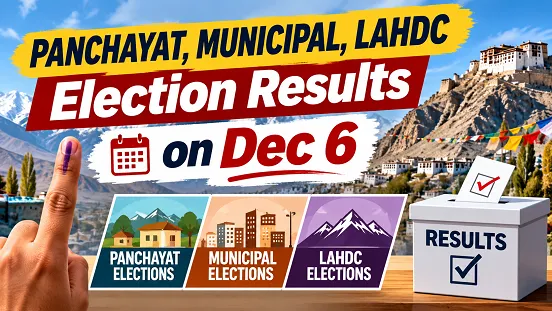
With a former MP and former CEC entering the fray, and major infrastructure projects providing a fresh development narrative, the BJP is seeking to reclaim political space in Leh. Whether the JTN factor and development pitch can translate into a decisive electoral advantage will become clear when voters cast their ballots on December 4.