27th Anniversary of Operation Vijay
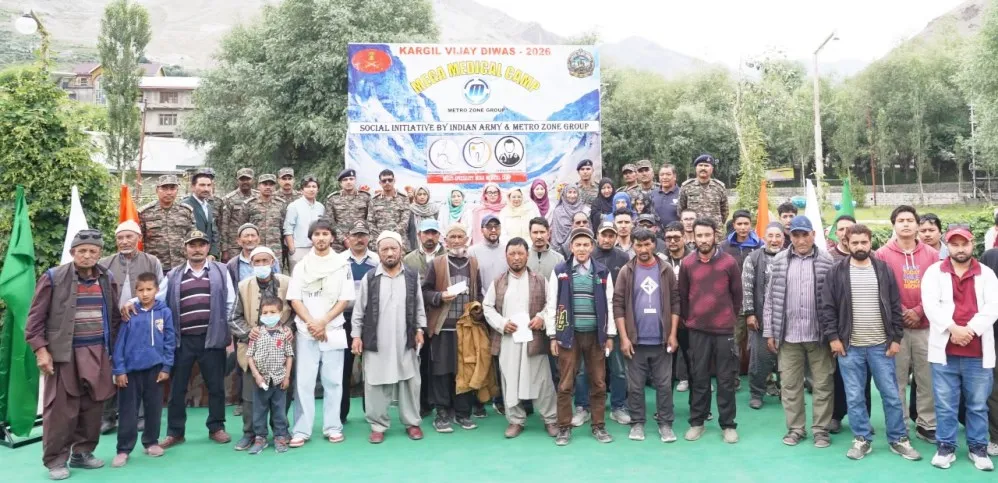
LEH: Marking the 27th anniversary of Operation Vijay, the Indian Army’s Top Gun Brigade organised week-long Mega Medical Camps across Hanuyokma, Mughalpura and Sankoo in western Ladakh, providing free specialist healthcare to more than 2,500 residents from remote and border villages between July 1 and 7.
Conducted in collaboration with the civil administrations and health departments of Khaltsi, Kargil and Drass, the outreach targeted communities with limited access to specialised medical facilities. The initiative also received support from Metro Zone Health Services (India) Pvt. Ltd., which supplied medicines under the Shishu Kalyan Yojana.
According to the Army, the camps covered residents from Hanuyokma, Hanuthang, Chiktan, Achinathang, Pandrass, Matayen, Drass, Mughalpura, Trespone, Saliskote, Farona, Lankarchey, Malikbar, Nagma, Sangrah and Sankoo. Around 250 pregnant women were among the beneficiaries.
Thirteen specialist doctors were deployed at each camp, assisted by nursing staff, to provide consultations in general medicine, orthopaedics, gynaecology, paediatrics, ophthalmology, dentistry, pain management and physiotherapy. Psychological counselling was also offered as part of the healthcare package.
The camps placed special emphasis on maternal and child healthcare, with pregnant women receiving antenatal examinations, nutritional assessments and counselling on safe pregnancy practices. Mothers were also guided on breastfeeding, newborn care, immunisation and child nutrition.
To overcome geographical barriers, the Army arranged free transportation for villagers from remote areas, enabling elderly residents, women and children to access medical services without logistical or financial constraints.
Veterinary services were organised at Mughalpura, where specialists examined livestock, advised farmers on vaccination, deworming and animal husbandry practices, benefiting pastoral communities, including Gujjars and Bakarwals.
Elderly patients suffering from chronic illnesses such as hypertension, diabetes, arthritis and respiratory ailments underwent medical examinations and received treatment, medicines and health counselling.
The Army said the outreach formed part of its continuing efforts to improve healthcare access in remote border regions while reinforcing its long-standing engagement with local communities through humanitarian and civic action programmes.