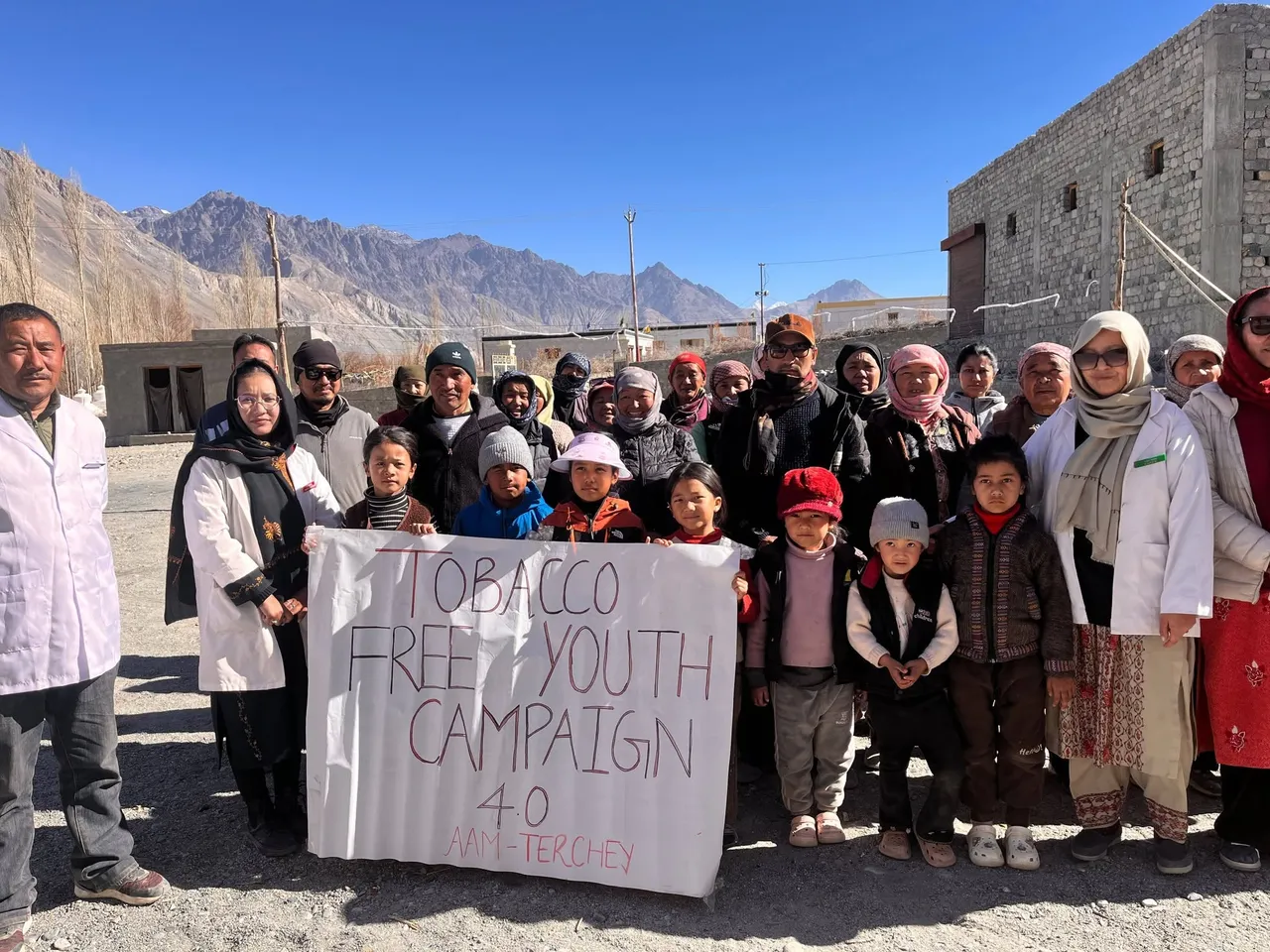
As Villages and Schools in Leh declared tobacco-free, TFYC 4.0 is seeking to turn anti-tobacco messaging into community action, although the challenge of sustaining these declarations remains.
LEH: From students carrying anti-tobacco messages through village streets to women’s groups, village representatives and school authorities taking responsibility for tobacco control, Ladakh’s ongoing Tobacco-Free Youth Campaign (TFYC) 4.0 is beginning to extend its reach beyond conventional awareness programmes, placing communities and educational institutions at the centre of efforts to curb tobacco consumption.
The campaign’s growing footprint is reflected in the latest reported figures from Leh district: 158 villages have been declared tobacco-free, up from 156 at the time of the campaign’s mega launch on November 2, while five government schools have been declared Tobacco-Free Educational Institutions during the ongoing drive. Government Degree College Khaltsi has also received tobacco-free institute status.
The expansion, particularly the declarations of Matho and Stok villages alongside their respective government high schools, signals an effort to take tobacco control beyond school boundaries and make it a shared responsibility of village institutions and residents. However, the larger test for the administration will be whether these declarations translate into sustained behavioural change and effective enforcement at the community level.
At the November 2 launch in Leh, Dr Stanzin Jamyang, District Consultant, National Tobacco Control Programme (NTCP), disclosed that 156 villages had already been identified as tobacco-free, while 42 remained to achieve the status. The programme, organised by the Health and Family Welfare Department, Leh, brought renewed attention to the need for sustained public participation in preventing tobacco use, particularly among young people.
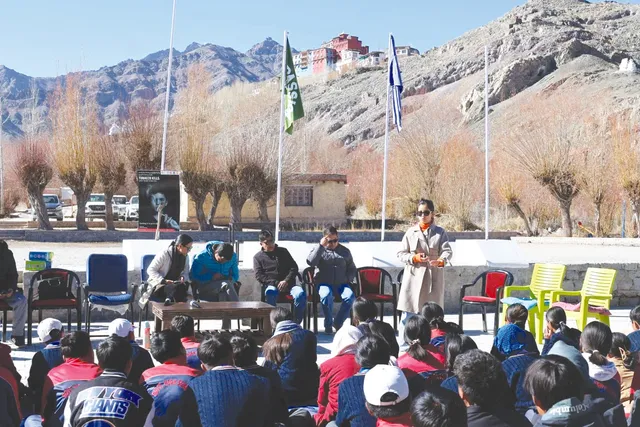
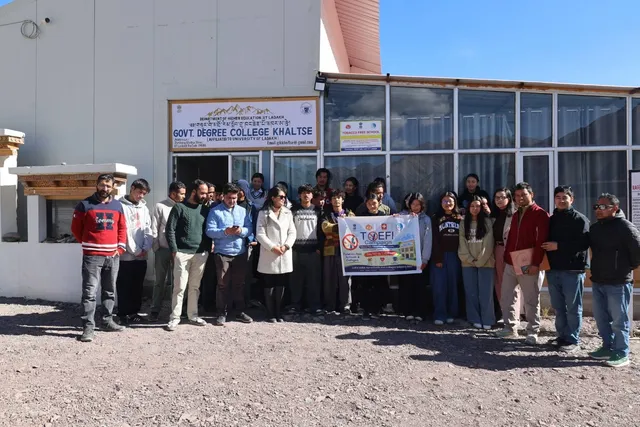
Since then, the campaign has recorded further declarations at the grassroots level. Government High School Thiksey and Government Middle School Ranbirpur were declared tobacco-free on November 5 following awareness sessions and a student rally. Government Degree College Khaltsi received tobacco-free institute status on November 7 after a sensitisation programme involving students and staff.
The campaign’s more visible community-level impact has emerged in Egoo, Matho and Stok, where the approach has moved beyond sensitising students to mobilising entire villages.
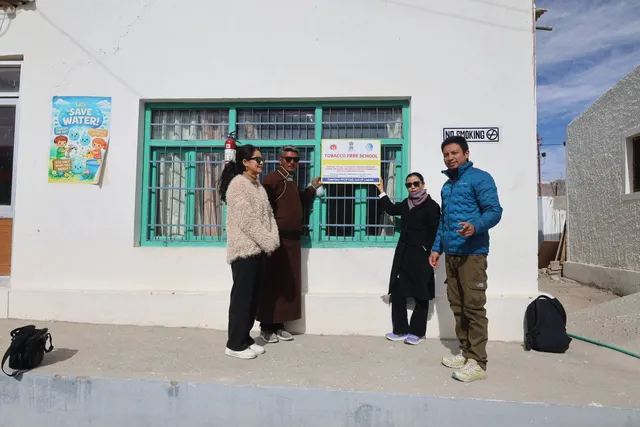
In Egoo, the village school was declared a Tobacco-Free Educational Institution, while a village-level coordination committee was constituted to strengthen the implementation of anti-tobacco laws. The initiative brought together the village Numberdar, Youth President, President of the Women’s Alliance, schoolchildren, teachers and Village Health Workers. No Smoking boards were installed, anti-tobacco messages were displayed at public places, and village representatives resolved to make tobacco and addiction control a regular agenda item at Gram Sabha meetings.
In Matho, the Health Department declared both the village and Government High School Matho tobacco-free following a community mobilisation programme attended by 89 participants, including students, teachers, village representatives, members of youth and women’s associations and health personnel. The programme combined health education with discussions on addiction, mental health and early identification of tobacco dependence. Students also took out an awareness rally through the village.
A similar initiative in Stok on November 19 culminated in the declaration of Stok village and Government High School Stok as tobacco-free. The programme brought together school authorities, village representatives, youth and women’s groups and health personnel. Participants were sensitised to the health consequences of tobacco consumption, the criteria for maintaining tobacco-free status and the importance of early intervention. The programme concluded with a collective pledge to sustain the declarations.
These interventions indicate a shift in the campaign’s approach: from communicating the dangers of tobacco to building local mechanisms that can discourage its use, prevent access to tobacco products among minors and promote compliance with anti-tobacco laws. The involvement of village leadership, women’s organisations, youth associations and educational institutions is particularly significant in a region where community participation can play an important role in sustaining public-health initiatives.
The campaign has also reached the Nubra region, where awareness programmes were organised in Partapur, Henachay, Agyam and Tsati on November 11 and 13. Residents, community members and Self-Help Group members participated in awareness activities, rallies and collective pledges to work towards making their respective villages tobacco-free. While these initiatives demonstrate an expansion of grassroots mobilisation, the four villages have not been reported as having received formal tobacco-free declarations and are therefore not included in the current tally of 158.
In Kargil, the campaign has focused on strengthening institutional coordination, enforcement and youth engagement. Deputy Commissioner Rakesh Kumar chaired a District Level Coordination Committee meeting on October 27 to review the campaign’s action plan, enforcement of the Cigarettes and Other Tobacco Products Act (COTPA), 2003, and Information, Education and Communication activities in schools, colleges, universities, ITIs and nursing institutions.
A mega marathon involving students of Government Girls and Boys Higher Secondary Schools was organised on October 29. On November 6, students of GNM College staged a street play during a cricket tournament, accompanied by a mass ‘No Tobacco Pledge’ in the presence of public representatives and health officials. While these activities have helped extend the campaign’s message to young people and the wider public, district-wise figures for tobacco-free schools and villages in Kargil have not been established in the reports reviewed.
The 60-day TFYC 4.0 was launched nationally on October 28 by the Union Ministry of Health and Family Welfare under the National Tobacco Control Programme. Building on the previous three editions, during which more than 5.8 lakh educational institutions and 73,000 villages were declared tobacco-free across the country, the current edition seeks to strengthen preventive action through youth participation, institutional compliance, community mobilisation and stricter enforcement.
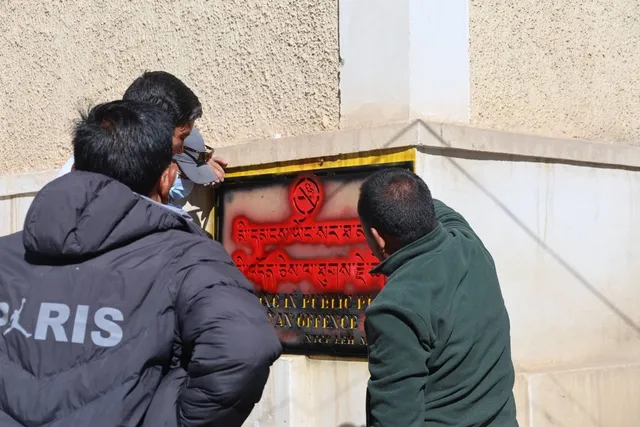
In Ladakh, the campaign has placed emphasis on compliance with Tobacco-Free Educational Institution (ToFEI) guidelines, expansion of tobacco-free villages, enforcement of COTPA and the Prohibition of Electronic Cigarettes Act (PECA), 2019, besides digital outreach and engagement with universities and colleges. Regular COTPA enforcement activities, including drives on Mondays and Wednesdays in Leh, are also intended to reinforce the message that tobacco control must extend beyond awareness sessions.
The public-health stakes are considerable. Tobacco consumption is associated with several forms of cancer and other life-threatening diseases, while nicotine dependence can expose young people to long-term health risks. At the Leh launch, Director of Health Services, UT Ladakh, Dr Tashi Thinless, underlined the importance of preventive awareness among the younger generation and highlighted the association between tobacco consumption and serious diseases. Dr Jamyang also stressed the need for sustained collective action, drawing attention to the possible linkage between tobacco use and substance abuse.
Yet, the number of declarations alone cannot serve as the sole measure of the campaign’s success. Tobacco-free status needs to be supported by continued compliance with prescribed criteria, regular monitoring, prevention of tobacco sales to minors, smoke-free public spaces and active participation of schools and village institutions. The formation of village-level coordination committees and the inclusion of tobacco control in Gram Sabha discussions are important steps in this direction, but their effectiveness will depend on whether they remain functional after the campaign concludes.
With TFYC 4.0 scheduled to continue until around December 26, further declarations and awareness interventions are expected. The increase from 156 to 158 reported tobacco-free villages in Leh, the declaration of five schools and the growing involvement of community organisations suggest that the campaign is gradually moving from awareness to local ownership.
For Ladakh, the real measure of TFYC 4.0 will not simply be how many villages and schools receive tobacco-free certificates by the end of the 60-day drive, but whether the campaign succeeds in making tobacco prevention a continuing community responsibility — one that protects children and young people long after the campaign banners have come down.