LEH: The Christian community in Leh on Thursday firmly distanced itself from individuals being investigated in connection with an alleged Bible translation and religious conversion-related operation in Skampari, asserting that the local Moravian Church had neither knowledge of nor involvement in the activities under scrutiny.
Responding to allegations raised by the Youth Wing of the Ladakh Buddhist Association (LBA), representatives of the Christian community said the individuals reportedly linked to the translation project were unknown to the local church leadership and had never coordinated with any recognised Christian institution in Ladakh.
“We have no connection whatsoever with the people concerned. Neither the Moravian Church leadership nor the wider Christian community in Ladakh was aware of these activities,” community representatives said at a press conference here.
The clarification comes amid an ongoing inquiry into allegations that a group of non-local individuals had been operating from a rented premises in Leh and engaging local youth in translating Biblical literature into various Ladakhi dialects.
While welcoming an official investigation into the matter, the Christian leaders said any organisation functioning in the region without engaging local stakeholders risked creating misunderstandings and avoidable social tensions.
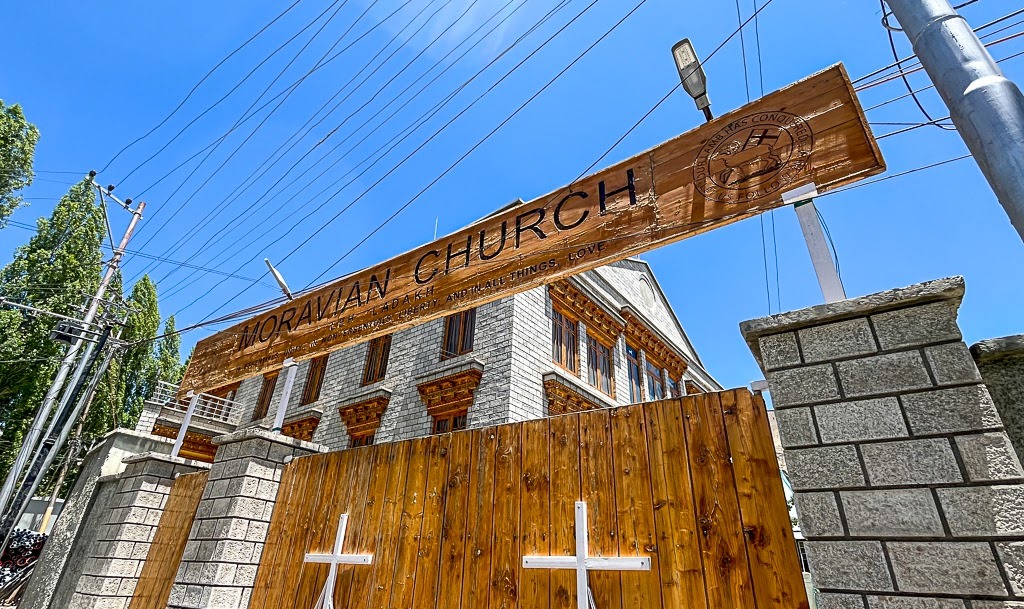
They maintained that the Moravian Church, which has been present in Ladakh for nearly 140 years, has historically focused on education, healthcare, social welfare and community development. The representatives highlighted the church’s contributions in promoting education, women’s empowerment, vocational skills and healthcare services across the region.
“The traditions of the Moravian Church in Ladakh have always centred on service to society and peaceful coexistence,” the speakers said.
At the same time, they acknowledged that there have been instances in the past where visiting religious groups operated independently without informing local church institutions, leading to confusion within the community.
The leaders also raised concerns over what they described as growing external influence in the administration of the historic Leh Church. They alleged that disputes over leadership appointments and governance had emerged in recent years, with sections of the local congregation expressing concern over preserving the church’s distinct Moravian identity.
Asked about the organisation allegedly involved in the translation project, the representatives said they had no information regarding its funding, structure or activities.
“If the authorities seek our cooperation, we will extend full support. However, we cannot comment on the functioning of a group that has never approached or interacted with us,” they said.
The community leaders urged the public not to jump to conclusions while investigations were underway and appealed to all sections of society to maintain calm and allow the authorities to establish the facts.
Reaffirming Ladakh’s long tradition of communal harmony, they said Buddhists, Muslims and Christians have lived together in the region for generations with mutual respect and understanding.
The representatives called for a fair, transparent and impartial inquiry, stressing that safeguarding social cohesion and inter-community trust must remain a collective priority as the investigation progresses.