Tsokar Ramsar Site hosts Day Two of Black-Necked Crane Festival
CHANGTHANG: Conservation, traditional culture and community participation came together on the second day of Ladakh’s first Black-Necked Crane Festival at the Tsokar Ramsar Site, with local communities, students, conservationists and visitors taking part in a series of activities centred on the region’s iconic alpine bird.
Held under the theme “Celebrating the World’s Only Alpine Crane”, the programme was organised by the Department of Forest, Ecology and Environment, UT Ladakh, in collaboration with Mahabodhi International Meditation Centre, Leh.
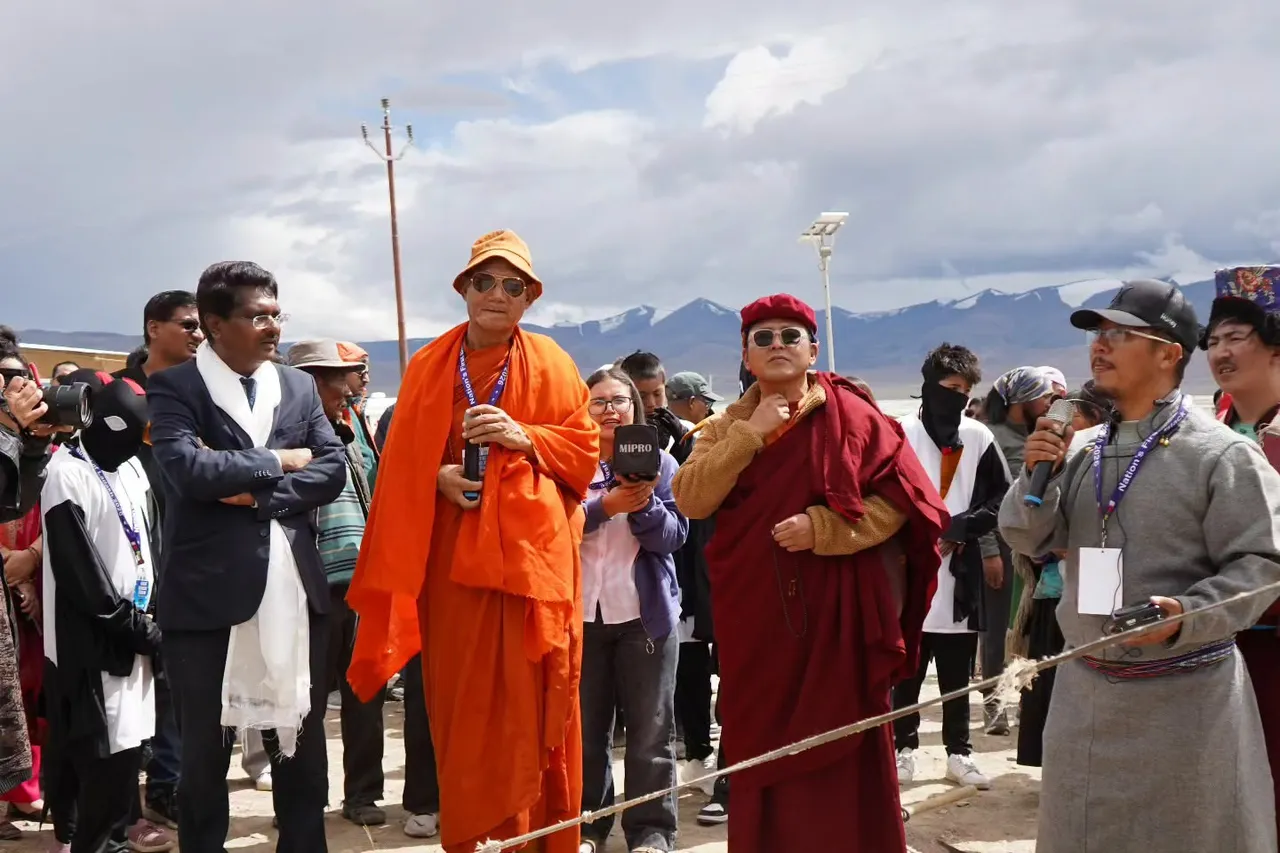
Additional Principal Chief Conservator of Forests and Chief Wildlife Warden S. Rajesh, IFS, Founder of MIMC Venerable Bhikkhu Sanghasena, Rinpochay Jigmet Yashi of Karzok and DFO Leh Vishal V. Surve were among those present.
Local communities set up traditional stalls showcasing Changthang’s handicrafts, customs, traditional products and way of life. The stalls also underlined the close relationship between local communities and the fragile wetland environment surrounding Tsokar.
Rajesh visited the stalls and interacted with students, artisans and community members, appreciating efforts to connect crane conservation with community participation and nature-based livelihoods.
Venerable Bhikkhu Sanghasena stressed the need to strengthen the relationship between people, culture and nature, while encouraging collective efforts to protect the environment.
The day’s activities included “Meet the Black-Necked Crane”, a Community Knowledge Circle, Art for Conservation and a Students’ Nature Camp featuring a bird race, bird treasure hunt and painting competition.
Members of the Bird Watching Club also participated in bird-watching activities, giving visitors an opportunity to observe and better understand Ladakh’s avian diversity.
Students of MIMC Leh and students from Bhutan added a cultural dimension to the programme with a Black-Necked Crane-themed dance performance conveying a conservation message through art. The event brought together environmental awareness and local cultural expression, highlighting the role of communities in protecting fragile high-altitude ecosystems.