DC, SSP warn against voter intimidation, MCC Violations
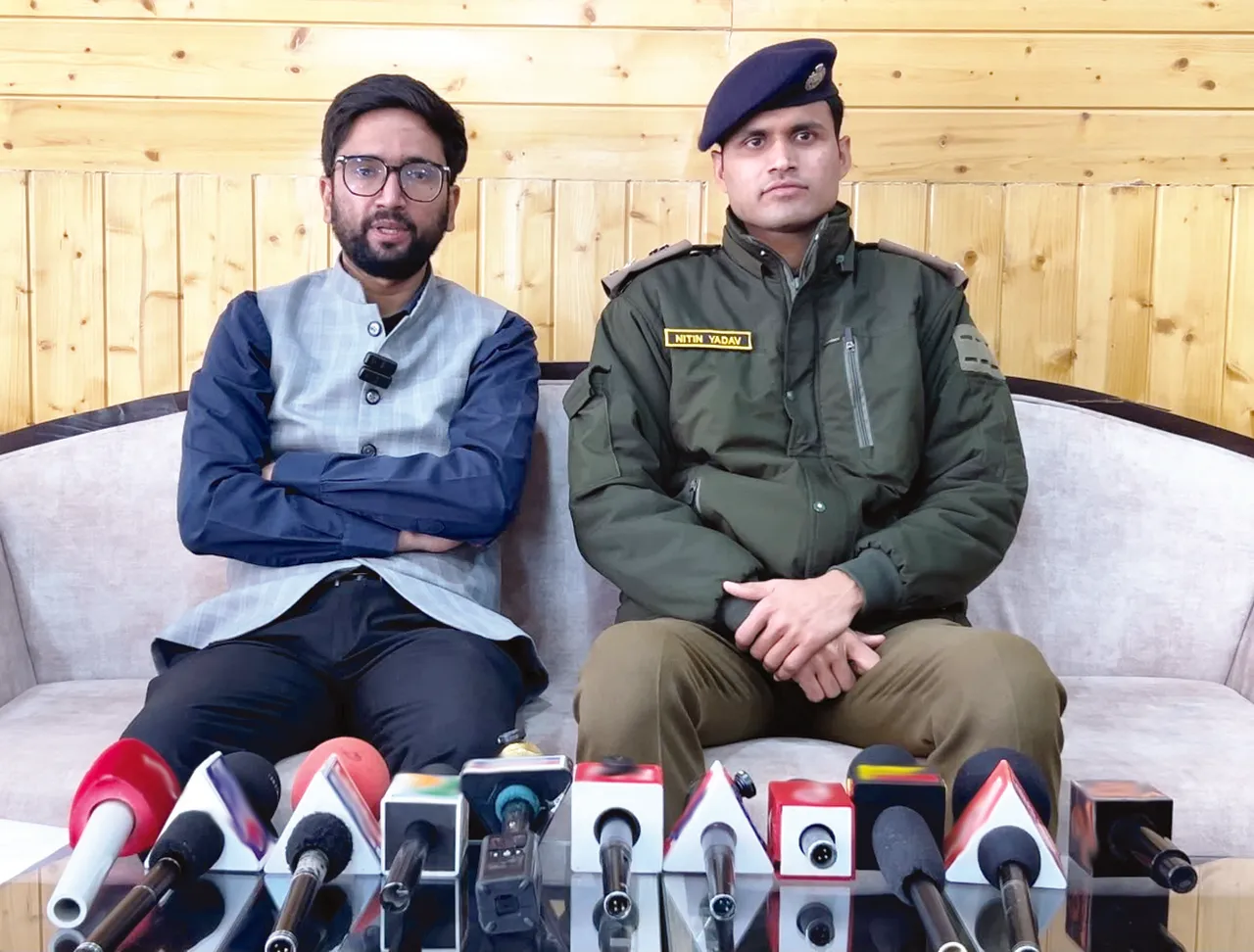
KARGIL: Two companies each of the Central Reserve Police Force (CRPF) and Indo-Tibetan Border Police (ITBP) will be deployed across Kargil district to secure the forthcoming elections, while police have warned of legal action against voter intimidation, coercion and violations of the Model Code of Conduct (MCC), Deputy Commissioner Rakesh Kumar and Senior Superintendent of Police Nitin Yadav said on Thursday.
Addressing a press conference here, the two officers outlined the security and administrative arrangements for the upcoming Panchayat, Municipal Committee and Ladakh Autonomous Hill Development Council (LAHDC) elections, asserting that elaborate measures had been put in place to ensure peaceful, free and fair polling.
SSP Nitin Yadav cautioned against intimidating, threatening or pressuring voters to support any particular political party or candidate, stating that such conduct would constitute a violation of the Model Code of Conduct and invite action under relevant provisions. He urged people to exercise their franchise freely and without fear or coercion.
On the possibility of social media being misused during election campaigning, Yadav said the cyber cell and intelligence units of Kargil Police were continuously monitoring online activities. He called upon the public to report suspected violations of the Model Code of Conduct to the Deputy Commissioner or SSP for inquiry and necessary action.
Detailing the security architecture, the SSP said police personnel, along with two companies each of CRPF and ITBP, would be deployed across the district. Quick Response Teams (QRTs) had been stationed at strategic locations, while sensitive polling stations would be secured by the CRPF and other Central Armed Police Forces.
Deputy Commissioner Rakesh Kumar said polling parties for Kargil and Drass would be dispatched on the morning of November 20, while all polling stations would be made ready ahead of polling scheduled for November 21.
He said the administration was ensuring essential facilities, including drinking water, electricity, adequate rooms and heating arrangements, at every polling station. Zonal and sector magistrates, accompanied by police officers, had also been deployed to inspect polling arrangements and oversee preparedness on the ground.
On the security of election material after polling, Kumar said ballot boxes would be deposited in designated strong rooms in the presence of candidates or their authorised polling agents. The strong rooms would remain sealed until the day of counting, ensuring the prescribed safeguards during the post-poll period.
The officers also highlighted inter-departmental coordination and administrative preparedness, reiterating that all necessary arrangements were being made to maintain law and order and provide voters with an environment conducive to exercising their democratic rights without hindrance.