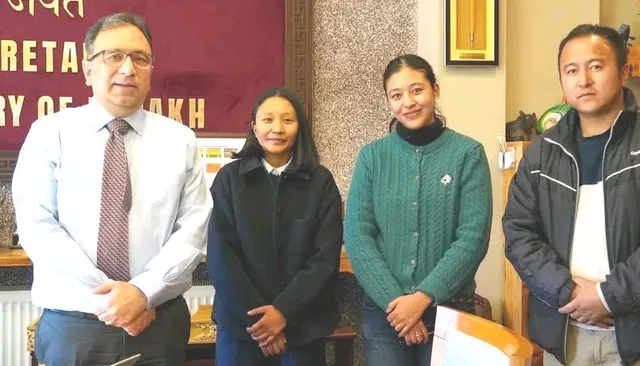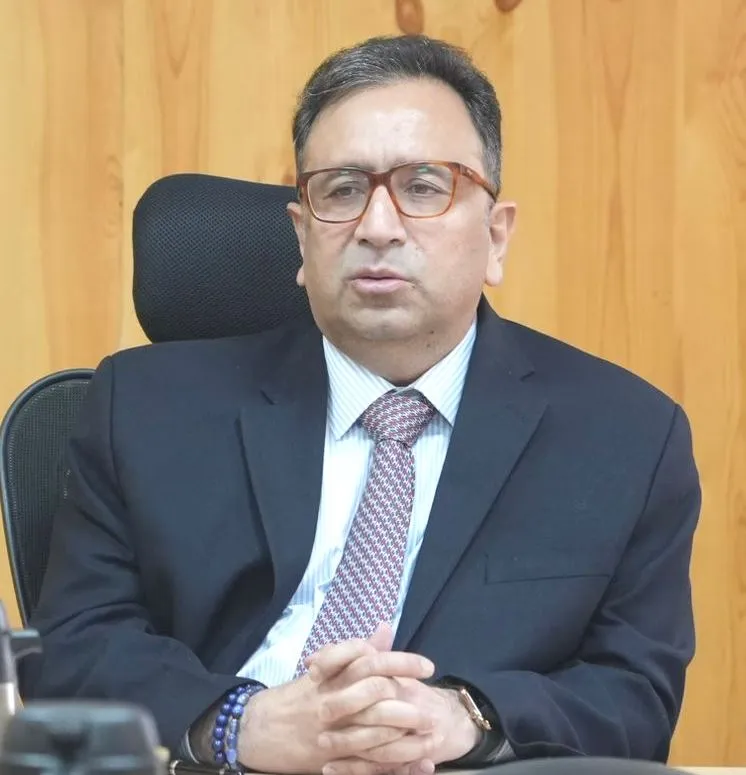
Leh: Chief Secretary of the Union Territory of Ladakh, Ashish Kundra, chaired a high-level review meeting with Pashmina artisans, weavers, entrepreneurs, cooperative members, and artisan organizations from across Ladakh, including Leh, Kargil, Zanskar, and other major Pashmina-producing regions, to assess the status and future development of the Ladakh Pashmina sector.
The meeting began with introductions from participating stakeholders, who shared insights into their work, production capacities, operational challenges, and the current status of their enterprises. Representatives from artisan groups, entrepreneur-led ventures, cooperative societies, self-help groups, and membership-based organizations presented their experiences and concerns regarding the growth and sustainability of the Pashmina value chain in Ladakh.
During the interaction, artisans highlighted key issues affecting Pashmina production and productivity, including the time-intensive warping process, the need for technological upgrades, access to modern machinery, loom modernization, and enhanced training opportunities. Participants also stressed the importance of creating greater awareness among the Changpa community, the primary producers of raw Pashmina, and called for continuous capacity-building initiatives across the sector.
Chief Secretary Kundra engaged extensively with the participants, seeking detailed information on their training backgrounds, annual production volumes, market linkages, sales trends, pricing mechanisms, and stock management practices. He also reviewed the performance of existing training centres and assessed the effectiveness of ongoing skill development programmes for Pashmina artisans and weavers.
Emphasizing the need for a structured and sustainable approach to strengthening the Ladakh Pashmina industry, Kundra underscored the importance of systematic skill upgradation within the weaving community. He reviewed the status of weaving instructors in the Handloom Department and stressed the need to enhance technical expertise among artisans to improve both productivity and product quality.
Observing that a significant number of weavers operate independently, the Chief Secretary advocated the formation of stronger cooperative structures to promote collective growth. He proposed the establishment of Common Facility Centres (CFCs) and recommended developing cluster-based cooperative models in key weaving hubs such as Phyang and other areas with a high concentration of artisans. These centres would provide access to shared machinery, common processing facilities, collective branding, standardization, marketing support, and aggregation services.
Kundra highlighted that activities such as weaving, finishing, pressing, design development, skill enhancement, and quality control could be efficiently managed through shared infrastructure. He noted that cooperative-led Pashmina clusters would improve operational efficiency, strengthen market access, and enhance the bargaining power of local artisans.
To further strengthen the sector, the Chief Secretary proposed the development of three cluster-based Common Facility Centres in Ladakh. These centres would serve as hubs for production, training, value addition, equipment access, design innovation, skill development, and women-led artisan empowerment initiatives.
Reiterating the importance of collective action, Kundra said that cooperative development and cluster-based models would play a vital role in preserving Ladakh’s traditional Pashmina weaving heritage while making the sector more competitive, sustainable, and economically viable. He urged all stakeholders to work together to build a robust ecosystem that supports artisans, promotes high-quality production, and enhances the global identity of Ladakhi Pashmina.
The meeting was attended by Moses Kunzang, Consultant functioning as Officer on Special Duty (OSD) for Special Projects; the Additional Secretary, Cooperative Department; the Deputy Registrar, Cooperative Societies, Leh; representatives of various Pashmina brands, self-help groups, artisan organizations; and officials from the Handloom Department.