Says Dec 4 Polls necessary to ensure Elected Councils prepare Next Year’s Budget; assures heated Polling Stations, Special queues for elderly
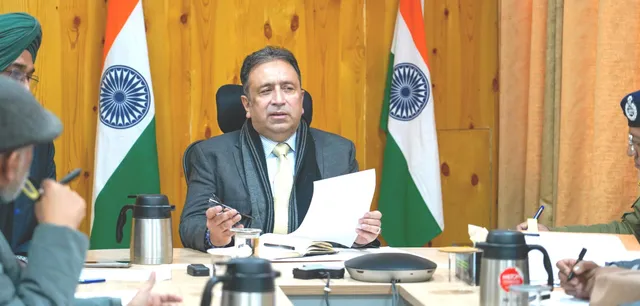
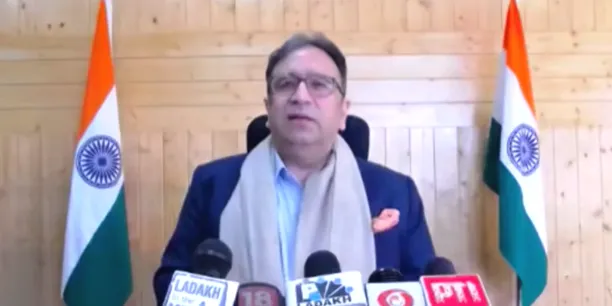
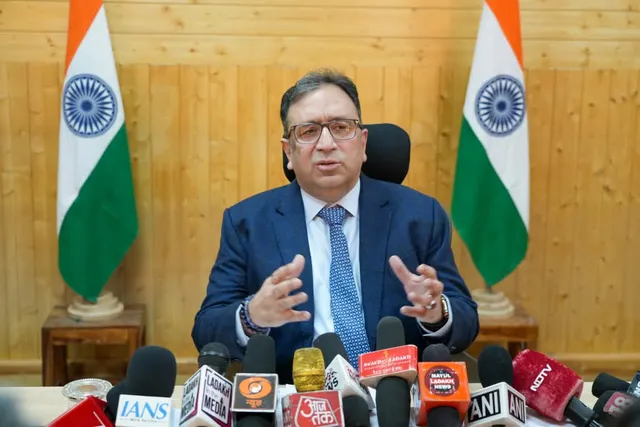
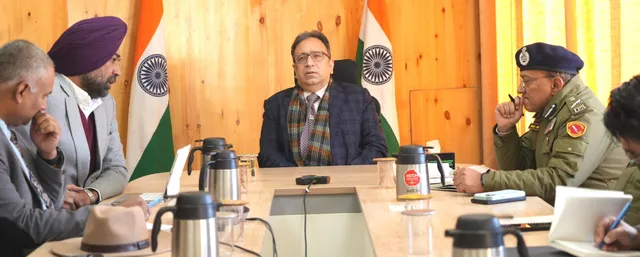
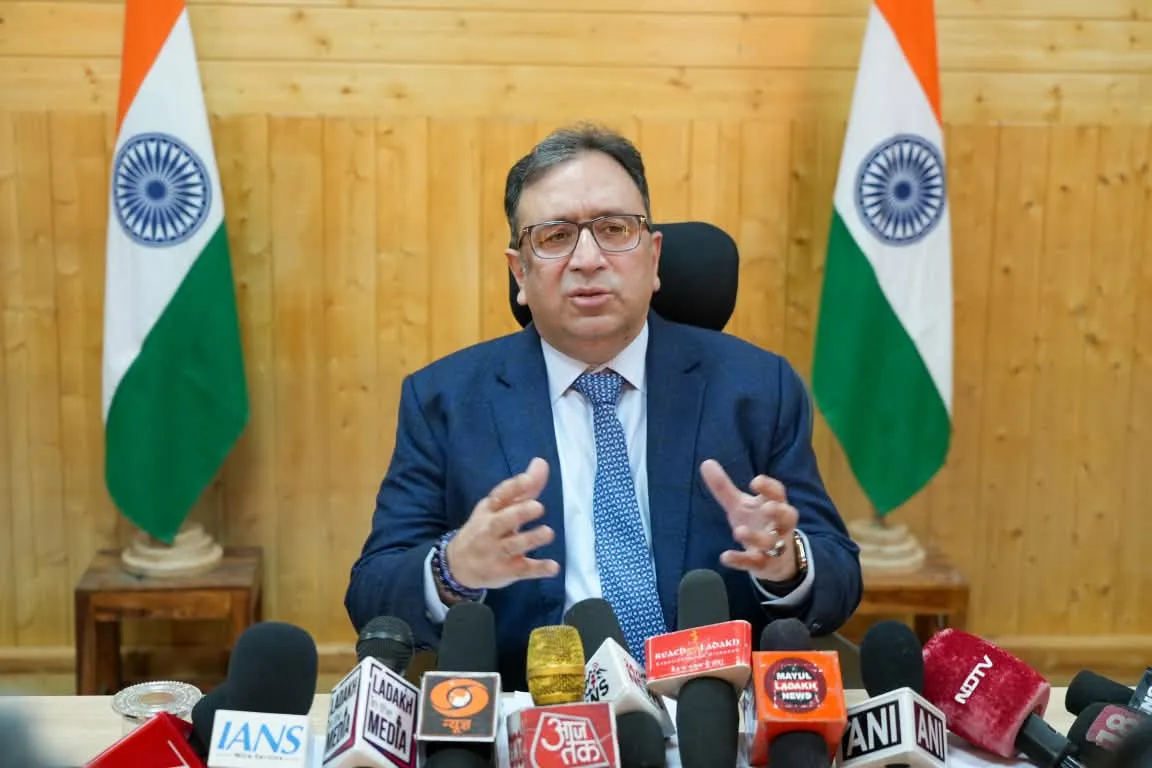
LEH: Defending the decision to hold elections to all eight Ladakh Autonomous Hill Development Councils (LAHDCs) on December 4 despite the onset of severe winter conditions, Chief Secretary Ashish Kundra on Tuesday said the timing was important to ensure that newly elected councils get sufficient time to prepare the budget for the next financial year, while assuring voters that adequate arrangements would be made to facilitate polling in the cold weather.
Addressing a media briefing here, Kundra responded to concerns over conducting the Hill Council elections during winter, arguing that December 4 should not pose an insurmountable challenge for voters as schools across Ladakh generally remain functional until December 15 or 16.
“If school children can go to school during this period, I do not think there should be any such issue preventing adults from going out to exercise their right to vote,” he said, seeking to allay apprehensions over the winter schedule.
He said the Administration had already instructed all Deputy Commissioners to ensure adequate facilities at polling stations, including arrangements for heaters. Special queues would also be provided for senior citizens to ensure that elderly voters do not face inconvenience while casting their votes.
Explaining the rationale behind the election schedule, Kundra said the timing was crucial because the newly elected Hill Councils would have January, February and March available to prepare the budget for the next financial year. He pointed out that if the councils were constituted later, they could miss the budget-preparation cycle, potentially resulting in the loss of an entire year in the process.
“Budget has to be prepared before March. Therefore, the timing is very important,” he said.
The Chief Secretary also made an appeal to the people of Ladakh, including youth, women, senior citizens, religious organisations and government employees, to participate enthusiastically in the forthcoming elections.
Emphasising the importance of democratic participation, he said Ladakh had a history of democratic traditions that should be preserved and strengthened.
Kundra pointed out that Panchayat elections had not been held for the past three years and the forthcoming exercise would facilitate the reconstitution of these grassroots institutions alongside the establishment of elected Hill Councils in all eight districts.
He described the elections as an opportunity to deepen democracy in Ladakh before the end of 2026, particularly in view of repeated demands during discussions with the Apex Body and other stakeholders for strengthening democratic institutions in the Union Territory.
The Chief Secretary said the Government of India had a clear intent to strengthen democratic institutions in Ladakh and that the Administration was working towards their early constitution.
The defence of the winter election schedule comes as Ladakh prepares for an extensive electoral exercise covering Panchayats, Municipal Councils and Hill Development Councils.
Elections to Panchayats and the Leh and Kargil Municipal Councils are scheduled for November 21, while polling for 100 constituencies across the eight LAHDCs will take place on December 4.
Kundra said the eight Hill Councils would have 50 constituencies each in the erstwhile Leh and Kargil districts, following the delimitation exercise undertaken after the creation of eight districts.
The election schedule provides November 17 as the last date for filing nominations, November 18 for scrutiny and November 20 for withdrawal of candidature. He also said the Administration would recommend that counting for the Panchayat, Municipal Council and Hill Council elections be conducted simultaneously to ensure that the results of one election do not influence the other.
Kundra highlighted that 36 of the 100 LAHDC constituencies had been reserved for women, marking one-third representation for women in the forthcoming Hill Council elections. He described the provision as a progressive measure towards strengthening women’s participation in grassroots democratic institutions.
The Chief Secretary’s appeal for participation comes against the backdrop of the larger debate over the expansion and functioning of democratic institutions in the Union Territory, with the forthcoming elections expected to constitute the first electoral exercise for the newly notified eight-district Hill Council structure.