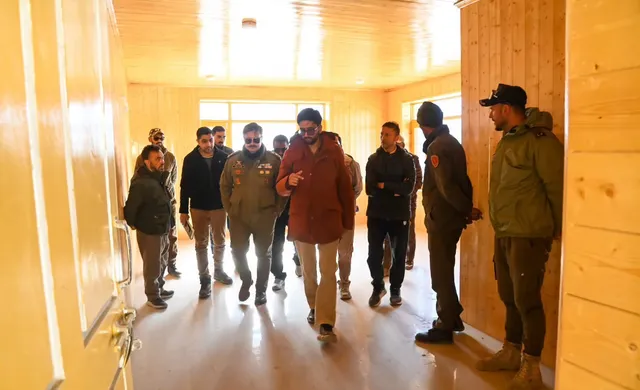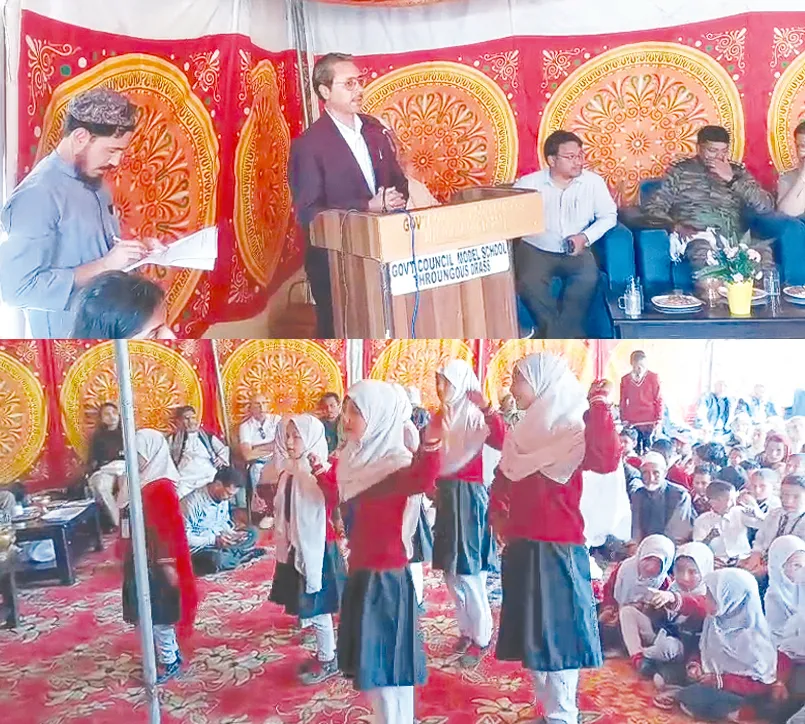
DRASS: Deputy Commissioner Drass Imteeaz Kacho on Monday inaugurated insulation-retrofitted classrooms at Government Middle School (GMS) Throngos, an intervention aimed at improving thermal comfort and creating a more conducive learning environment for students during the severe winter months in Drass.
The inauguration was attended by Superintendent of Police Ishtyaq Kacho, Commanding Officer, 4th Assam, Colonel Krishnan, representing the Army, LAHDC Councillors Abdul Wahid of Bhimbet and Abdul Samad of Ranbirpora, Principal GDC Drass Nasir Shabani, Zonal Education Officer Mohammad Ibrahim, former LAHDC Councillor Syed Mohammad Shah, Director of rZamba Foundation Saldon Shifa, members of the Village Education Committee (VEC) and other community representatives and guests from Delhi and Bengaluru.
The insulation work was facilitated by rZamba, with material, technical support and guidance provided by Eco Structure Eco Pvt. Ltd., Twerlinger Centre for Shelter and Villigro Innovation.
The intervention is intended to improve indoor thermal conditions at the school and provide students with more comfortable learning spaces during the extreme winters for which Drass is known.
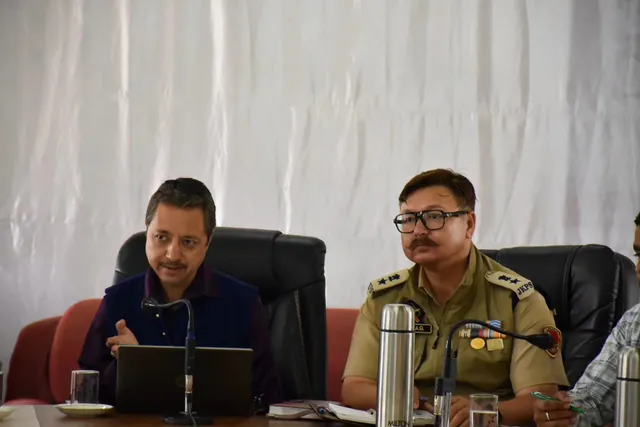
Speaking at the event, the Deputy Commissioner, Superintendent of Police and other guests appreciated the quality and relevance of the insulation work, noting the need for school infrastructure suited to the harsh climatic conditions of Ladakh.
They also expressed support for exploring similar solutions for other schools and locations across the Union Territory.
Kacho thanked the organisations involved in the initiative and appreciated rZamba’s work in Drass and other parts of Ladakh, particularly its interventions in education and school development.
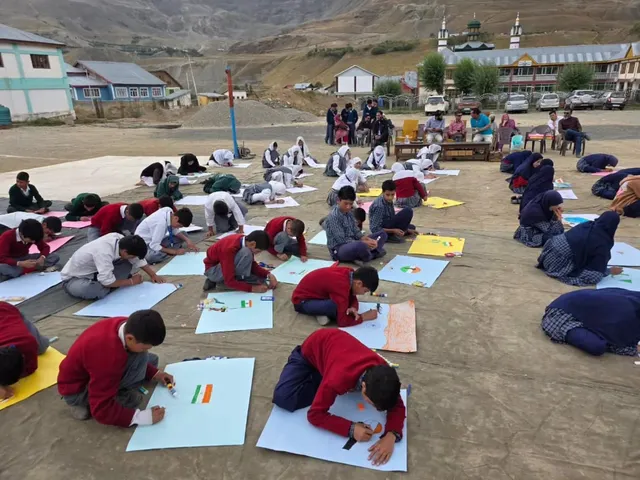
The programme also featured cultural performances by students of GMS Throngos.
Members of the VEC expressed gratitude to the organisations and individuals involved in the project, with particular appreciation for rZamba for its continued engagement with the school and the wider community.
The insulation work was monitored by the VEC throughout its implementation, providing community oversight and participation. The initiative brought together the school, local community, civil society organisations and technical experts in an effort to develop climate-responsive learning infrastructure for children in one of Ladakh’s coldest regions.