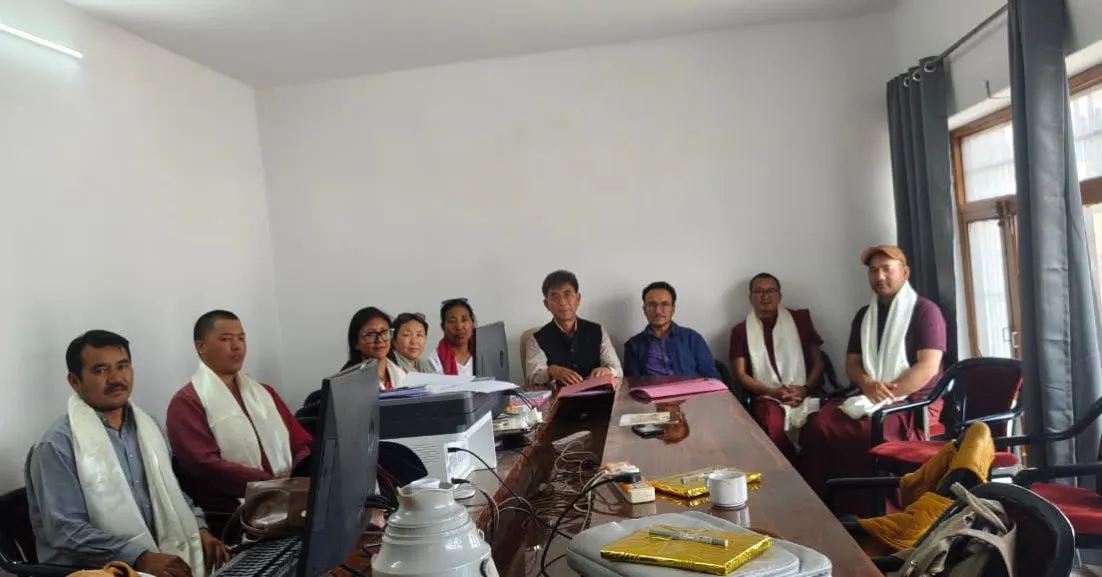
LEH: The District Institute of Education and Training (DIET), Leh on Saturday concluded a six-day workshop to review, revise and reframe Bhoti textbooks for Classes III onwards, with the exercise aimed at aligning learning material with the National Education Policy (NEP) 2020 and the National Curriculum Framework (NCF) while strengthening mother tongue-based education in Ladakh.
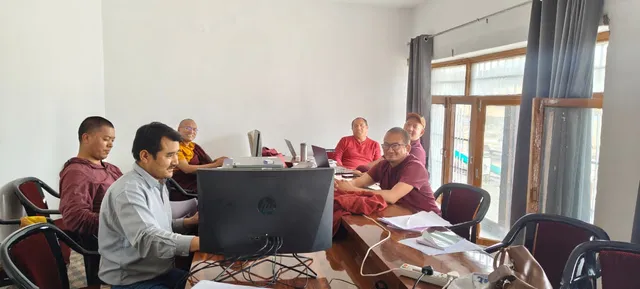
Held from July 6 to 11, the workshop brought together Bhoti language scholars, academicians and experienced teachers to develop learner-centred, culturally relevant and pedagogically sound textbooks through a collaborative review process.
According to DIET Leh, members of the Bhoti Textbook Core Committee undertook detailed deliberations to review existing content, revise learning material and finalise draft textbooks intended to improve academic quality, linguistic accuracy and cultural relevance for school students.
The committee comprised Dr. Jamyang Wangchuk (HSS Tingmosgang), Dr. Lotos Rabgais (DIET Leh), Ven. Tashi Gyaltsan (HSS Saspol), Padma Wangail (HS Gya), Ven. Konchok Tsering (HSS Skurbuchan), Dr. Tsering Dolker (Boys Higher Secondary School Leh) and Ven. Konchok Stanzin (HS Thiksey).
Addressing the valedictory session, DIET Leh Principal S. D. Namgail commended the experts for their sustained commitment throughout the workshop and felicitated them with traditional Khatas in recognition of their contribution to the development of Bhoti language education.
He urged the participants to continue contributing to research, curriculum development and the preparation of quality educational resources, observing that continued academic engagement would be essential for preserving and promoting Bhoti language, culture, traditions and the wider heritage of Ladakh.
The workshop forms part of DIET Leh’s continuing efforts to strengthen mother tongue-based education by developing curriculum and textbooks that are academically robust while reflecting the linguistic and cultural identity of the region. The revised textbooks are expected to support classroom learning through content that is both contextually relevant and aligned with contemporary pedagogical practices.