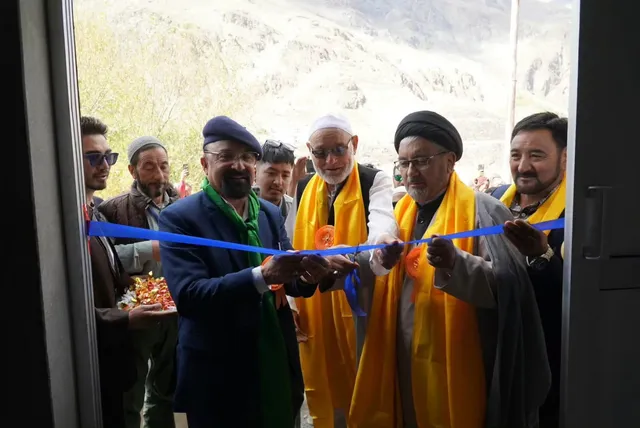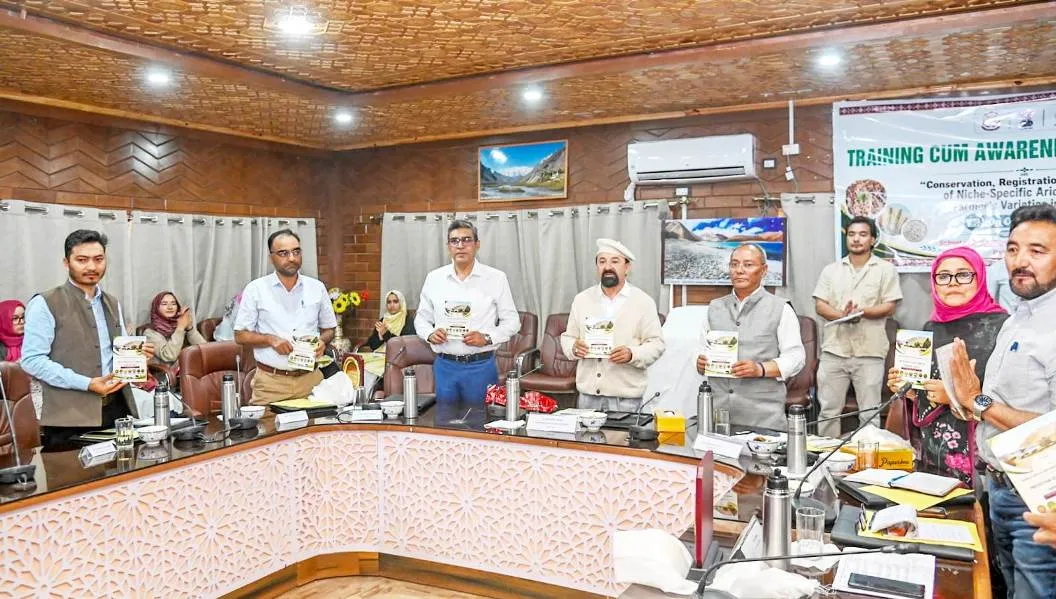
KARGIL: Chairman and Chief Executive Councillor (CEC), LAHDC Kargil, Dr. Mohd Jaffer Akhoon on Tuesday called for the conservation and registration of Ladakh’s indigenous crop varieties, asserting that safeguarding the region’s unique agricultural heritage is vital for sustainable farming, food security and improving farmers’ livelihoods.
Addressing a one-day Training-cum-Awareness Programme on “Conservation, Registration and Promotion of Niche-Specific Arid Crops and Farmers’ Varieties in Ladakh” at Baroo, the CEC urged farmers to utilise government schemes in the agriculture and horticulture sectors while preserving traditional crop varieties adapted to Ladakh’s cold-arid ecosystem.
Organised by the School of Horticulture Science and Technology, University of Ladakh, Kargil, under the Protection of Plant Varieties and Farmers’ Rights (PPV&FR) Authority, the programme brought together scientists, researchers, horticulture officials, Krishi Vigyan Kendra experts, students and progressive farmers.
Dr. Akhoon said Ladakh’s naturally organic farming practices and indigenous crop varieties possess considerable nutritional and commercial value, adding that greater emphasis on conservation, scientific documentation and value addition could strengthen the region’s agricultural economy. He assured continued support from LAHDC Kargil to institutions working in agriculture, horticulture and farmer welfare.
Participating virtually, University of Ladakh Vice Chancellor Prof. Saket Kushwaha highlighted the importance of integrating scientific research with traditional knowledge to conserve farmers’ varieties. He said the recently introduced B.Sc. Agriculture programme would strengthen agricultural research, capacity building and human resource development in Ladakh.
Earlier, experts briefed participants on the provisions of the PPV&FR Act, 2001, the process of registering farmers’ varieties and the need to preserve indigenous germplasm for climate resilience and sustainable agriculture.
Director Horticulture Tsering Punchok and Chief Horticulture Officer Ali Raza highlighted the need for improved post-harvest infrastructure, value addition and scientific cultivation practices, particularly in apricot production, while informing farmers about departmental support and subsidy schemes.