Candidates intensify door-to-door campaigning, personally reach out to voters and mobilise grassroots support as BJP, Congress, NC and Independents make all-out efforts to win public mandate
YASH KHAJURIA
LEH: Election fever has gripped the entire Union Territory of Ladakh as the political battle for control of its eight Ladakh Autonomous Hill Development Councils (LAHDCs) enters a crucial phase, with candidates and political parties launching an all-out campaign ahead of polling on December 4.
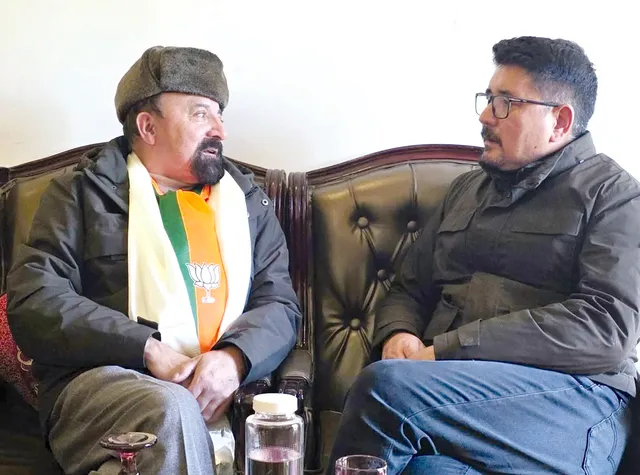
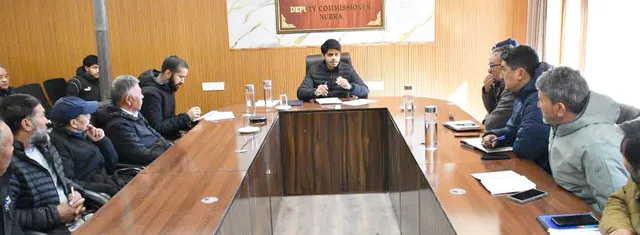
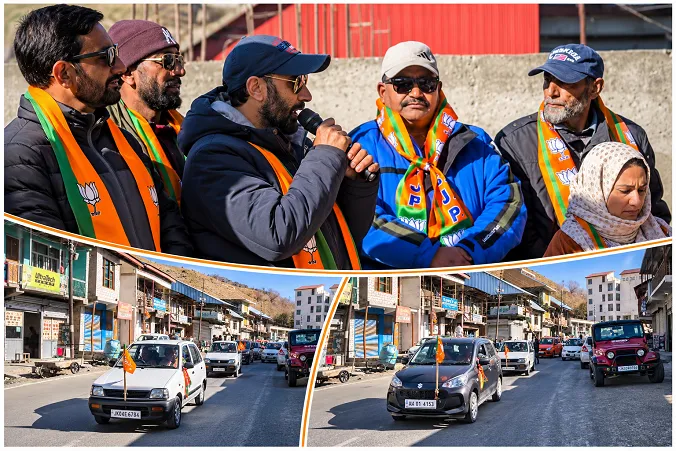
From the streets and marketplaces to remote villages and far-flung settlements, the electoral contest is gathering momentum, with the BJP, Congress, National Conference (NC) and a sizeable number of Independent candidates leaving no stone unturned to mobilise voters and consolidate their support. Door-to-door campaigning, public meetings, interactions with community representatives and intensive outreach have become the defining features of the ongoing political activity across Leh and Kargil regions.
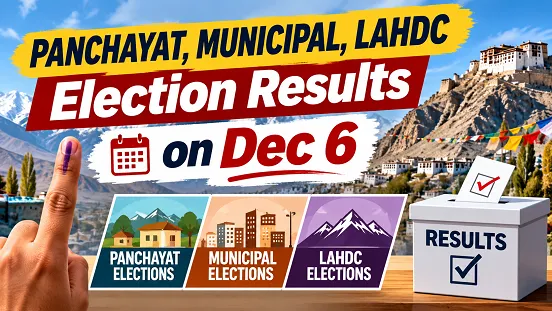
However, the stakes extend beyond the election of 100 Council members across the eight electoral regions. The December 4 polling will be followed by a crucial counting day on December 6, when Ladakh will witness a double electoral verdict, with the results of the LAHDC elections being declared alongside those of the recently concluded Panchayat elections.
In an important communication dated November 23, the Election Commission for Union Territories has directed that counting of votes for both Panchayat and LAHDC elections commence at 8:30 AM on December 6. The decision has effectively turned December 6 into a major political milestone, with the electoral choices of voters at both grassroots and Hill Council levels set to emerge on the same day.
The elections are particularly significant as they will determine the political composition of all eight Hill Councils, which play a central role in local governance, development planning and representation of regional aspirations.
The electoral exercise covers Leh, Kargil, Nubra, Sham, Changthang, Zanskar, Drass and Sankoo, making it one of the most extensive political contests in Ladakh’s electoral landscape.
The distribution of 100 constituencies across these eight Councils has added another dimension to the contest. Leh has 22 constituencies, Kargil 21, Sankoo 13, Changthang 10, Nubra, Sham and Zanskar nine each, while Drass has seven constituencies.
With different political equations, regional priorities and local leadership dynamics shaping each electoral region, the outcome is unlikely to be determined by a single overarching political narrative.
The BJP and Congress have emerged as the principal contenders in the broader political battle, with both parties seeking to establish their political influence across the strategically and politically significant Hill Councils.
The BJP is looking to expand its footprint in areas where it sees organisational strength and favourable electoral equations, particularly in Zanskar, Sankoo, Drass, Sham and Changthang. Congress, meanwhile, is banking on its traditional political networks and local leadership in Leh and Kargil, where it is expected to put up a strong challenge.
Nubra presents a particularly interesting contest, with neither major party enjoying an unchallenged position. The possibility of post-election political alignments, including cooperation between Congress and the National Conference, could add another layer to the electoral calculations.
The NC’s participation is also significant, particularly in Kargil, where regional political considerations and the party’s organisational presence could influence the contest in several constituencies.
Yet, the biggest wildcard in the election could be the Independent candidates. Their presence in multiple constituencies has the potential to upset established party calculations, divide traditional vote banks and produce unexpected victories.
In a contest where margins in several constituencies could prove decisive, Independents may not merely determine the outcome of individual seats but could also emerge as kingmakers in the formation of Council leadership.
While political parties are attempting to project the elections as a test of their broader political standing, voters are likely to weigh candidates on local issues, accessibility, development performance and their ability to represent constituency-specific concerns.
Issues relating to roads, drinking water, electricity, healthcare, education, employment opportunities, tourism infrastructure and rural development are expected to figure prominently in campaign narratives.
In addition, questions surrounding land, employment, constitutional safeguards and the future political and administrative framework of Ladakh continue to form part of the wider political discourse. However, the extent to which these broader concerns translate into votes may vary considerably from one region to another.
The elections also come at a politically important juncture, with different parties attempting to strengthen their grassroots presence and establish their relevance in the region’s evolving political landscape.
The Panchayat elections, which recorded encouraging voter participation, have already demonstrated substantial public engagement in the grassroots democratic process. The LAHDC elections will now test whether that enthusiasm translates into equally strong participation in the Hill Council contest.
For the BJP and Congress, the results will be an important measure of their organisational strength and political acceptance across the UT. For the National Conference, the elections will provide an opportunity to assess its regional influence, while Independents will be looking to convert local popularity into electoral gains.
The final arithmetic could also throw up hung Councils or situations requiring post-election negotiations, making the role of Independents and smaller political formations particularly consequential.
With campaigning gathering pace and December 4 approaching, the political battle is entering its decisive stretch. The coming days will test the ability of parties to convert campaign momentum into votes, while December 6 will reveal whether the electoral map of Ladakh tilts towards the BJP, Congress, or a more fragmented political arrangement.
For Ladakh, it will be more than an election verdict. It will be a significant indicator of the region’s changing political preferences, the strength of its regional leadership and the balance of power in its grassroots and autonomous governance institutions.