Experts stress balance between development and conservation
ZANSKAR: A collective call for a development model that safeguards Zanskar’s fragile ecology while promoting community-led economic growth, responsible tourism and cultural preservation marked the conclusion of the three-day Envisioning Zanskar Summit 2026 at Government Degree College Zanskar on Thursday, with experts from academia, public institutions, entrepreneurship, civil society and environmental organisations converging to deliberate on the region’s long-term development priorities.
The summit concluded with a series of panel discussions and expert lectures that underscored the need to integrate environmental sustainability with economic aspirations, while encouraging greater participation of local communities in shaping Zanskar’s future. Deliberations throughout the final day centred on climate resilience, sustainable tourism, entrepreneurship, waste management, women’s health and digital responsibility.
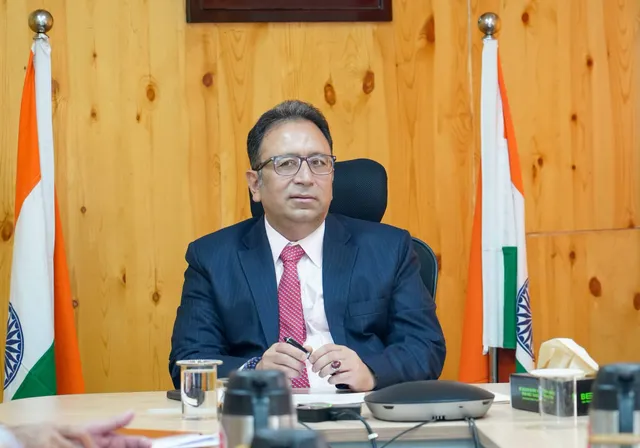
Addressing the valedictory session, Rigzin Sandup (JKPS), Superintendent of Police, Zanskar, commended the All Zanskar Students’ Union and Government Degree College Zanskar for bringing together experts from diverse fields on a common platform. He observed that the multidisciplinary dialogue had facilitated knowledge sharing on issues central to the region’s future and stressed that collaborative initiatives would play an important role in advancing environmentally sustainable, socially inclusive and economically viable development.
The academic sessions opened with an online lecture by Sonali, who spoke on women’s health, menstrual hygiene and women’s empowerment. She introduced Bionap, an eco-friendly sanitary pad initiative, highlighting its affordability and environmental benefits while advocating wider awareness of safe menstrual hygiene practices.
In another presentation, Kanika Dihani traced the journey of Acheley Block Printing in Leh, illustrating how sustainable textile production can generate livelihoods while preserving traditional craftsmanship. She highlighted the contribution of locally driven enterprises in strengthening rural economies through environmentally responsible production methods.
The summit’s first panel discussion, “Zanskar at a Crossroads: Balancing Development and Environmental Sustainability,” examined the growing pressures of climate change, tourism and unplanned development on the Himalayan ecosystem. Moderated by Dr. Mohd Salim, Assistant Professor, Department of Environmental Science, Government Degree College Zanskar, the session featured Dr. Tsewang Namgyal and Lobzang Namtak, who emphasised sustainable water management, biodiversity conservation and responsible utilisation of natural resources as essential components of future development planning.
Attention then shifted to economic opportunities rooted in local traditions during the panel discussion, “Entrepreneurship Rooted in Culture and Nature: A Path for Ladakh’s Future.” Moderated by Dr. Jigmet Zazay, Assistant Professor, Department of Zoology, Government Degree College Zanskar, the discussion brought together Rinchen Angmo, Thinles Norbu, Tsetan Dorjey and Diskit Angmo, who shared their entrepreneurial experiences in eco-tourism, handicrafts, sustainable agriculture, food processing and creative industries. They encouraged young entrepreneurs to build enterprises that combine innovation with cultural preservation and environmental responsibility.
The third panel discussion, “Zanskar in Transition: Building a Sustainable and Responsible Tourism Model,” focused on evolving a tourism framework that balances economic opportunities with ecological conservation. Moderated by Dr. Amjad Ali Abassi, Principal, Government Degree College Zanskar, the session featured Rigzin Wangmo, Lhundup Dorje and Tenzin Mutup, who advocated community-based tourism, improved waste management, preservation of cultural heritage and equitable distribution of tourism benefits among local residents.
The concluding panel discussion, “Zero Waste Future: Sustainable Solutions for Zanskar and Ladakh,” examined practical approaches to reducing waste generation across the region. Moderated by Dr. Mohd Salim, the discussion featured Eshey Tondup, Director, LEDeG, Mipham Jigmet and Dr. Tsering Konchok, who highlighted waste segregation, recycling, circular economy practices, sustainable consumption and institutional support as central to environmental stewardship in the Himalayan region.
The summit also featured a lecture by Tashi Chosgon on “Digital Responsibility: Empowering Ethical Content Creators,” during which he urged young people to use digital platforms responsibly by producing authentic, ethical and constructive content that reflects the cultural heritage and aspirations of Zanskar.
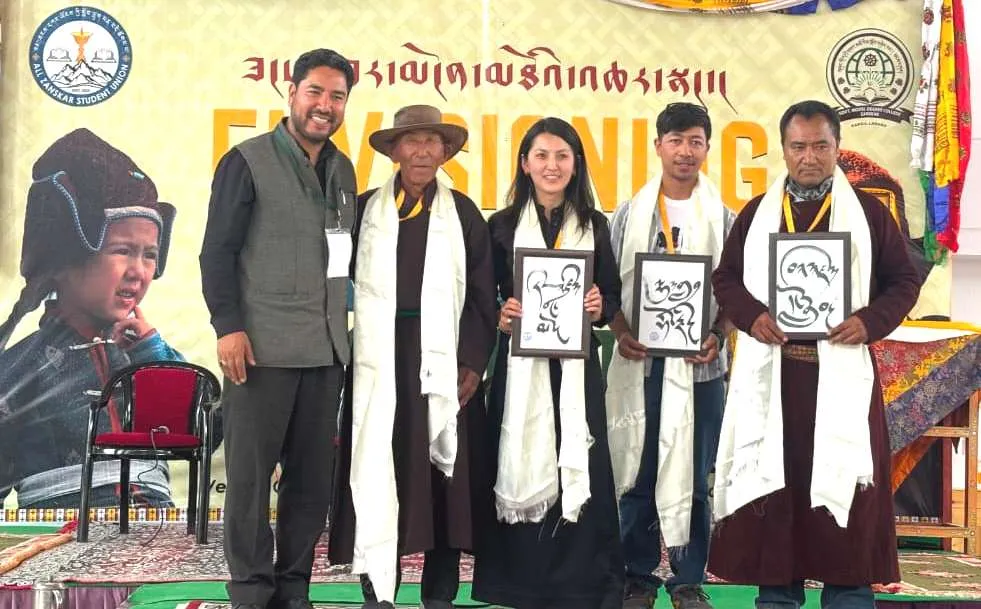
Speakers, panellists, students and stakeholders were felicitated with traditional khataks and commemorative mementoes in recognition of their contributions to the summit.
Organisers said the three-day event concluded with a shared resolve among participants to pursue a development pathway that strengthens environmental conservation, supports sustainable livelihoods and preserves the unique cultural identity of Zanskar through continued dialogue and collaborative action.