Experts, Artisans discuss sustainable Wool economy
KARGIL: Stakeholders from academia, government departments, artisan communities and development organisations convened at the University of Ladakh’s Kargil Campus for a two-day exhibition and open discussion aimed at exploring sustainable interventions to strengthen Ladakh’s traditional wool sector and expand livelihood opportunities linked to local wool production.
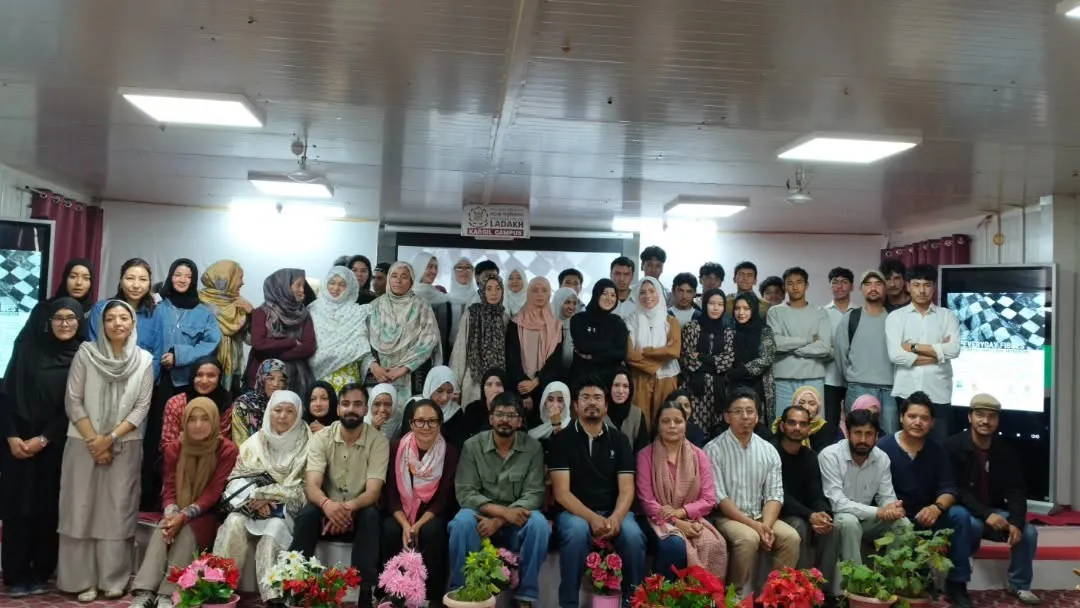
The programme, titled “Everyday Fibres – The Story of Ladakh’s Wool,” was held on July 11 and 12 at the University’s Conference Hall. It was jointly organised by the Tribal Research Institute (TRI), Ladakh, Kargil Campus of the University of Ladakh, in collaboration with ATREE, Achi Association India, Unnu Textiles and Government Degree College, Kargil.
The exhibition was conceived as an initial effort to understand the region’s wool ecosystem, foster institutional partnerships and identify pathways for promoting sustainable wool-based livelihoods in Kargil.
The event was inaugurated by Dr. Mehboob Ali, In-charge Administration, University of Ladakh, Kargil Campus. It drew participation from students of the University of Ladakh and Government Degree College, Sankoo, besides officials from the Handloom Department, local craftswomen, artisans, researchers and community representatives.
Interactive sessions during the programme provided a platform for discussions on strengthening Ladakh’s traditional wool economy through collaborative research, community engagement and skill development.
The Project Manager introduced the AMP-Himalaya Project, outlining its objective of supporting pastoral communities and revitalising local wool economies through community-driven initiatives. Wool expert Jigisha Patel shared experiences from field interventions undertaken with pastoral communities in Chibra and discussed the scope for adapting similar models in Kargil.
Deliberations centred on documenting the volume of unused sheep wool available in Kargil, preserving indigenous knowledge and traditional wool-processing skills, ensuring a sustainable supply of sheep and yak wool before launching value-addition initiatives, and developing need-based training programmes for local artisans. Participants also proposed undertaking a joint regional survey in collaboration with the Tribal Research Institute to establish baseline data on wool production, traditional practices and livelihood opportunities. The proposed survey is expected to support future planning and interventions aimed at strengthening Ladakh’s wool value chain while preserving its pastoral and craft traditions.