LEH: In a significant display of medical expertise and preparedness under challenging high-altitude conditions, doctors at Fire & Fury Corps Hospital in Ladakh successfully performed a critical limb-saving vascular procedure on a 34-year-old civilian official, preventing the loss of his right arm.
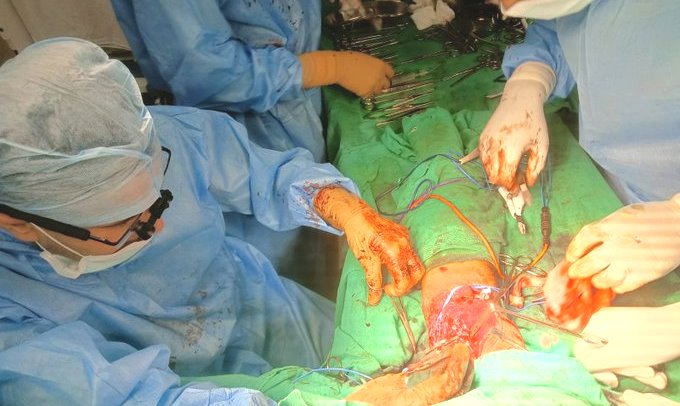
The patient, who is posted in Ladakh, sustained multiple deep lacerations to his right upper limb, resulting in a complete transection of the brachial artery. The serious vascular injury had left the limb at imminent risk of acute ischemia and eventual amputation, making urgent intervention essential.
The procedure assumed added significance as it was performed in a high-altitude setting without a Vascular Surgeon immediately available. Faced with the critical nature of the injury, the medical team undertook timely surgical intervention, relying on clinical expertise, adaptability and coordinated decision-making.
During the surgery, the damaged arterial segment was reconstructed using a vein graft harvested from the patient’s leg. The graft restored continuity of the brachial artery, thereby re-establishing blood flow and perfusion to the affected limb.
The successful restoration of arterial circulation ensured that the injured arm was preserved and the patient was spared a potentially devastating amputation.
The case highlights the importance of rapid assessment, timely surgical decision-making and multidisciplinary coordination in managing life- and limb-threatening emergencies, particularly in geographically remote and high-altitude locations such as Ladakh.
The successful procedure also demonstrates the ability of military medical facilities to adapt to complex clinical situations where specialised expertise may not always be immediately available. The coordinated efforts of the medical team enabled a sophisticated vascular reconstruction to be undertaken despite the challenging circumstances.
The intervention at Fire & Fury Corps Hospital underscored the crucial role of preparedness, teamwork and clinical adaptability in ensuring that patients in remote high-altitude regions have access to potentially limb-saving emergency care.
The successful outcome not only preserved the patient’s limb but also stands as an example of the medical capabilities and commitment of the healthcare teams serving in some of the most demanding operational environments in the country.