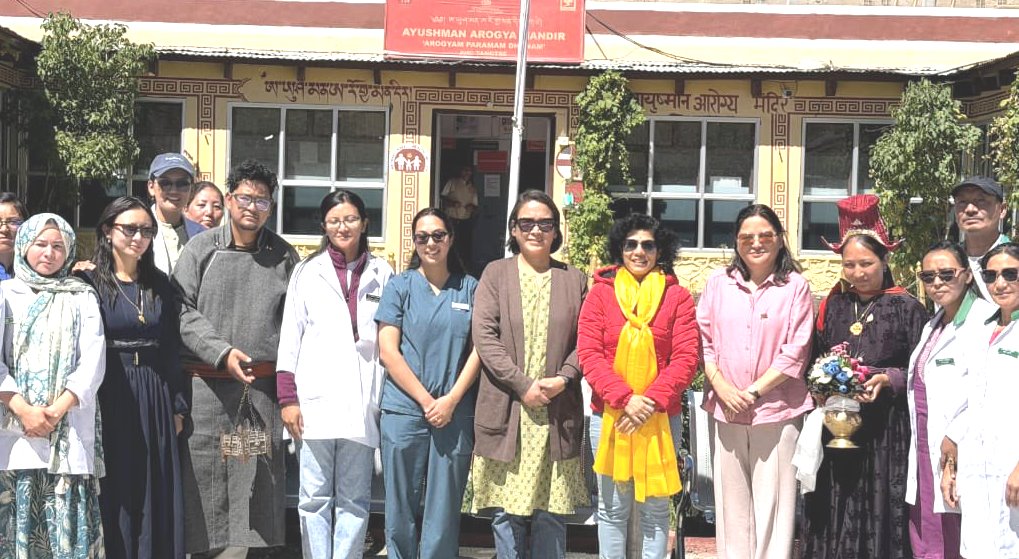
Aradhana Patnaik, Addl Secretary and MD NHM, visited Ayushman Arogya Mandir Tangtse Primary Health Centre to review healthcare delivery on the ground.
LEH: Healthcare services in one of Ladakh’s most remote and high-altitude regions received a major push as Aradhana Patnaik, Additional Secretary and Mission Director, National Health Mission (NHM), visited the Ayushman Arogya Mandir Tangtse Primary Health Centre (PHC) in Changthang to review healthcare delivery on the ground.
At an altitude of around 13,000 feet and nearly 126 km from the nearest city, the Tangtse health facility serves as a critical lifeline for residents as well as tourists and construction workers travelling through the remote region.
According to the Ministry of Health and Family Welfare, the facility caters to more than 50 patients daily, underlining the growing demand for healthcare services in the high-altitude area.
The Tangtse PHC is currently being upgraded into a District Hospital by the UT Administration, a move that is expected to significantly strengthen access to medical and emergency services for communities living across Changthang.
The facility routinely handles cases associated with the region’s difficult terrain and extreme altitude. High-altitude sickness and road accidents are among the common cases requiring medical attention and emergency care.
Patnaik’s visit focused on assessing healthcare services and understanding the challenges faced in delivering medical care in the difficult high-altitude environment.
The Ministry said the visit reflected the government’s emphasis on ensuring that healthcare delivery reaches even the most remote settlements and that services are strengthened through ground-level assessment and intervention.
The proposed upgradation of the Tangtse PHC assumes particular significance for Changthang, where vast distances, harsh climatic conditions and high altitude can make timely access to advanced medical care difficult.
The initiative is part of the broader effort to bring quality healthcare closer to people living in remote and high-altitude settlements of Ladakh, reinforcing the objective of ensuring that geographical remoteness does not become a barrier to essential healthcare.