NEW DELHI: India has recorded a 38 per cent decline in tuberculosis (TB) mortality since 2015, the highest ever reduction, surpassing the global reduction of 35 per cent, while achieving a treatment success rate of 94 per cent among patients with drug-susceptible TB, according to the World Health Organization’s (WHO) Global Tuberculosis Report 2026 released on Thursday.
The report stated that India’s estimated TB mortality rate declined from 28 deaths per lakh population in 2015 to 18 per lakh in 2025, reflecting improvements in early detection, diagnosis, treatment and nutritional support.
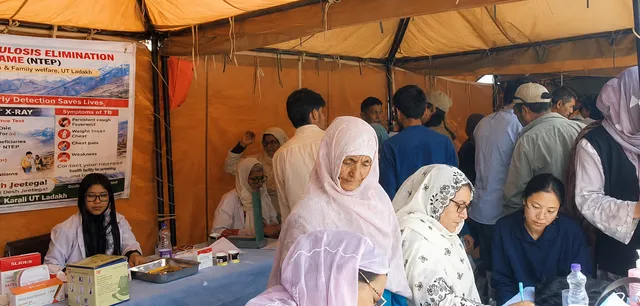
A major driver of the country’s efforts has been the TB Mukt Bharat Abhiyaan, under which more than 25 crore people were brought under the ambit of intensified screening between December 7, 2024, and November 8, 2026.
According to the Union Health Ministry, over 11 crore chest X-rays and more than three crore nucleic acid amplification tests (NAAT) were conducted during this period, leading to the identification of 48.64 lakh new TB cases. Of these, 14.97 lakh were asymptomatic cases, highlighting the importance of proactive screening in detecting infections that might otherwise remain undiagnosed.
The campaign was initially launched on December 7, 2024, in 347 high-priority districts across 33 states and Union Territories before being expanded nationwide. A second intensified 100-day campaign was launched on March 24, 2026, focusing on 1.58 lakh high-risk villages and wards, congregate settings and vulnerable populations.
The ministry attributed the decline in mortality to interventions under the National TB Elimination Programme (NTEP), including AI-enabled chest X-rays, rapid molecular diagnostics, prompt treatment initiation and nutritional assistance through the Ni-kshay Poshan Yojana and Ni-kshay Mitra initiative.
Technology is also playing an increasingly important role in India’s TB response, with AI tools being deployed to identify disease hotspots and predict high-risk cases likely to experience adverse outcomes. The Ni-kshay digital platform facilitates patient tracking, treatment monitoring and programme management.
The government said 96 per cent of the funding requirements for the TB programme were being met through domestic resources, reflecting the country’s investment in its elimination efforts.
Community participation has also been strengthened through the involvement of Panchayati Raj institutions, civil society organisations, healthcare providers and corporate partners. As many as 67,933 panchayats were declared TB-free in 2025.
Meanwhile, the Indian Council of Medical Research-National Institute for Research in Tuberculosis (ICMR-NIRT) conducted a nationally representative TB prevalence survey in 2025. Its findings have been shared with the WHO and are currently under technical discussion. The WHO is expected to publish an updated country profile for India following the assessment.