LEH: The need for greater use of artificial intelligence and digital healthcare systems, along with stronger legal safeguards for medical professionals and hospitals, emerged as major themes at the two-day mid-term conference of the Jammu & Kashmir State Chapter of the Association of Surgeons of India (JAKASI) in Leh.
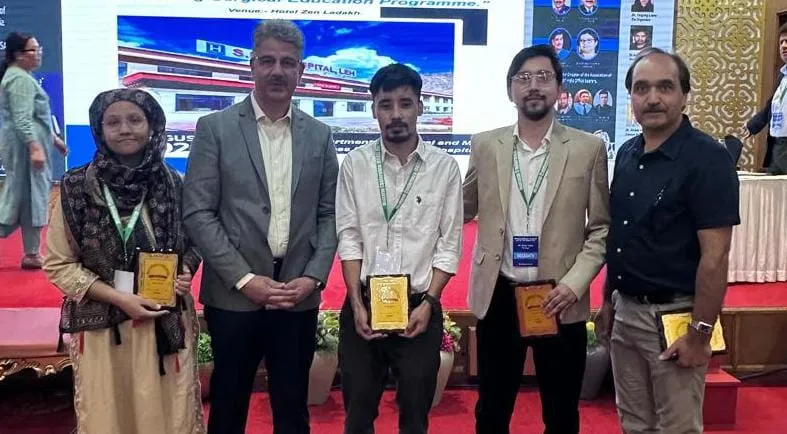
Held on August 22 and 23 at Hotel Zen, the conference brought together surgeons and healthcare professionals from Ladakh, Jammu and Kashmir, Delhi, Mumbai, Ahmedabad and other parts of the country for discussions on surgery, patient safety, medical ethics, healthcare delivery and emerging technology.
The conference was organised under the leadership of Dr Tashi Motup of S.N.M. Hospital, Leh, and inaugurated by Health Secretary, UT Ladakh, Dr Laltinkhuma Franklin, IAS.
A session on “AI-Powered Digital Marketing & Patient Acquisition Strategies for Doctors and Hospitals”, delivered by digital marketing and branding expert Dr Naresh Pandya, focused on how technology is changing the way patients search for doctors, hospitals and specialist care.
Pandya discussed the use of AI in patient communication, appointment scheduling, follow-up systems and digital outreach, besides its potential to reduce routine administrative work and improve communication between healthcare institutions and patients.
The discussion assumed particular relevance for Ladakh, where geographical distance and difficult terrain can pose challenges in accessing specialised medical care. The conference noted that digital platforms and AI-based systems could help connect patients with specialists and healthcare institutions beyond their immediate locations.
The conference also put the safety of healthcare workers under focus.
Prof. Dr Rajesh Shah, Founder President, Federation International Law, Medicine Ethics & Innovation, Ahmedabad, spoke on violence against healthcare workers and hospitals, stressing the need for a safe working environment for doctors, nurses, paramedical staff and other healthcare personnel.
Shah called for stronger legal and institutional safeguards and advocated consideration of a special law in Ladakh for protection of healthcare workers and healthcare institutions.
The conference provided doctors from Ladakh an opportunity to engage with specialists from across the country and exchange knowledge on surgical practices, medical cases, technology, patient care and emerging healthcare systems.
Among those attending were Prof. Nazir A. Wani, Vice President, J&K Chapter of the Association of Surgeons of India; Dr Shams ul Bari, Secretary, J&K Chapter of ASI; Prof. Dr Rajesh Shah; Dr Tashi Motup; and Dr Padma Diksit of S.N.M. Hospital, Leh.
The organisers said such professional interaction could support collaboration in specialised healthcare, training, research and telemedicine, while strengthening links between healthcare institutions in Ladakh and medical centres elsewhere in the country.
The two-day conference concluded with emphasis on modern healthcare technology, professional collaboration, improved patient services and a safer working environment for healthcare professionals.