KARGIL: Nearly 47 years after the establishment of Kargil Forest Division in 1979, the Forest Department, Ladakh, has initiated the process of preparing its first comprehensive Working Plan, seeking scientific assessment of forest resources, biodiversity conservation, plantation development and sustainable management of the region’s fragile high-altitude ecosystem.
The initiative took shape at a stakeholder consultation convened by the Forest Department at the Conference Hall, Baroo, on Thursday, where government departments, academic institutions and conservation organisations were invited to contribute technical inputs and recommendations for the proposed plan.
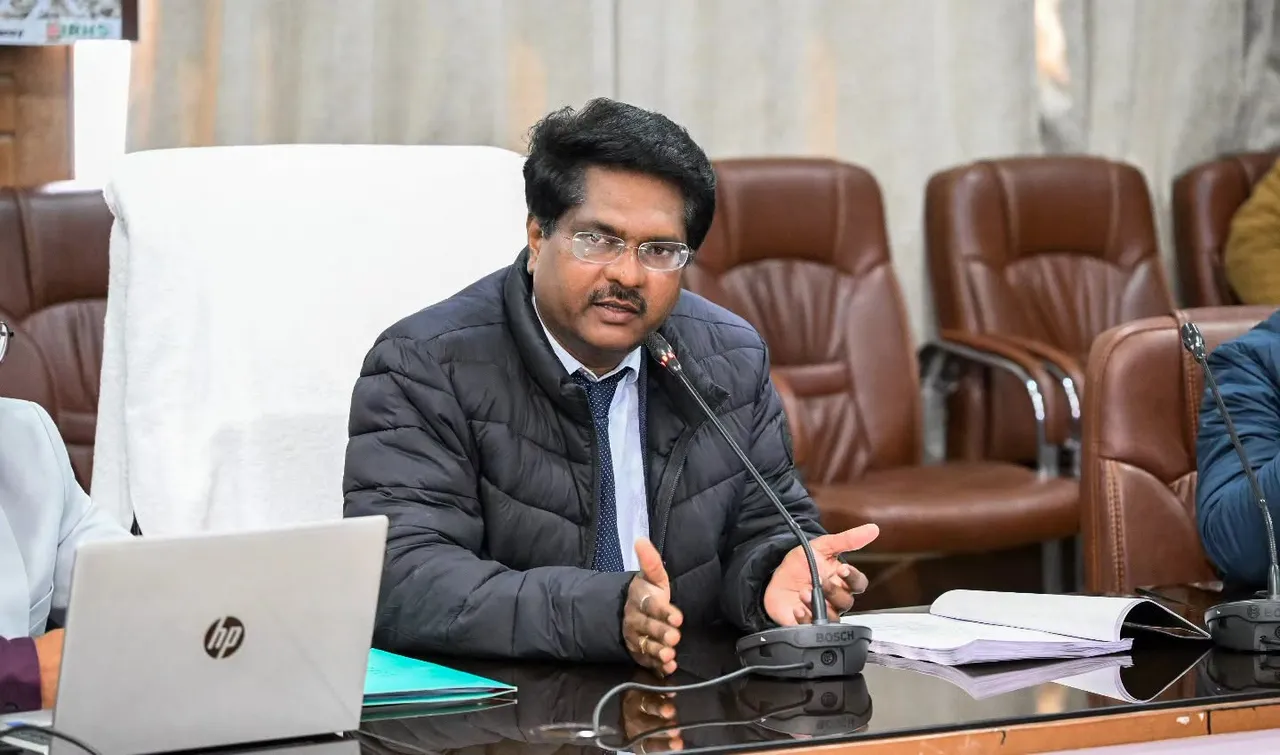
Chaired by the Additional Principal Chief Conservator of Forests (APCCF), Ladakh, the meeting brought together representatives of the University of Ladakh, Survey of India, World Wide Fund for Nature (WWF), Himalayan Brown Bear Trust and various government departments.
Addressing the gathering, the APCCF stressed the need for scientific forest management, accurate land records, forest mapping and biodiversity conservation, pointing to Ladakh’s limited forest cover and the need to protect existing vegetation while expanding tree cover in ecologically suitable areas.
The proposed Working Plan will cover forest resource assessment, land classification, biodiversity documentation, plantation development, forest protection, infrastructure, agroforestry and sustainable timber production. It will also examine the management of sea buckthorn, community participation and climate-responsive conservation strategies suited to Ladakh’s fragile mountain environment.
The Divisional Forest Officer and Wildlife Warden, Kargil, outlined the proposed framework, comprising a general description of the forest division and a management plan based on scientific prescriptions. Government departments and institutions were asked to provide land records, maps, soil data, vegetation inventories, wildlife information and relevant research findings.
The University of Ladakh offered technical assistance in documenting local flora, biodiversity and soil characteristics. Its Geography Department highlighted the application of Geographic Information Systems (GIS) and remote sensing in forest mapping and monitoring, while the Forest Survey of India assured support through available maps and spatial data.
The Agriculture Department called for greater emphasis on agroforestry and improved availability of quality poplar planting material. Discussions also covered plantation survival, enhancement of tree cover and convergence with relevant government schemes.
Livestock grazing pressure, particularly in Drass and the Suru Valley, emerged as another concern, with the Animal Husbandry Department flagging fodder shortages and inadequate grazing pastures. Participants discussed pasture improvement, fodder development and measures to mitigate human-wildlife conflict.
Representatives of the Himalayan Brown Bear Trust and WWF stressed community-based conservation, wildlife conflict mitigation, biodiversity documentation and identification of wildlife hotspots. The discussions also explored better management of sea buckthorn and opportunities to link conservation initiatives with local livelihoods and employment generation.
Technical presentations on Biodiversity Management Committees, People’s Biodiversity Registers and Normalized Difference Vegetation Index (NDVI) analysis highlighted the importance of community participation, satellite-based assessment and scientific monitoring in preparing the plan.
The APCCF emphasised that the proposed Working Plan must balance ecological conservation with local livelihood requirements through interdepartmental coordination, reliable scientific data and field verification. Inputs received during the consultation will be examined for incorporation into the plan, subject to applicable legal provisions and technical requirements.