LEH: The Ladakh administration has directed all Food Business Operators (FBOs) across the Union Territory to ensure strict and continuous compliance with the Food Safety and Standards Act, 2006, warning that serious and repeated violations could invite penalties, licence action and prosecution.
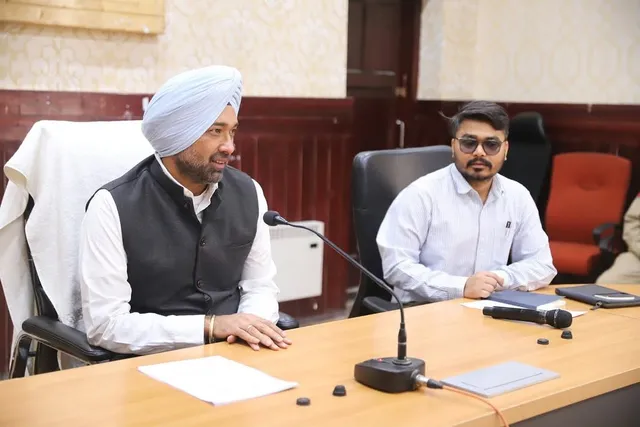
The directive was issued by Commissioner of Food Safety, UT Ladakh, Dr Laltinkhuma Franklin, through a circular of the Department of Health and Medical Education. The administration has stressed that food safety is a continuing statutory responsibility and cannot be treated merely as a requirement during inspections.
Ladakh currently has 428 FSSAI licence holders and 8,355 FSSAI registration holders, according to the circular. All FBOs have been directed to maintain valid licences or registrations and display the relevant certificate at their business premises.
The administration has directed food businesses to comply with prescribed hygiene and sanitation standards, including cleanliness of premises, personal hygiene of food handlers, prevention of cross-contamination, safe storage, temperature control, use of potable water, pest control and proper waste disposal. Raw and cooked food must also be appropriately segregated.
Licensed establishments have further been asked to maintain an appropriate Food Safety Management System (FSMS). Food handlers must receive suitable training, while persons suffering from illnesses that could affect food safety should not be engaged in food handling activities.
The circular prohibits the manufacture, storage, distribution or sale of unsafe, sub-standard, misbranded, adulterated or contaminated food, as well as products that have crossed their prescribed shelf life. Misleading or deceptive claims on food labels and advertisements have also been prohibited.
Penalties for violations vary according to their nature and gravity. Certain offences, including misleading advertisements, furnishing false information and carrying out a food business without the required licence, can attract penalties of up to Rs 10 lakh. Cases involving unsafe food may also attract imprisonment and fines depending on the consequences.
The Food Safety Department has announced a zero-tolerance approach towards deliberate and serious violations affecting public health. Enforcement measures may include inspections, sampling and analysis, seizure of unsafe food, prohibition of sale, suspension or cancellation of licences, statutory penalties and prosecution.
Food Safety Officers will conduct inspections and verify compliance, while FBOs have been directed to review their practices immediately and rectify deficiencies.