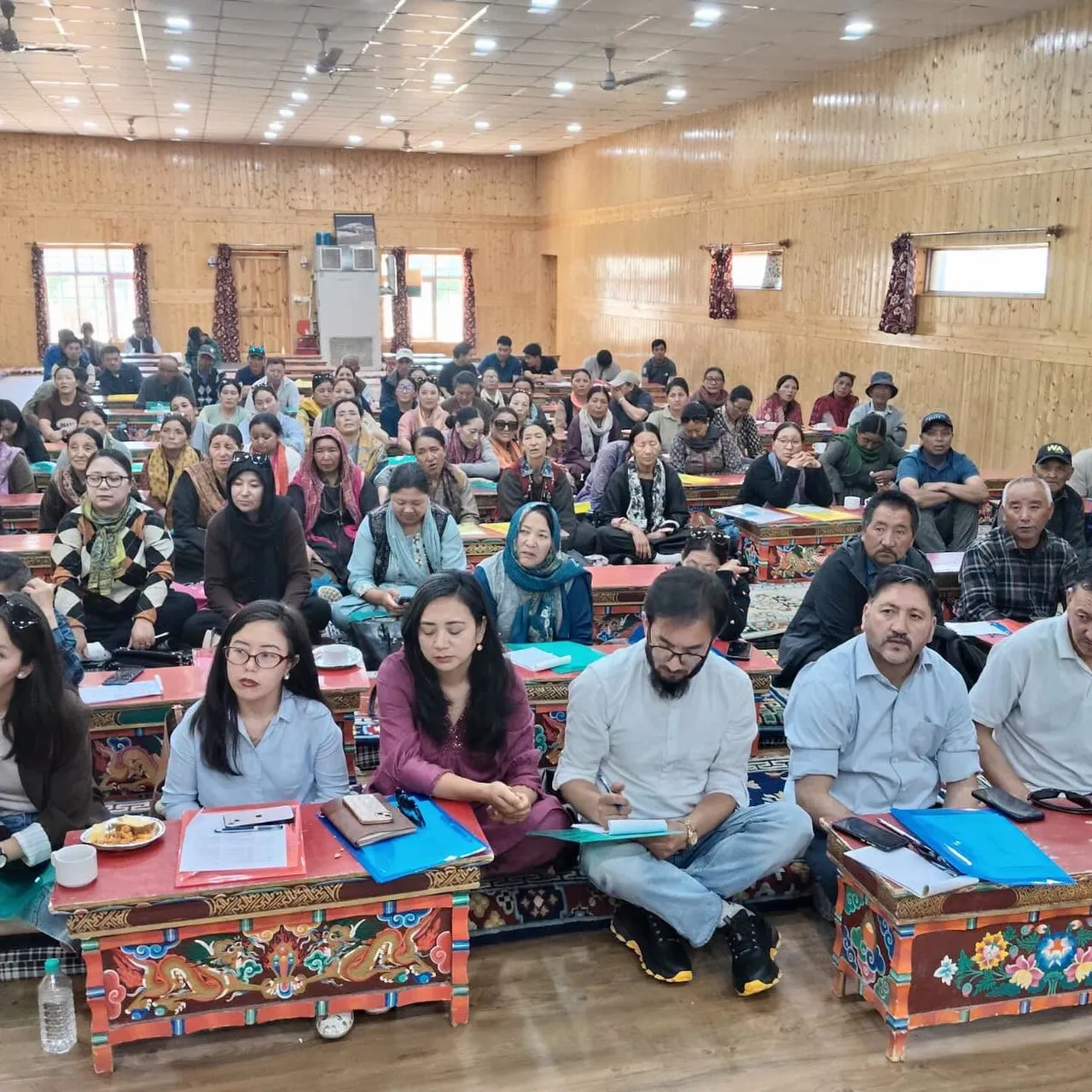
LEH: The Union Territory of Ladakh has initiated the process of preparing a comprehensive organic branding and marketing strategy, with policymakers, scientists, entrepreneurs and sectoral experts converging in Leh to chart a roadmap for expanding market access, strengthening value addition and creating sustainable livelihood opportunities for farming communities.
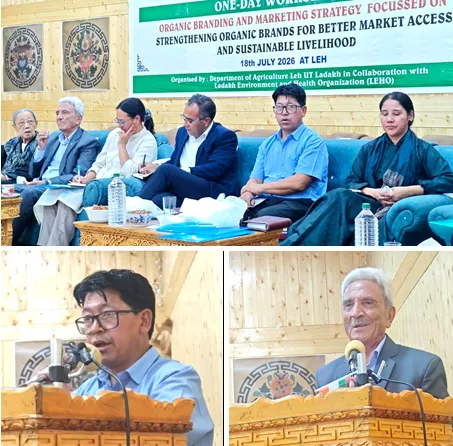
The one-day workshop, organised by the Department of Agriculture, UT Ladakh, in collaboration with the Ladakh Environment and Health Organisation (LEHO) at Sheynam Community Hall, centred on developing a draft strategy to enhance the visibility and competitiveness of Ladakh’s organic produce through branding, certification, packaging and improved market linkages.
The draft framework took shape during a panel discussion chaired by Dr. Tsering Stobdan, Scientist at DIHAR, where participants deliberated on measures required to establish a stronger organic identity for Ladakh. The discussions examined certification standards, branding mechanisms, value addition, packaging, marketing channels and institutional support, with the recommendations subsequently presented before participants for feedback before their finalisation.
Opening the workshop, Deputy Director, Agriculture Leh, Tashi Dolma said organic certification remains central to building consumer confidence and enabling Ladakh’s agricultural products to access competitive markets. She stressed that strengthening certification systems would help local producers secure better market opportunities while reinforcing the credibility of organically grown produce.
The technical sessions drew on experiences from entrepreneurs and development practitioners working in the sector. Thinles Norbu, entrepreneur and founder of Ladakh Basket, shared practical insights into branding and marketing locally produced commodities, while Tsewang Norbu of TATA Trust presented case studies on market development and branding models that could be adapted to Ladakh’s agricultural ecosystem.
The workshop also explored opportunities beyond crop cultivation. Animal Husbandry Officer, Leh, Dr. Stanzin Ladol, outlined dairy expansion schemes and emerging prospects in the livestock sector, while District Sheep Husbandry Officer Dr. Tsewang Morup highlighted government interventions supporting sheep and goat rearing, particularly in wool and manure production as complementary sources of rural income.
Addressing the gathering, LEHO President Dr. Mohammed Din underscored the role of sustainable agriculture in strengthening rural livelihoods, while Chief Horticulture Officer, Leh, Kunzang Wangmo, highlighted Ladakh’s distinct agro-climatic conditions and the potential for expanding organic horticulture across the region.
The programme concluded with a vote of thanks by LEHO Deputy Director Tashi Thokmat, who acknowledged the contributions of government departments, resource persons, partner organisations and participants towards preparing an integrated strategy for the Union Territory.
The workshop reflects the administration’s broader effort to align Ladakh’s organic farming potential with market-driven interventions by creating a coordinated framework that links production, branding, certification and marketing, while improving income prospects for farmers and rural entrepreneurs.