15,000 ‘A-grade’ stems from high-altitude Choglamsar flower field dispatched to Delhi, Mumbai and Chandigarh; initiative aimed at creating livelihood opportunities through commercial floriculture
- TIMELINE
- June 22, 2026: Foundation of the flower field laid
- July 16, 2026: Lilium plantation began
- September 17, 2026: Flower field inaugurated
- September 29, 2026: First consignment of 15,000 stems dispatched
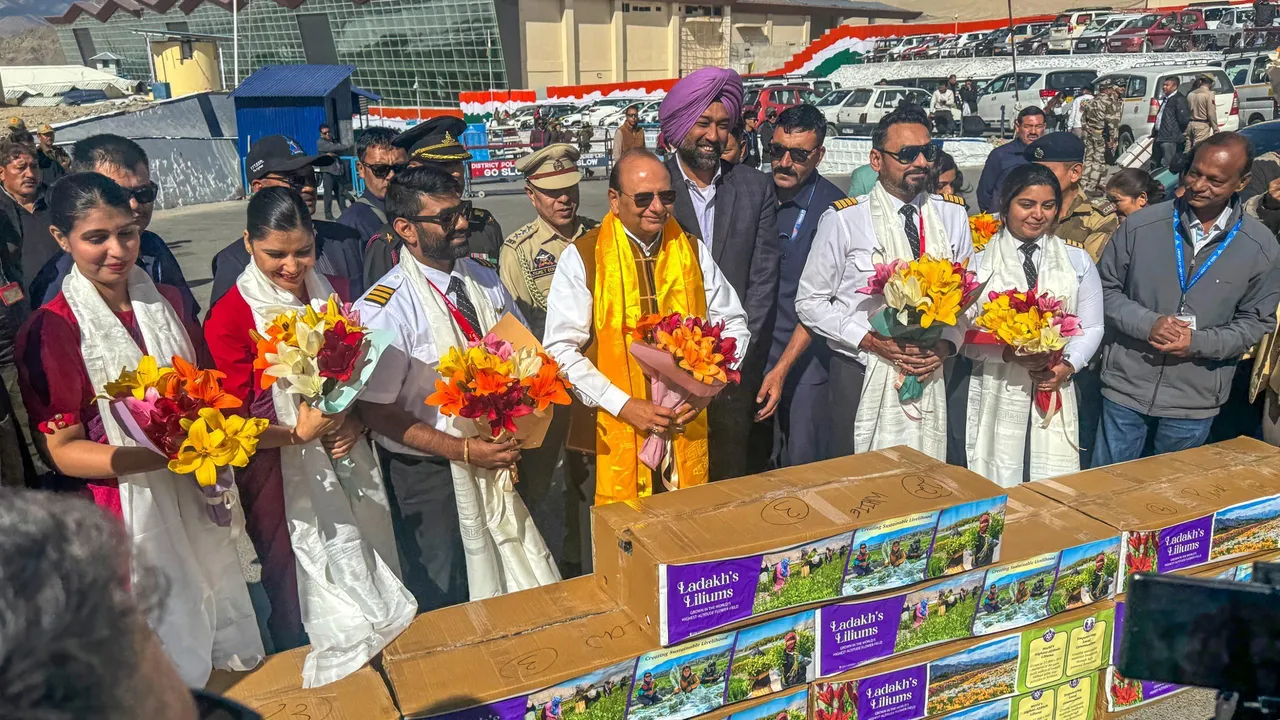
LEH: Lieutenant Governor Vinai Kumar Saxena on Tuesday flagged off the first consignment of 15,000 Ladakh-grown “A-grade” Lilium stems from Leh Airport for national flower markets, marking the beginning of commercial distribution of flowers cultivated at the high-altitude Choglamsar flower field.
The consignment, comprising red, pink, white, yellow and orange Liliums, is being sent to Delhi, Mumbai and Chandigarh, where the flowers will be marketed as premium cut flowers. The Liliums have been cultivated at an altitude of 10,600 feet at what the administration describes as the world’s highest-altitude flower field.
The initiative is aimed at opening a new avenue of livelihood through commercial floriculture while diversifying agricultural activity in Ladakh. The administration has also projected the expansion of flower cultivation as a means of altering the visual landscape of the Union Territory, traditionally associated with its rugged mountains and sparse vegetation.
The “A-grade” Liliums have four to five buds per stem and command a premium in the domestic market. According to the administration, Lilium stems are sold for around Rs 150 to Rs 200 each in domestic retail markets and are in demand in the floral and hospitality sectors. The flowers have a shelf life of five to seven days.
Saxena described floriculture as an alternate livelihood opportunity for farmers and youth, linking the initiative to agricultural diversification and the creation of income-generating opportunities in the region.
The project has also generated local employment at the cultivation site. Fifteen local women have been engaged in cutting, sorting and packaging the flowers and are being paid Rs 900 per person per day. A qualified local botanist has been assigned the task of marketing the flowers in national markets.
At the flag-off ceremony, the Lieutenant Governor presented bouquets of Ladakh-grown Liliums to the crew members carrying the first consignment, describing the gesture as symbolic of the new commercial initiative.
The administration plans to take the high-altitude floriculture model beyond Leh. Saxena has directed the Deputy Commissioners of the other districts to identify land for flower cultivation and replicate the model in their respective areas.
The Deputy Commissioners of Kargil, Drass, Sham, Changthang and Zanskar have been directed to identify at least 20 acres of land in each district for developing flower fields. The administration intends to eventually bring at least 200 acres under high-value flower cultivation by next year, with Lilium and other high-value flowers proposed to be grown across Ladakh.
The expansion is also being linked to the tourism potential of the flower fields. The administration said the cultivation of large stretches of flowering plants could add a new visual attraction to Ladakh and complement its tourism economy.
The Leh flower field, which has more than 25 lakh flowers, was developed within two months. The foundation was laid on June 22, plantation began on July 16, and the field was inaugurated on September 17, with the project completed in 60 days.
Since being opened to the public, the flower field has drawn hundreds of visitors every day, according to the administration.
The dispatch of the first commercial consignment therefore places the Leh project at a new stage, moving it from a high-altitude cultivation experiment towards supplying premium flowers to markets outside Ladakh.