Police step up action against drug supply chains and local peddling network
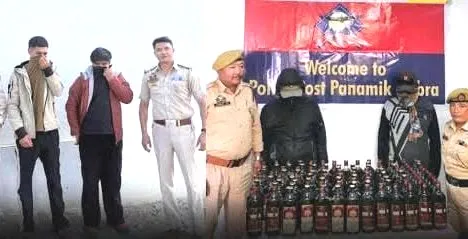
LEH: In an expanding offensive against narcotics smuggling and drug peddling, Ladakh Police have seized at least 285.17 grams of specified narcotic substances, besides 6,146 psychotropic tablets, through a sustained series of operations across Leh, Kargil and Drass over the past three months, exposing suspected supply channels from outside the Union Territory and alleged attempts to push drugs into local markets.
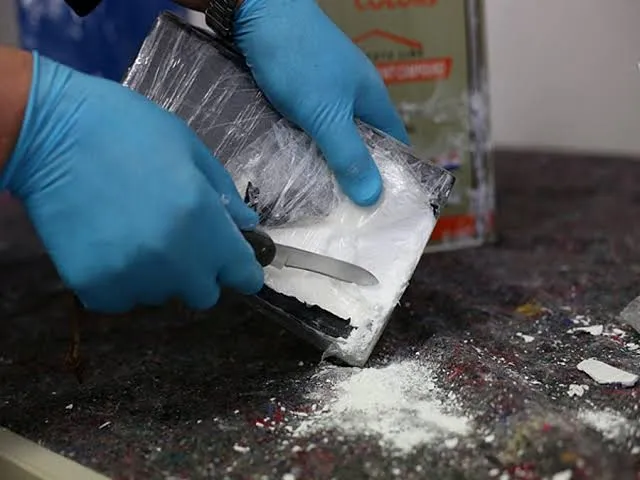
The enforcement trail, spanning airport interceptions, highway checkpoints, residential searches and night patrols, has yielded at least 82.17 grams of heroin and heroin-like substances, 111 grams of charas-like substances and 92 grams of ganja in cases where specific quantities have been disclosed. The recovery of thousands of psychotropic tablets from a residential premises in Choglamsar has further brought the suspected illicit circulation of pharmaceutical drugs into the police scanner.
The figures, compiled from the individual operations detailed in Ladakh Police and Anti-Narcotics Task Force (ANTF) disclosures, represent the minimum quantified recoveries available in the supplied record and do not include cases where the seized quantity has not been specified.
The crackdown marks an increasingly multi-layered policing response to the narcotics challenge in Ladakh, with enforcement agencies targeting not merely street-level possession and peddling but also suspected transportation routes, supply intermediaries and assets linked to repeat offenders.
One of the most consequential recoveries came on October 19, when Leh Police arrested 21-year-old Jigmet Chosgyal, a resident of Chumathang, at Kushok Bakula Rimpochee Airport after his arrival from Delhi. A search of his carry bag led to the recovery of 21.02 grams of heroin, described in police-linked reporting as the largest heroin seizure in Ladakh up to that point. Preliminary interrogation reportedly pointed towards procurement from the Nayagaon area.
Airport surveillance subsequently yielded further recoveries. On October 27, ANTF seized 3.5 grams of a heroin-like substance from a passenger, with preliminary investigation indicating that the consignment had allegedly been routed from Chandigarh through an air traveller. On November 6, another 3.5 grams of a heroin-like substance was recovered from Mohd Hussain of Diskit at Leh Airport, prompting the police to issue a public advisory against carrying parcels entrusted by strangers.
The highway network has also come under intensified surveillance. On November 3, a joint ANTF Kargil and Police Station Kargil team intercepted a vehicle arriving from the Srinagar side at Bypass Bridge and recovered three grams of heroin and 92 grams of ganja. Three persons were identified in connection with the case. On November 6, ANTF recovered another three grams of heroin from Tenzin Chodar of Choglamsar along the Leh-Phyang Road.
Earlier operations had exposed suspected local distribution channels. On September 17-18, ANTF arrested Jaskreet Singh, a Ludhiana resident working at a Leh salon, after recovering 13.13 grams of a heroin-like substance. Preliminary investigation indicated alleged supply to local youth.
On September 19, Kargil Police arrested Mohd Mustafa of Chiktan and Arif Nabi of Bhimbet, Drass, in a heroin-related case. On September 24, ANTF arrested Stanzin and Tsering Stobgais at SNM Hospital in Leh and recovered 12.20 grams of heroin.
The pharmaceutical drug seizure at Choglamsar on October 1 was another major development. ANTF recovered 6,146 Spasmo and Alprazolam tablets during a residential search, registering FIR No. 17/2026 under Sections 8/22 of the NDPS Act.
In parallel operations, District Police Drass recovered 81 grams of a charas-like substance from a rented room at Drass Market on October 12. On the same day, Kargil Police seized approximately 30 grams of a similar substance near Iqbal Bridge during patrolling, taking the search forward in the presence of an Executive Magistrate after issuance of a notice under Section 50 of the NDPS Act.
The August operations had already set the tone for the intensified campaign. ANTF intercepted a Bolero vehicle at Kharu on NH-3 and recovered 12.46 grams of heroin, arresting three persons. On September 3, another operation at Phyang Police Check Post led to the recovery of a suspected heroin consignment concealed in an Alto car’s dashboard.
Police action has also moved beyond conventional seizures and arrests to target the financial and logistical assets allegedly associated with narcotics offences. In August, Leh Police invoked Section 68F of the NDPS Act to attach assets valued at approximately Rs 2 lakh, comprising two motorcycles and six golgappa carts, belonging to a person connected with earlier ganja seizures. In a separate action, Zahid Hussain of Ranbirpora was detained under the PIT-NDPS Act on the basis of a dossier documenting repeated involvement in NDPS cases.
Additional recoveries reported during the period included approximately 10.36 grams of a heroin-like substance near Basgo and further charas-like quantities during night patrolling in Drass, although the latter quantities were not specified.
The enforcement pattern indicates that Ladakh Police are increasingly concentrating on preventing narcotics from entering the Union Territory while simultaneously pursuing suspected local distribution networks. Intelligence-led operations, coordinated naka checking, airport vigilance, residential searches and night patrolling, including joint efforts with the CRPF in parts of Kargil and Drass, have formed the backbone of the campaign.
The action also carries a wider public-interest dimension, particularly in view of police disclosures pointing towards alleged supplies to local youth. By targeting suspected carriers, intercepting consignments and invoking legal provisions for attachment of assets, the enforcement agencies are attempting to disrupt the transportation, distribution and financial infrastructure sustaining the narcotics trade.
The campaign is being pursued under the broader Nasha Mukt Abhiyan, with coordination through the Narcotics Coordination Centre (NCORD) mechanism and other agencies. Public advisories urging residents not to carry unknown parcels and to share credible information have also sought to bring community vigilance into the anti-drug effort.
However, the scale of seizures should not be mistaken for a quantified reduction in drug availability or consumption. The available police disclosures do not provide consolidated figures for total arrests, cumulative seizures across all operations or any measurable decline in street-level supply. The investigations are also yet to establish the complete extent of the suspected inter-regional supply networks.
For the police, the challenge now extends beyond individual recoveries to tracing the financiers, suppliers and local intermediaries behind the alleged trade. Sustained surveillance, follow-up investigations and action against the wider supply chain will determine how effectively the ongoing crackdown translates into preventing narcotics from reaching vulnerable sections of Ladakh’s population.