Proposed move aims to ensure systematic conservation, preservation and protection of ancient monuments, rock carvings, petroglyph sites, caves, forts and religious heritage structures
LEH: In a major step towards safeguarding Ladakh’s rich archaeological and cultural legacy, the Department of Tourism & Culture, UT Ladakh, has proposed declaring 25 historically significant sites across the Union Territory as Protected Monuments under the provisions of the Jammu and Kashmir Ancient Monuments Preservation Act, Samvat 1977 (1920 AD).
The proposed move aims to ensure systematic conservation, preservation and protection of ancient monuments, rock carvings, petroglyph sites, caves, forts and religious heritage structures spread across Leh, Sham, Nubra, Zanskar and Kargil regions.
The draft notification, issued by the Tourism & Culture Department, has been placed in the public domain, inviting comments, suggestions and objections from stakeholders and members of the public within 15 days of its publication.
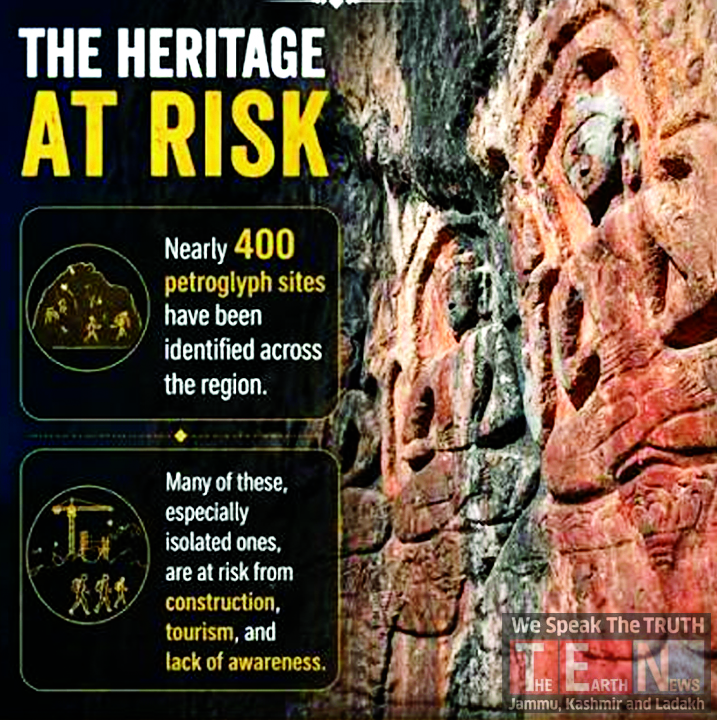
Among the prominent sites proposed for protection are ancient petroglyph sites at Sharnos, Domkhar, Lehdo, Alchi and Murgi villages, the Maitreya Buddha rock carving near Sindhu Ghat at Shey, Tingmosgang Fort, Ancient Caves at Saspol, and the Petroglyph Park at Alchi.
The list also includes several important Buddhist heritage sites of Zanskar, including Bardan Gonpa at Pipcha Village, Sani Kanikha Gonpa at Sani Village and Stongday Gonpa, along with historically significant caves and archaeological locations in Nubra Valley.
The proposed protected sites in Nubra include ancient meditation caves, rock carvings, Buddha sculptures and archaeological remains at Hunder, Zong, Digger, Tokpo and Murgi villages, besides Sumoor Fort, which contains remnants of historical significance.
In Kargil district, the notification proposes protection for the rock inscription at Yourbaltak Village and the petroglyph site at Mangmore Village, recognising the region’s contribution to Ladakh’s ancient cultural landscape.
The Department stated that declaring these sites as protected monuments would provide a legal framework for their conservation and prevent damage to valuable historical assets. The initiative comes at a time when Ladakh’s ancient rock art, monasteries, forts and archaeological remains are gaining wider recognition as symbols of the region’s unique civilisational heritage.
Members of the public, heritage experts and other stakeholders can submit their written comments and suggestions to the Administrative Secretary, Tourism & Culture Department, UT Ladakh, within the stipulated period.