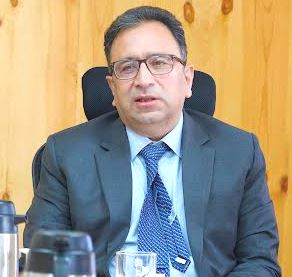
UT to adopt GPS-Based Waste Monitoring, says CS Kundra
LEH: Chief Secretary of UT Ladakh, Ashish Kundra, on Monday directed the adoption of a technology-driven and accountable solid waste management system across the Union Territory while reviewing the implementation of the Solid Waste Management Rules, 2026 and compliance with the directions of the Supreme Court on scientific waste management.
Chairing a meeting of the UT-Level Implementation Committee, the Chief Secretary assessed the progress made under the new rules and emphasized that Ladakh must move beyond periodic cleanliness drives to establish sustainable systems for waste segregation, collection, transportation, processing and disposal in both urban and rural areas.
The meeting was attended by the Divisional Commissioner; Secretaries of Health, Public Works, Tourism and Planning; Regional Director, IFS and Member Secretary of the Ladakh Pollution Control Committee (LPCC), Mandeep Mittal; Deputy Commissioner, Leh; senior officials of various departments and stakeholders, while Vice-Chancellor of the University of Ladakh and Deputy Commissioners of different districts joined virtually.
Deputy Commissioner, Leh, presented a comprehensive review of the implementation of the Solid Waste Management Rules, covering source segregation, registration of Bulk Waste Generators (BWGs), functioning of Solid Resource Management Centres (SRMCs), waste transportation systems, household-level dustbin distribution, mapping of waste collection routes and plans for deploying additional garbage collection vehicles. The presentation also outlined schedules for door-to-door and designated-point waste collection in rural areas and the status of ongoing segregation initiatives.
Regional Director and Member Secretary of LPCC, Mandeep Mittal, briefed the committee on compliance with the Supreme Court’s directions, highlighting measures such as identification of Garbage Vulnerable Points (GVPs), monitoring of Bulk Waste Generators, reporting through the Swachhtam portal, four-way segregation at source, inspection mechanisms and fortnightly compliance reporting.
Reviewing the presentations, Kundra sought district-wise details on expenditure, infrastructure requirements, the status of SRMCs, waste collection frequency, BWG registration and the remediation of Garbage Vulnerable Points. He instructed Deputy Commissioners to conduct comprehensive assessments of violations related to littering and improper waste disposal, while putting in place effective mechanisms for imposing and monitoring fines.
Stressing the importance of digital governance, the Chief Secretary directed departments to develop a robust technology-enabled monitoring framework using GPS and other digital tools to track waste collection vehicles, verify route coverage and monitor daily collection schedules. He also called for a system that would enable reporting and prompt action against illegal garbage dumping, while ensuring clear responsibility and accountability whenever scheduled waste collection is not carried out.
Kundra further directed officials to undertake a comprehensive mapping of villages, collection points and Solid Resource Management Centres to generate reliable data on waste generation, collection, transportation, processing and disposal. He said such a database would support evidence-based planning, monitoring and policy interventions.
Highlighting the need for performance benchmarking, the Chief Secretary proposed periodic district and village-level assessments based on defined waste management parameters, with findings placed in the public domain to promote transparency, accountability and healthy competition among local bodies.
The meeting also reviewed the waste management scenario in Kargil and Drass, particularly Garbage Vulnerable Points where indiscriminate waste disposal poses environmental risks and may attract wildlife. Deputy Commissioner, Kargil, informed the committee about ongoing efforts to eliminate such vulnerable locations within a stipulated timeframe.
Calling for stronger coordination among the Planning Department, municipal bodies, district administrations and other stakeholders, Kundra emphasized that effective implementation of the Solid Waste Management Rules, 2026, requires regular monitoring, accurate data, strict enforcement, technological integration and active public participation.
The meeting concluded with directions to prepare comprehensive district-wise action plans, strengthen monitoring and reporting systems, bridge infrastructure gaps and ensure sustained compliance with the Solid Waste Management Rules, 2026, as well as the directives of the Hon’ble Supreme Court.