Students seek higher university budget, sports infrastructure, exposure tours and safer transportation; allege unresolved grievances despite repeated representations
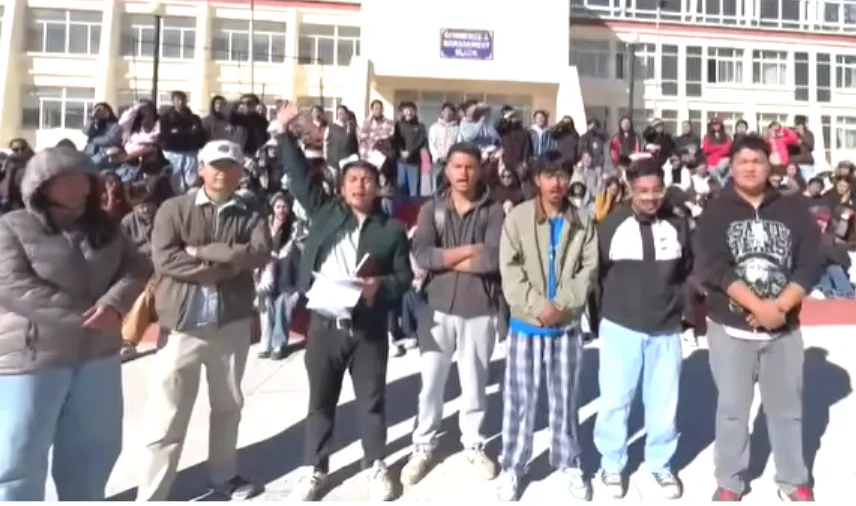
LEH: Students of the University of Ladakh’s Leh campus staged a full-day protest, raising a range of academic, infrastructural and welfare-related concerns and demanding urgent intervention by the university administration and UT authorities to address what they described as long-pending grievances.
Raising slogans in support of their demands, they highlighted shortages in sports staff, inadequate sports infrastructure, delays in fellowship payments to PhD scholars, limited opportunities for academic exposure outside Ladakh and difficulties faced by students due to late transportation.
One of the key concerns raised during the protest was the shortage of personnel in the sports department. According to the protesting students, the department has been functioning without a Physical Training Instructor (PTI) for a considerable period, despite repeated requests to the authorities. They said the department has only three professors against a requirement of at least five, affecting its functioning and the delivery of sports-related activities.
The students also expressed concern over the condition of the sports ground pitch, which they said had remained in need of repairs for nearly a year despite repeated written representations. They demanded that the pending work be completed without further delay.
Transportation emerged as another major issue, with students pointing to the difficulties faced by those travelling towards Choglamsar and adjoining areas after classes. They said buses reportedly leave around 4.40 pm or 4.50 pm, with the journey towards Choglamsar extending until around 6 pm. Consequently, students may reach home as late as 8 pm, leaving them to negotiate darkness and a shortage of transport options.
Questioning the arrangements for students returning home late in the evening, the protesters raised concerns over their safety and asked who would be held accountable if any student encountered an untoward incident. They called for a review of transportation arrangements to ensure that students can return home safely and without undue delay.
PhD scholars’ fellowship issues also figured prominently in the demonstration. The students alleged that eligible non-JRF research scholars had not received their university fellowship for nearly a year. They referred to UGC-related fellowship guidelines and demanded timely disbursement of financial assistance.
The protesters further maintained that the existing fellowship amount of around Rs 8,500 was inadequate, particularly in view of the cost of living and other expenses associated with pursuing research in Ladakh. They sought an enhancement of the amount and a more reliable system for the timely release of funds, saying financial uncertainty was adding to the difficulties faced by research scholars.
Another major grievance concerned opportunities for academic exposure outside Ladakh. The students argued that participation in educational tours, field visits and exposure programmes is important for broadening academic understanding, providing practical experience and enabling students to interact with institutions and professionals beyond the Union Territory.
However, they alleged that the Leh campus had faced restrictions on such tours, particularly when the proposed expenditure exceeded Rs 500, with budgetary constraints cited as a reason. They also claimed that departments based in Kargil had undertaken exposure visits outside Ladakh, while similar opportunities for Leh campus departments were being denied.
The students demanded a transparent and equitable policy for educational tours and exposure programmes, arguing that students should not be deprived of academic opportunities because of budgetary limitations or differences in the treatment of campuses.
The protest brought together concerns extending beyond individual facilities to the broader question of funding and institutional support for the University of Ladakh. The students maintained that inadequate budgetary allocations ultimately affect teaching, research, extracurricular activities and the overall educational experience.
Seeking early resolution of their demands, the protesters appealed to the UT administration and the university’s Chancellor to intervene, increase the university’s budget and direct the administration to address the pending issues.
The students said their demonstration was intended to draw attention to problems that they claimed had persisted despite repeated representations, and called for concrete action rather than further assurances. There was no response from the university administration included in the protest transcript. The allegations and demands could not be independently verified from the material provided.