





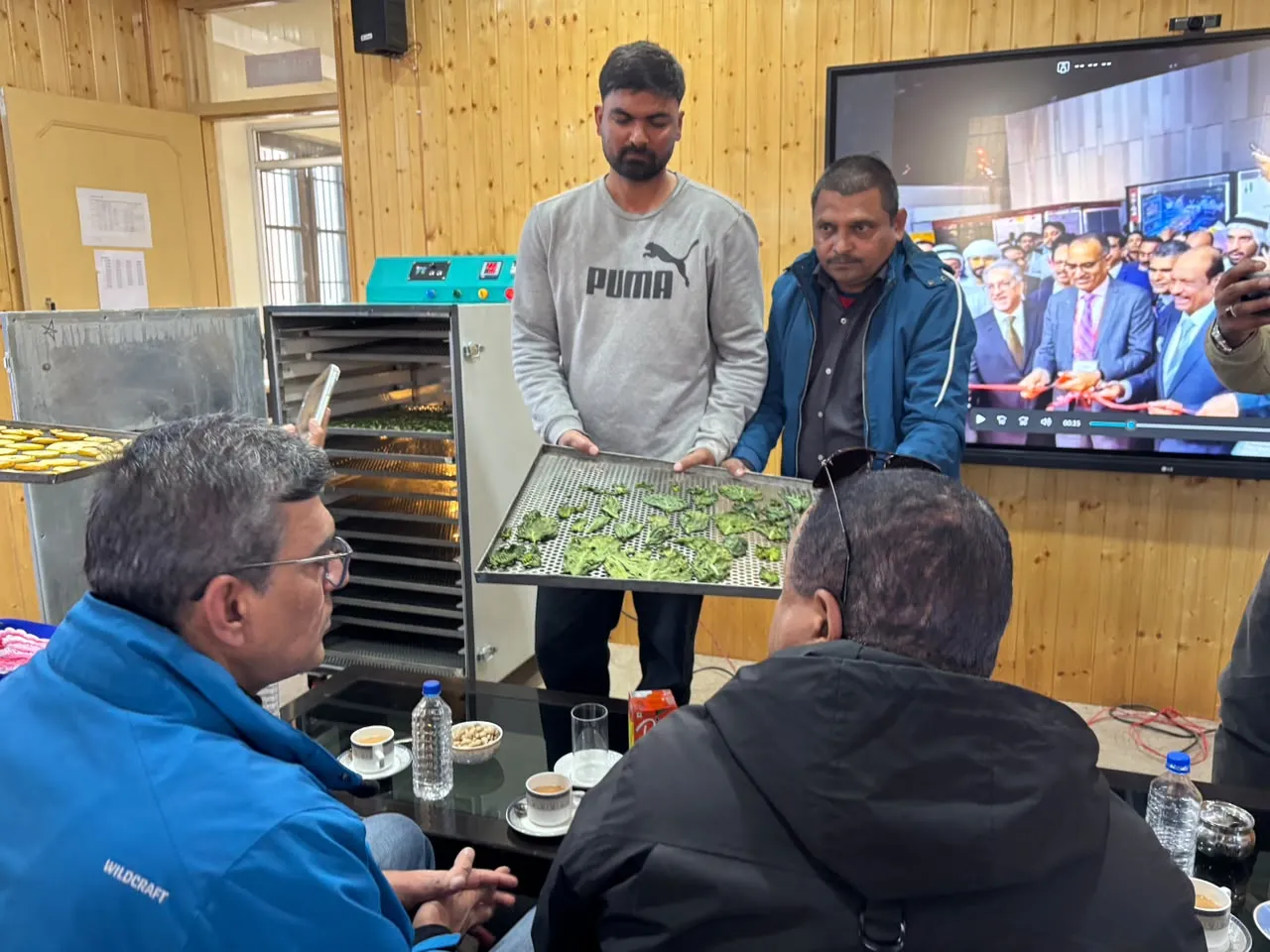
KARGIL: With a focus on reducing post-harvest losses and improving the market value of locally grown produce, the University of Ladakh has launched an initiative to test infrared dehydration technology for processing apricots, apples and sea buckthorn — three important horticultural products of the region.
The School of Horticulture Science and Technology (SHS&T), Kargil Campus, inaugurated an Infrared Dehydration Technology (IRHS™) system at Purig Guest House on October 30, opening the way for research into modern food-processing methods suited to Ladakh’s challenging agro-climatic conditions.
The system has been provided by Smart City Solutions India Pvt. Ltd. to facilitate research, demonstrations and the promotion of improved techniques for drying fruits and vegetables. Under a proposed collaborative research initiative, SHS&T and the company will study the dehydration of locally available produce, with particular attention to apricot, apple and sea buckthorn.
The research will seek to establish suitable drying temperatures, processing durations and commodity-specific dehydration protocols. A scientific and technical report will subsequently be prepared to guide farmers, entrepreneurs, food processors and buyers in adopting appropriate processing practices.
The initiative seeks to address a persistent challenge for horticultural producers in remote regions: preserving perishable produce and extending its shelf life to create opportunities for value addition and wider market access.
Speaking at the inauguration, SHS&T Dean Prof. Faizan Ahmad stressed the need to bring scientific research and technological innovation into horticulture, particularly in view of Ladakh’s difficult growing conditions. He also underlined the importance of collaboration between academic institutions and industry.
Brijendra Singh, founder of Smart City Solutions India Pvt. Ltd. and innovator and patent holder of the IRHS™ technology, explained its working principles and potential applications in processing fruits, vegetables and herbs. He said the technology could help improve product quality, extend shelf life and open avenues for entrepreneurship.
Additional Deputy Commissioner Kargil Ghulam Mohd, who attended as chief guest, welcomed the initiative, saying modern food-processing technologies could help reduce post-harvest losses, improve farmers’ incomes and promote rural entrepreneurship.
The programme marks an effort by SHS&T to link research with practical applications in Ladakh’s horticulture sector.

