Religious women’s organisations say administration has agreed in principle to their recommendations on liquor policy; demand formalisation of commitments by Nov 5
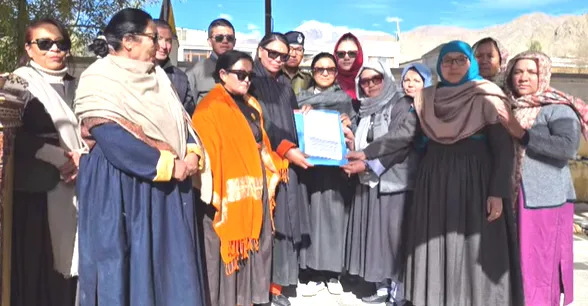
LEH: Religious women’s organisations of Ladakh have temporarily suspended their ongoing protest against the Union Territory’s liquor policy for one week after the UT Administration agreed in principle to all the points and recommendations submitted by them, raising hopes of a negotiated resolution to the contentious issue.
In a written communication issued on Thursday, the organisations announced that the *dharna* would remain suspended from October 29 to November 5, allowing the administration time to finalise the agreement and formally incorporate the assurances into a written document.
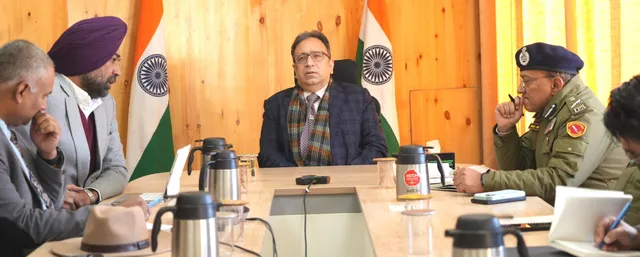
The decision followed a written response from the Home Department, UT Ladakh, signed by Special Secretary Home Tashi Dolma, JKAS, in reply to the proposed interim consensus submitted by the religious women’s organisations. The administration has sought one week to finalise the agreement, which the organisations have agreed to in the spirit of dialogue and cooperation.
The development marks a significant turn in the protest, which has centred on opposition to the expansion of liquor availability in Ladakh and a demand to move towards declaring the Union Territory a dry state.
The organisations, however, have made it clear that the temporary suspension should not be interpreted as a withdrawal of their long-term demand for a healthier, alcohol-free Ladakh. They described the decision as an expression of faith in the administration’s assurance and thanked the people of Ladakh for their overwhelming support.
In their submission to Chief Secretary Ashish Kundra, the religious women’s organisations outlined nine interim recommendations concerning liquor outlets, bar licences, operating hours, pricing and future changes to the excise policy.
Among their key demands are strict adherence to prescribed distance and population norms for liquor outlets, particularly in relation to educational and religious institutions, and a transparent annual auction process for bar licences wherever permitted. They have also recommended that existing bars should not receive automatic renewal for the following year.
For wine-shop licences, the organisations have proposed a lottery system among eligible applicants instead of competitive bidding, arguing that the latter could favour applicants with greater financial resources and disadvantage smaller local entrepreneurs.
They have further called for wine shops to operate between 10 am and 5 pm, in line with government office timings, and sought the issuance of an authentic and comprehensive liquor policy document after the Model Code of Conduct ends. Any future amendment, modification or expansion of the policy, they have demanded, should be preceded by meaningful consultation with the relevant religious, women’s and youth organisations.
Other recommendations include retaining the power to issue no-objection certificates with the Goba, Nambardar and Ladakh Buddhist Association Women’s Wing; fixing the maximum retail price of liquor at rates comparable to those in Himachal Pradesh, Jammu and Kashmir to discourage illegal inflow from neighbouring regions; and allowing existing bars to operate until their current permits expire, without renewal thereafter.
The proposed interim understanding also lays down specific limits on liquor outlets and bars across Ladakh.
According to the document submitted by the organisations, the number of wine or liquor shops should be restricted to one per district, with an exception for Leh, the capital, where two outlets have been proposed.
For bar licences, the proposal provides for three outlets in Leh and one each in Nubra, Changthang, Durbuk, Khaltse and Padum. The total number of bars across Ladakh should not exceed eight.
The organisations have also urged the administration not to treat liquor licensing as a revenue-generating exercise, arguing that its purpose should be limited to facilitating availability for the service industry.
They have cautioned that the temporary acceptance of the interim points must not be portrayed as encouragement of liquor consumption in Ladakh. Their stated objective, they reiterated, remains the welfare of the people, protection of the region’s social fabric and preservation of its cultural and spiritual values.
In their submission, the organisations expressed concern over the expansion of liquor availability at a time when Ladakh is grappling with unemployment among young people. They argued that recent decisions on liquor availability had hurt public sentiment and called for a policy framework that prioritises social welfare.
They have also warned of the possible circulation of substandard alternatives and the growth of black markets if the transition is not managed carefully, presenting the interim recommendations as a cautious arrangement in the larger interest of society.
The organisations said they intend to undertake awareness campaigns against addictive substances in villages across Ladakh in the coming period. The initiative is being led jointly by the women’s wings of the Ladakh Buddhist Association, Anjuman-e-Imamia, Anjuman Moin-ul-Islam and the Christian community.
Their collective submission reflects a coordinated effort by women’s organisations from different religious communities to seek changes in the UT’s liquor policy while pursuing their broader demand for prohibition.
The administration’s written response and the one-week suspension have opened a short window for negotiations. The immediate focus will now be on whether the assurances conveyed by the Home Department are translated into a formal written agreement by November 5.
The organisations have expressed hope that the administration will honour its commitment and take forward measures aimed at safeguarding the future of Ladakh’s youth and the overall well-being of its people.