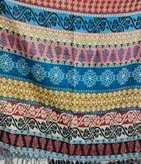
Traditional woollen blanket gifted to President Sadyr Japarov; gesture highlights shared nomadic heritage of Ladakh and Kyrgyzstan
LEH: Ladakh’s distinctive textile heritage has found an international spotlight after Prime Minister Narendra Modi gifted a traditional Ladakhi Tsug-dul blanket to Kyrgyzstan President Sadyr Japarov during his recent visit to the Central Asian country.
The choice of the blanket, a traditional woollen textile associated with Ladakh’s high-altitude pastoral communities, carried significance beyond its value as a handicraft. It was among a carefully selected collection of Indian cultural gifts presented by Prime Minister Modi to the leadership of Kyrgyzstan and Uzbekistan, with the objects chosen to reflect India’s diverse literary, artistic and traditional heritage.
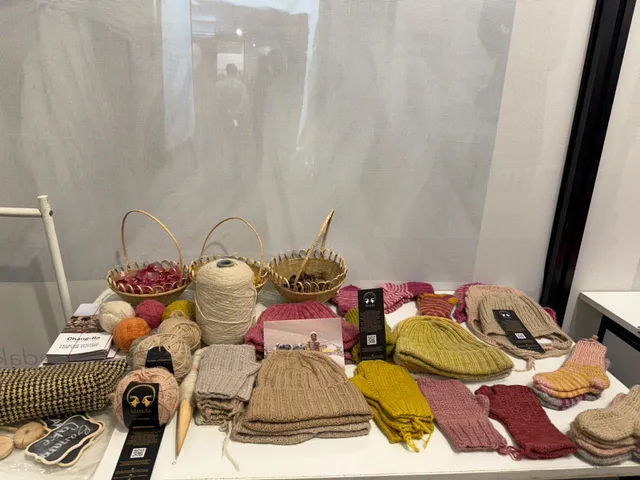
The Tsug-dul blanket is known for its vibrant colours and distinctive geometric, floral and stylised motifs. Traditionally made from locally sourced wool, the textile combines warmth and durability with the craftsmanship developed over generations in Ladakh’s cold and rugged mountain environment.
For Ladakh, where wool and pastoralism have historically been closely linked to community life, the blanket represents more than a utilitarian winter textile. Its making reflects the region’s longstanding relationship with sheep, goats and other livestock, as well as the skills of local artisans who transform locally available wool into textiles suited to the harsh Himalayan climate.
The choice of Tsug-dul for the Kyrgyz President assumes particular importance because of the striking cultural parallels between Ladakh and Kyrgyzstan.
Both regions have been shaped by mountainous landscapes, pastoral economies and nomadic traditions. Wool has traditionally played an important role in the material cultures of communities in both places, while textiles have served practical as well as cultural purposes.
Officials cited this shared heritage as a natural point of resonance between the two countries. The Tsug-dul therefore serves as a symbolic link between India’s Himalayan textile traditions and Kyrgyzstan’s own nomadic and wool-based craftsmanship.
In this sense, the blanket is not merely a ceremonial gift. It represents a cultural conversation between two societies whose histories have been deeply influenced by mountains, herding and mobility. The presentation of the Tsug-dul also placed a distinctly Ladakhi craft tradition on the stage of international diplomacy.
Prime Minister Modi’s selection of the blanket alongside other traditional Indian creations reflects an effort to use cultural heritage as an instrument of diplomacy. While the gifts included the 10-volume English translation of the Mahabharata for President Japarov, a Dokra artwork for Kyrgyzstan’s Prime Minister Adylbek Kasymaliev and other Indian handicrafts and cultural products for Uzbek leaders, the Ladakhi textile brought a Himalayan dimension to the diplomatic exchange.
The Tsug-dul’s journey from Ladakh’s pastoral landscape to the hands of the Kyrgyz President illustrates how traditional crafts can acquire new relevance through cultural diplomacy. A textile originally developed to provide warmth in one of the world’s most challenging inhabited environments has now become a symbol of friendship between two countries separated geographically but connected by mountains, pastoral traditions and wool-based craftsmanship.
The diplomatic gift thus gave the humble Ladakhi blanket a much larger identity—as an expression of Ladakh’s living heritage, indigenous craftsmanship and pastoral culture, and as a reminder that traditional knowledge can build bridges between communities across national borders.