Initiative with Vidyasagar University focuses on hygienic preparation, packaging and market development of Pulli, Khambir, curd and Churpi
LEH: The Ladakh Environment and Health Organisation (LEHO), in collaboration with Vidyasagar University, West Bengal, has launched a skill development programme aimed at empowering rural women through hygienic preparation, processing and packaging of traditional Ladakhi food products, including Pulli, Khambir, curd and Churpi.
The initiative seeks to combine traditional food knowledge with modern standards of food safety, quality control and packaging, enabling rural women and self-help groups (SHGs) to develop products with greater market competitiveness and sustainable livelihood potential.
The project is being supported by the Department of Scientific and Industrial Research (DSIR), Government of India, for a period of one-and-a-half years.
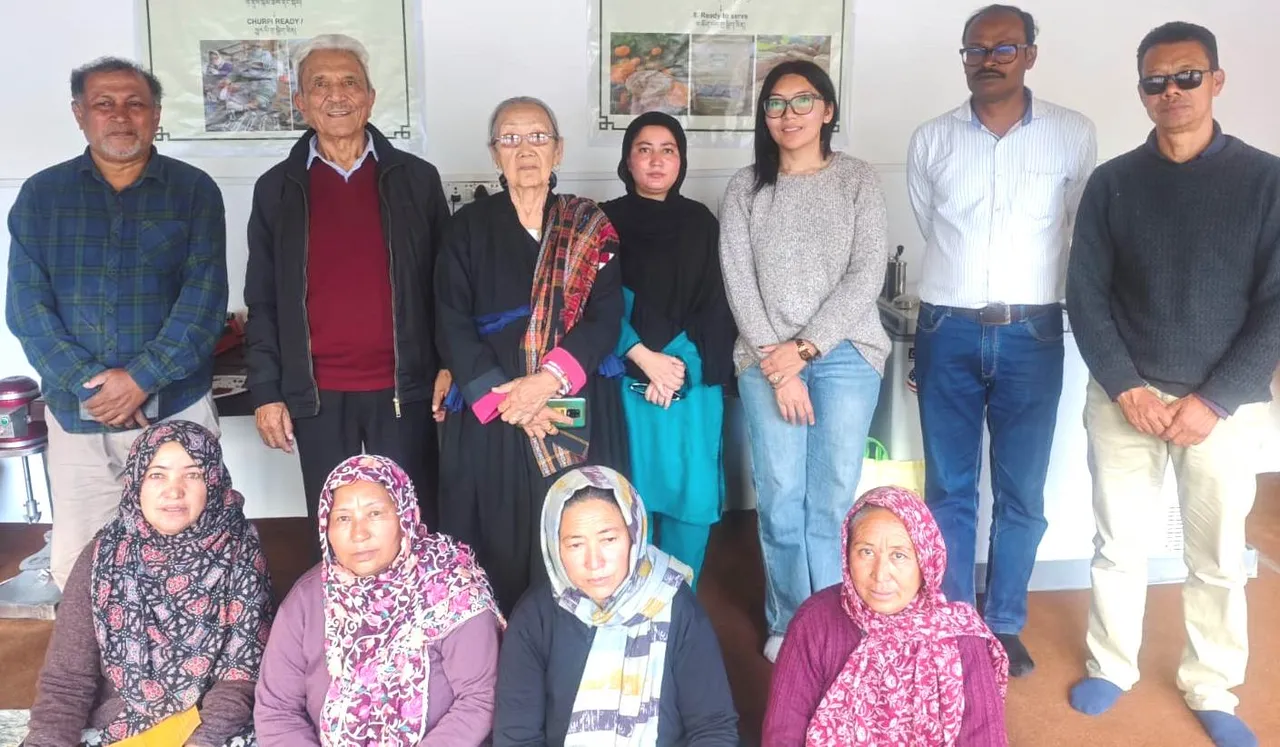
As part of the initiative, a ‘Product Development Show’ was organised at the LEHO Training Centre, Chushot Gongma, on October 7, providing a platform to assess the progress of the programme and showcase the development of traditional food products by participating women.
Dr Asha Choubey, Senior Scientist, CSIR-Indian Institute of Integrative Medicine (IIIM), Jammu, and Dr Tsering Stobdan, Senior Scientist, Defence Institute of High Altitude Research (DIHAR), participated as experts and reviewed the progress of the project.
Founder of LEHO Dr Mohammed Deen said the programme was designed to provide rural women with practical skills that could be directly converted into livelihood opportunities. He particularly highlighted the demand for standardised Pulli and Khambir for marriage ceremonies and family celebrations, saying improved preparation, hygiene and presentation could enable women to cater to this growing market.
The programme focuses on developing practical skills in traditional food preparation and processing while creating awareness about hygienic practices, food safety and cleanliness. It also seeks to improve the quality, packaging and presentation of Ladakh’s traditional foods without disconnecting them from their cultural roots.
A key component of the initiative is the strengthening of SHGs by equipping members with skills required for small-scale food production and entrepreneurship. By helping women transform traditional knowledge into commercially viable products, the project aims to create additional income opportunities and contribute to their economic empowerment.
The initiative also has a broader cultural dimension, as it seeks to preserve and promote traditional foods of the Leh-Ladakh region at a time when changing lifestyles and evolving food markets are reshaping local consumption patterns.
With emphasis on standardisation, hygiene, packaging and market readiness, the programme could help bridge the gap between Ladakh’s traditional food heritage and emerging opportunities in the formal food and tourism economy.