LEH: Lieutenant Governor of Ladakh Vinai Kumar Saxena on Wednesday launched an AI-powered brown bear intrusion detection system developed to provide real-time alerts and strengthen protection of communities and wildlife in areas prone to human-bear conflict.
The technology was launched during the Wildlife Week Celebration 2026 in Leh in the presence of Chief Secretary, UT Ladakh, Ashish Kundra; Vice-Chancellor, University of Ladakh, Prof Saket Kushwaha; Chief Wildlife Warden Rajesh S (IFS) and senior officials of the UT Administration and Department of Forest, Ecology and Environment.
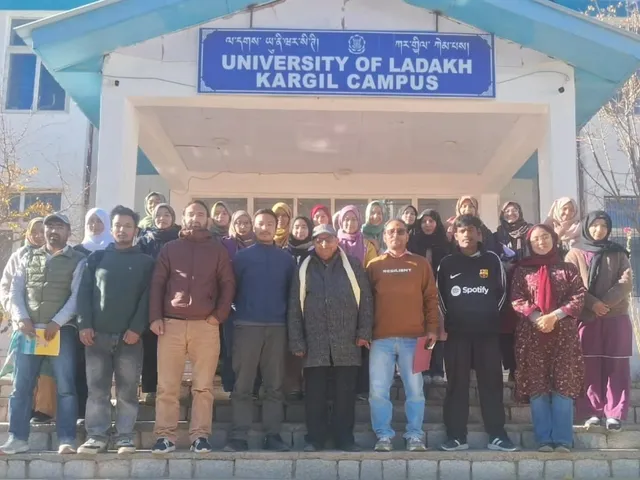
The system has been developed by the University of Ladakh, Kargil Campus, with technical and developmental assistance from iHUB DivyaSampark, IIT Roorkee, and the Technology Enabling Centre, University of Ladakh.
The Lieutenant Governor praised the University of Ladakh for advancing academic research towards developing technology tailored to the region’s environmental and geographical challenges.
Designed for deployment in difficult mountainous terrain, the system uses edge computing and deep-learning algorithms to detect brown bears in real time. Intelligent computing devices installed directly at field locations continuously monitor sensitive areas, while integrated Pan-Tilt-Zoom (PTZ) cameras automatically track a bear’s movement once detected.
According to the information released, the system has reached Technology Readiness Level 6 (TRL 6) and has recorded detection accuracy of more than 85 per cent during night operations in field testing.
Once an intrusion is detected, the system automatically sends alerts and live visuals through communication platforms including WhatsApp and Telegram to local authorities and residents. The system is designed to facilitate faster response by providing real-time information on wildlife movement.
The technology has also been designed for locations without reliable electricity supply. Solar panel arrays with intelligent battery management systems provide power for field deployment in remote areas. Two operational units have already been deployed in Drass and Shargole, identified as high-conflict zones. The units are currently monitoring brown bear movements and transmitting automated alerts when intrusions are detected.