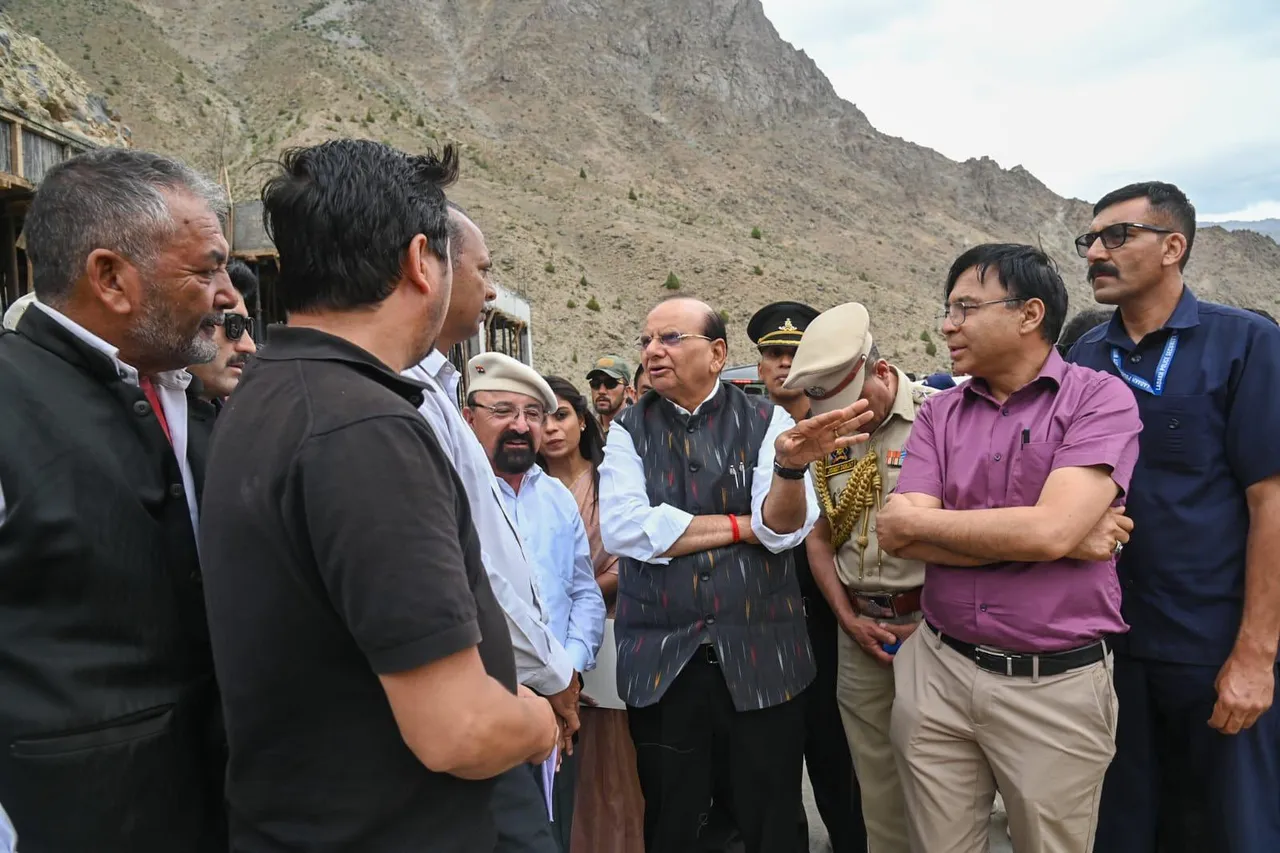
LEH: Lieutenant Governor Vinai Kumar Saxena on Thursday reviewed ongoing efforts to develop Hunderman village in Kargil as a border and heritage tourism destination, directing officials to complete the planned infrastructure works by the end of October.
Located around 10 km north of Kargil on the banks of the Suru river and adjoining the Line of Control (LoC), Hunderman is among the northernmost settlements in India. The village remained under Pakistan’s control until the 1971 India-Pakistan war, when the Indian Army captured the surrounding heights and the area came under Indian control.
During his visit, Saxena was briefed on the “Exploring LoC and Hunderman Village Experience” project, which envisages an LoC viewpoint, integrated amenity centre, information panels, walking promenade, landscaping, cafes and eateries, besides other visitor facilities.
The Lieutenant Governor directed the concerned authorities to adhere to the October-end deadline for completion of the development works, while stressing that tourism infrastructure should preserve Hunderman’s heritage and character and generate livelihood opportunities for local residents.
“Hunderman is not merely a border village; it is a living symbol of Ladakh’s history, heritage and resilience. My vision is to make Hunderman, the first Indian village on the LoC, accessible to visitors from across the world and develop it as a unique border and heritage tourism destination,” Saxena said.
He emphasised the village’s strategic location and historical heritage, saying its proximity to the LoC and its borderland history could give it a distinctive place on Ladakh’s tourism map.
The L-G also interacted with residents and heard their grievances during the visit. He reviewed the solar lift irrigation system, which is intended to improve water availability for agriculture through renewable energy.
The administration said the development of Hunderman is in line with Prime Minister Narendra Modi’s vision of promoting self-sustainability and development in remote border areas.
Focus Shifts to Apati Heritage Site
Saxena also visited the rock-carved Maitreya Buddha statue at Apati village in Kargil, another heritage site that the administration plans to develop for tourism.
The historic statue, believed to date back to the seventh century, stands more than 25 feet tall and is among only three such Maitreya Buddha statues in the Ladakh region.
Saxena directed officials to prepare a comprehensive and time-bound plan to upgrade the site with visitor amenities, including a cafeteria, parking facilities and public conveniences.
“Once developed, I am confident that this historic site will evolve into a must-visit tourist attraction in Kargil, while opening new livelihood avenues for local villagers,” he said.
The twin initiatives at Hunderman and Apati form part of efforts to diversify Kargil’s tourism offerings by combining its border history, cultural heritage and remote landscapes with improved visitor infrastructure.