Sodh water crisis puts agriculture and local livelihoods at risk
KARGIL: The acute water crisis in Sodh block of Kargil district has emerged as a serious threat to agriculture and local livelihoods, with villages facing severe shortages that have already contributed to crop losses and prompted migration to nearby areas.
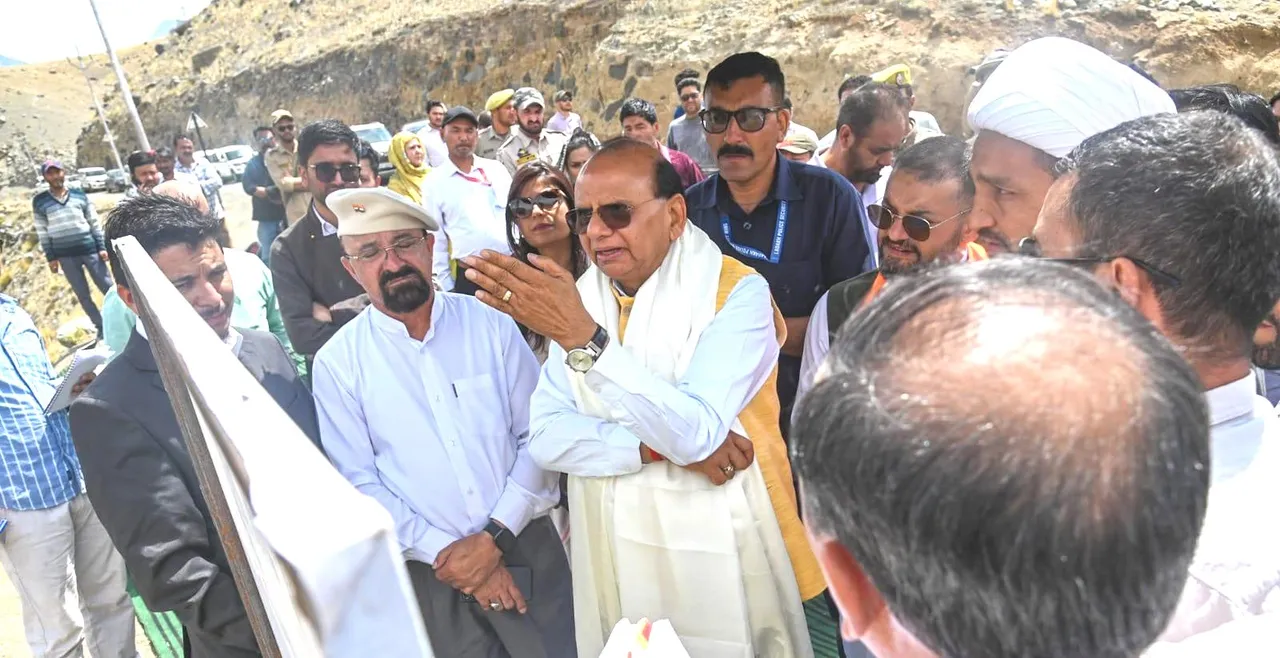
The gravity of the situation came to the fore during Lieutenant Governor Ladakh Vinai Kumar Saxena’s visit to Sodh block, undertaken on the request of Ladakh MP Mohmad Haneefa Jan. Kargil Autonomous Hill Development Council (LAHDC) Kargil CEC Dr Mohd Jaffer Akhoon was also present during the on-ground assessment.
The LG said the visit enabled him to experience first-hand the hardships being faced by the local population due to the shortage of water. According to him, the crisis has severely affected agricultural activities in the villages, resulting in significant livelihood losses and forcing some villagers to migrate to nearby areas.
Taking cognisance of the situation, LG Saxena directed the concerned authorities to explore and identify potential water sources, including glacier-fed streams in and around Sodh block, which could potentially be channelised towards the affected villages.
The objective is not merely to provide immediate relief but to establish a more reliable water supply capable of supporting agriculture and securing livelihoods over the long term.
The direction assumes significance for Sodh’s predominantly rural communities, where agricultural activity is closely dependent on the availability of water. A sustained shortage therefore threatens not only irrigation but also the economic viability of villages and the ability of residents to remain in their traditional settlements.
MP Mohmad Haneefa Jan expressed gratitude to the Lieutenant Governor for responding to his request and visiting the area personally. He said the LG’s on-ground assessment and intervention to identify sustainable water sources represented an important step towards addressing the crisis. He emphasised that long-term water security is essential to protecting the livelihoods of people in Sodh.
The MP’s intervention, followed by the LG’s field visit, has brought the water crisis in the remote block directly to the attention of the UT administration, shifting the focus towards identifying a sustainable source rather than relying solely on short-term measures.
The situation described by the LG highlights the wider consequences of water stress in Kargil’s remote and high-altitude settlements. When irrigation systems fail, the impact extends beyond reduced agricultural output: household incomes suffer, agricultural land becomes less productive and communities can face increasing pressure to move elsewhere.
For Sodh, the proposed exploration of glacier streams could therefore prove crucial if technically and environmentally feasible. Channelising such sources to villages could potentially provide a more dependable supply for irrigation while strengthening the local agricultural economy.
The immediate challenge, however, will be to identify viable sources, assess their seasonal availability and develop infrastructure capable of delivering water to the affected settlements.
The Sodh visit has consequently put water security, agricultural sustainability and prevention of livelihood-driven migration at the centre of attention, with the administration now tasked with translating the proposed identification of glacier sources into a durable solution for the water-starved villages.