ALTTA flags financial losses from abrupt closures and seeks uniform regulations, wider consultation and protection of business livelihoods.
LEH: Alleging that the liquor trade in Ladakh is being selectively targeted in the name of social reform while other businesses with comparable economic interests and social implications are being overlooked, the All Ladakh Liquor Traders’ Association (ALLTA) has called for an equitable approach and urged the UT Administration and civil society organisations to consider the livelihood concerns of traders before taking any decision on the demand for complete prohibition.
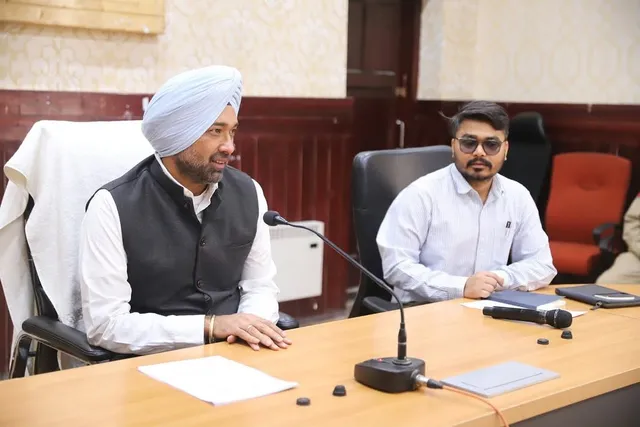
Addressing a press conference, the Association’s office-bearers questioned why the liquor trade alone was being singled out when several other commercial activities also generate substantial profit margins and have their own economic and social implications. They maintained that if businesses are to be scrutinized on such grounds, the exercise should be uniform and cover all sectors rather than focusing on one particular trade.
The representatives also clarified that liquor businesses in Ladakh are not confined to any particular religious community, stating that people belonging to all communities are engaged in the trade. They said the perception that liquor business is exclusively associated with one community was misplaced and stressed that the interests of all those dependent on the sector should be considered.
Highlighting the financial stakes involved, the Association expressed serious concern over the possibility of abrupt closure of licensed establishments. It said several traders, particularly those who had recently obtained licences, had invested lakhs of rupees in licence fees, procurement of stock and setting up their businesses. Some, it claimed, had not even received a month’s opportunity to earn despite making substantial investments.
The office-bearers urged those advocating prohibition to consider the financial burden that sudden restrictions could impose on traders and their families. They cautioned that any decision taken without assessing the economic consequences could leave young entrepreneurs facing heavy losses and financial uncertainty.
Defending the regulated liquor trade, the Association pointed out that licensed establishments contribute to government revenue through excise duties, licence fees, additional charges and GST. It argued that traders already bear a substantial tax burden and questioned the rationale behind imposing further restrictions without considering their existing financial commitments.
The Association also sought transparent and uniform implementation of excise regulations, particularly regarding the granting and renewal of licences, distance restrictions from religious places and educational institutions, and the role of local administration in issuing permissions and No Objection Certificates.
Opposing an abrupt blanket prohibition, the traders cautioned that closing licensed outlets would not necessarily eliminate alcohol consumption and could instead encourage illegal sales and black marketing. They advocated effective regulation, enforcement and public awareness as important measures to address alcohol-related concerns.
The representatives said they were not opposed to awareness campaigns against excessive alcohol consumption and substance abuse. They also called for collective social responsibility in tackling drug abuse, particularly among youngsters, urging members of the public to cooperate with law enforcement agencies.
Responding to questions about violent incidents associated with liquor establishments, the office-bearers referred to restrictions applicable to licensed outlets, including the prohibition on serving alcohol to persons below 21 years of age. They also stated that establishments maintain CCTV surveillance and that individual licence holders have a responsibility to monitor activities on their premises and cooperate with the authorities.
The Association called for a comprehensive dialogue involving the UT Administration, Excise Department, religious organisations, civil society groups, representatives of the anti-liquor campaign and stakeholders from the hotel, tourism, transport and business sectors.
Maintaining that the issue involves both social concerns and economic livelihoods, the traders urged all stakeholders to adopt a balanced approach and assess the wider implications before taking any policy decision on the future of the liquor trade in Ladakh.