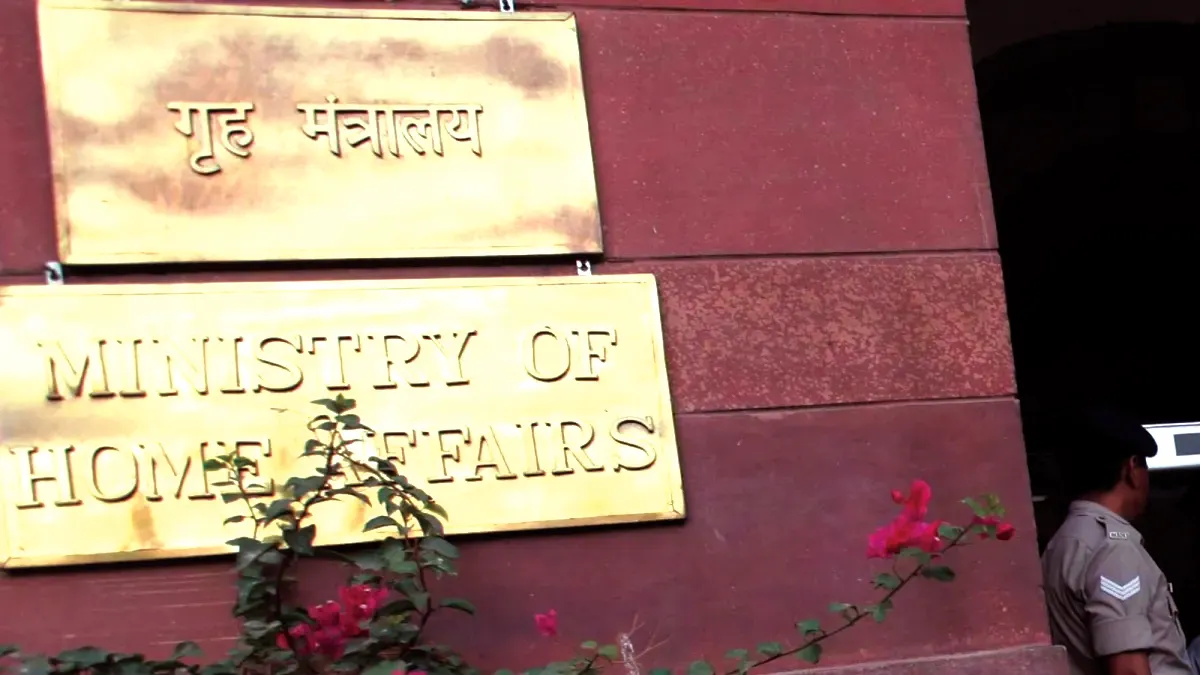
The talks are expected to lay the groundwork for the next formal round of negotiations on constitutional safeguards, legislative empowerment and institutional reforms for Ladakh
YASH KHAJURIA
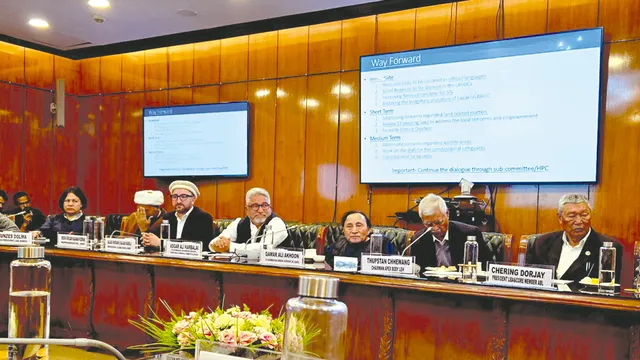
LEH: Advancing the dialogue on Ladakh’s long-pending constitutional and governance demands, the Ministry of Home Affairs (MHA)-constituted sub-committee will hold its first-ever meeting in Leh with representatives of the Leh Apex Body (LAB) and the Kargil Democratic Alliance (KDA) on Thursday.
The meeting marks the first time that the Centre’s panel will engage with the two apex civil society organisations in Ladakh within the Union Territory itself, following the last round of discussions held in New Delhi on May 22. The talks are expected to lay the groundwork for the next formal round of negotiations on constitutional safeguards, legislative empowerment and institutional reforms for Ladakh.
Speaking ahead of the meeting, LAB Chairman Chering Dorjey Lakruk described Thursday’s engagement as an informal preparatory exercise, clarifying that no major decisions are expected to emerge from the discussions.
“This is not a decision-making meeting. Its purpose is to understand the government’s thinking and for the government to understand our position and the direction of our demands,” Lakruk said. He stressed that the LAB and KDA would continue to maintain a unified approach during the negotiations.
“Our strategy is always common. Before every meeting, we consult with the KDA. There is no separate strategy between the two organisations. We go into the talks with a single, coordinated position,” he said. He also indicated that the composition of the LAB delegation was yet to be finalised, as one of the members who attended the previous meeting is currently in Delhi on a hunger strike, necessitating a replacement.
One of the key issues likely to be raised during Thursday’s meeting is the omission of certain discussions from the draft minutes of the May 22 meeting circulated by the MHA. According to LAB leaders, deliberations relating to the **Annual Performance Appraisal Reports (APRs)** of officers were not reflected in the official record despite being discussed during the previous talks.
Sources associated with the dialogue said the Leh Apex Body has also prepared a detailed draft proposal outlining the structure, powers and functions of a proposed elected institution for Ladakh with legislative, administrative and financial authority. The draft is expected to be discussed with the KDA before a common proposal is submitted to the MHA panel.
The proposed governance framework forms part of a broader effort to secure greater institutional autonomy for Ladakh following the in-principle understanding reached during the May 22 meeting in New Delhi.
Responding to speculation that the demand for constitutional safeguards under provisions similar to Article 371 could amount to a compromise on the earlier demand for Sixth Schedule status, Lakruk rejected the suggestion.
“I do not consider it a compromise. In certain respects, provisions similar to Article 371 could even be stronger than the Sixth Schedule. While the Sixth Schedule empowers Autonomous District Councils, Article 371-type provisions can provide safeguards for an entire state or region, including protection of land, employment and local identity,” he said.
However, Lakruk declined to comment on the pending elections to the Ladakh Autonomous Hill Development Councils (LAHDCs), stating that the issue falls outside the core demands currently being pursued by the LAB and KDA. “Our demands are different. Whether the government conducts council elections or not is its decision. It is not part of our present negotiations,” he remarked.
The dialogue process centres on extending constitutional protections for Ladakh on the lines of Article 371 applicable in states such as Nagaland, Sikkim and Mizoram, with the objective of safeguarding the region’s land rights, employment opportunities, demographic balance and unique cultural heritage.
Ladakh became a Union Territory without a legislature following the reorganisation of the erstwhile Jammu and Kashmir in August 2019. Since then, the LAB and KDA have jointly campaigned for statehood, constitutional safeguards, enhanced legislative powers and greater administrative autonomy.
Lakruk expressed cautious optimism about the outcome of Thursday’s engagement, saying the informal discussions could help narrow differences before the next official round of talks.
“The advantage of such preparatory meetings is that if some understanding is reached informally, it becomes much easier to resolve issues during the formal negotiations. Both sides will have a clearer idea of what the government is willing to offer and what we are seeking,” he said. He added that the Centre has conveyed that an official round of negotiations is expected to be held soon after Thursday’s meeting.
When asked about his message to the people of Ladakh, Lakruk remained measured in his response. “I will only say that I keep my fingers crossed. It could turn out well, or it may not. We cannot predict the future,” he said.