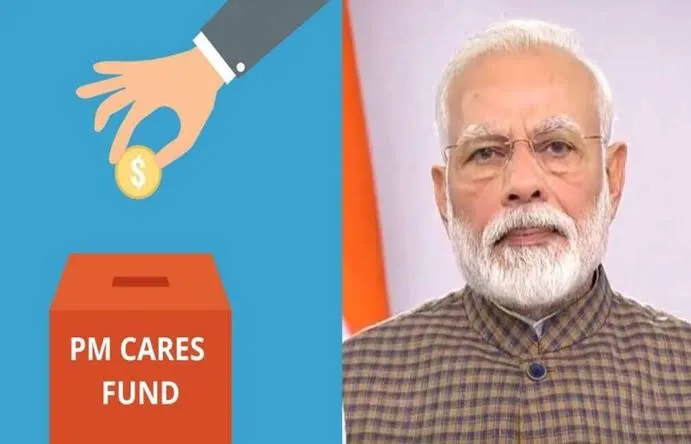
Nearly 93% of the fund parked in fixed deposits; Rs 324.66 crore returned by implementing agencies, while latest accounts leave key details unexplained
NEW DELHI: The latest audited accounts of the PM CARES Fund have put a striking set of figures in the public domain: the emergency relief fund closed 2024-25 with a corpus of Rs 8,452.07 crore, but recorded expenditure of only Rs 87.85 lakh during the entire financial year, with nearly 93 per cent of its balance parked in fixed deposits. The accounts, covering 2023-24 and 2024-25, were made public on the fund’s website around August 17, more than a year after the close of FY2024-25.
The figures show that the fund’s financial position strengthened substantially even as its annual deployment fell to a fraction of its corpus. It began 2024-25 with Rs 7,173.03 crore and ended the year with Rs 8,452.07 crore, an increase of about Rs 1,279 crore. Of the closing balance, Rs 7,846.65 crore was held in fixed deposits with scheduled banks, while Rs605.41 crore remained in savings bank accounts.
The most striking entry is on the expenditure side. Of the Rs87.85 lakh spent during FY2024-25, Rs87.84 lakh went towards the PM CARES for Children Scheme, while just Rs451 was recorded towards bank and SMS charges. This was sharply lower than the Rs 15.60 crore spent in 2023-24, of which Rs 15.38 crore had gone to the PM CARES for Children Scheme.
The accounts also reveal a changing composition of the fund’s receipts. Domestic donations fell from Rs 681.81 crore in 2023-24 to Rs 479.05 crore in 2024-25, while foreign donations declined from about Rs 1.14 crore to Rs 92.83 lakh.
At the same time, the large fixed-deposit corpus generated substantial interest. The fund earned Rs 469.38 crore from fixed deposits and another Rs 5.77 crore from savings-bank balances during the year. Thus, interest income alone was almost comparable with the fresh domestic contributions received during the year.
But one of the less noticed figures in the accounts could prove particularly significant: Rs 324.66 crore was received as “refund from implementing agencies” during 2024-25. The amount was nearly four times the corresponding refund of Rs 84.31 crore recorded in the previous financial year. The published receipts-and-payments statement identifies the amount but does not, by itself, specify which agencies returned the money, what the original allocations were for or why the funds were returned.
PM CARES was constituted on March 27, 2020, at the height of the COVID-19 crisis, as a public charitable trust intended to provide assistance in emergency and distress situations. The fund is chaired by the Prime Minister, with the Defence, Home and Finance Ministers as ex-officio trustees. According to the fund’s own FAQ, it is audited by an independent auditor appointed by its trustees, rather than through a statutory CAG audit.
The latest figures therefore provide the clearest picture yet of how the fund has evolved after the pandemic: from a vehicle that accumulated and deployed thousands of crores during the COVID emergency to a large financial reserve whose balance is now predominantly held in bank deposits.
The financial statements also show that the fund earned considerably more from its investments than it spent on relief-related activities during FY2024-25. With Rs 8,452 crore available at the end of the year and Rs 7,846.65 crore in fixed deposits, the corpus itself generated hundreds of crores in interest even as annual expenditure remained below Rs 1 crore.
The publication of the accounts has also revived longstanding questions about the extent of public scrutiny over PM CARES. The fund has maintained that it is a public charitable trust and has said it is not subject to the RTI Act as a “public authority”. In January this year, the Delhi High Court, while hearing a case concerning disclosure of information relating to the fund’s tax exemption, observed that even if PM CARES were treated as a public authority or government-linked entity, questions of statutory privacy could still arise under the RTI framework. The matter remains part of the court proceedings.
Separately, the Supreme Court had in 2020 declined to direct transfer of PM CARES money to the National Disaster Response Fund, treating the two as separate funds with distinct purposes. The Court noted the difference in their statutory framework, including the CAG audit mechanism applicable to the NDRF.
The transparency issue acquired a fresh parliamentary dimension this year when the PMO informed the Lok Sabha Secretariat that questions and matters concerning PM CARES, the Prime Minister’s National Relief Fund and the National Defence Fund were not admissible under specified Lok Sabha rules. The PMO’s position was that these funds are financed through voluntary contributions and do not receive allocations from the Consolidated Fund of India.
The newly released accounts now put a much larger financial picture on record. A fund that ended March 2025 with more than Rs 8,452 crore, earned roughly Rs 475 crore in bank interest, received nearly Rs 479 crore in domestic donations and Rs 324.66 crore in refunds, spent less than Rs 1 crore during the year, and held nearly Rs 7,847 crore in fixed deposits has emerged as a sizeable financial reserve whose deployment and accounting trail will command renewed public attention.
What the latest documents establish is the size and movement of the corpus. What they do not fully establish from the published receipts-and-payments statement is the institutional trail behind some of the largest entries—most notably the Rs 324.66-crore refunds from implementing agencies. That gap is likely to remain central to the continuing demand for greater disclosure surrounding a fund created in the name of citizens’ assistance during emergencies.