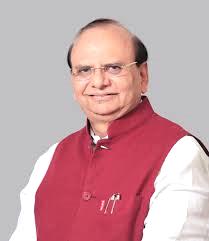
LEH: Presenting a comprehensive report card of his first 100 days in office, Lieutenant Governor of Ladakh, Vinai Kumar Saxena, has outlined a roadmap of development centred around water security, ecological conservation, tourism revival, social welfare, employment generation and climate-resilient infrastructure. The period from 13 March to 20 June 2026 witnessed a series of initiatives aimed at transforming Ladakh into a sustainable, self-reliant and people-centric Union Territory.
Since assuming charge as the fourth Lieutenant Governor of Ladakh, Saxena has placed special emphasis on creating modern civic infrastructure while safeguarding the fragile Himalayan ecosystem and ensuring active participation of local communities. His governance approach has focused on ground-level engagement, extensive consultations and innovative solutions suited to Ladakh’s unique geographical challenges.
Recognising water scarcity as one of Ladakh’s most critical challenges, the LG administration launched several landmark initiatives under the vision of long-term water security.
The ambitious Project Him Sarovar, launched on 10 April 2026, aims to harvest snow and store rainwater and glacial melt through village-level water bodies. In its first phase, 50 water bodies are being created, with a target of establishing 100 ponds within one year.
The first water body under the project at Stok village was completed in just three weeks and has a storage capacity of nearly 35 lakh litres, benefiting around 150 hectares of agricultural land. Similarly, the large water body at Spituk Farka, inaugurated on 21 June, can store approximately 60 lakh litres of glacier meltwater, supporting irrigation, groundwater recharge and ecological restoration.
Another major achievement was the launch of the Sindhu Jal Samriddhi Abhiyan, under which India’s first Himalayan Rock Check Dam over the Indus River was inaugurated at Upshi at an altitude of 11,400 feet. Built in only seven days, the structure stores nearly 40 million litres of water and is designed to strengthen irrigation and agricultural security in high-altitude villages.
The revival of the historic 43-km-long Igoo–Phey Irrigation Canal marked another milestone. Restored and operationalised within 20 days, the canal is now irrigating nearly 4,500 hectares of agricultural land across 10 villages.
Keeping Ladakh’s fragile ecology at the centre of governance, Shri Saxena launched the Indus River Green Corridor Initiative, planting around 1,000 indigenous trees along the banks of the Indus with participation from government departments, security forces, schools and local communities.
Under various plantation drives, more than 35,000 trees have been planted across Ladakh, including native species such as willow, poplar, apricot, apple, oleaster and juniper. The initiative aims to increase Ladakh’s green cover from less than one per cent to five per cent in the next two years.
The administration also launched the High-Altitude Experimental Plantation Nursery in Leh to study the adaptability of different plant species in Ladakh’s extreme climate and constituted the Snow Leopard and High-Altitude Nature (SHAN) Conservation Society for wildlife protection and biodiversity management.
In a major ecological restoration effort, nearly 800 acres of barren land near Spituk is being reclaimed through scientific interventions, using water from the restored Igoo–Phey Canal to revive degraded landscapes and create future livelihood opportunities.
Recognising tourism as a key pillar of Ladakh’s economy, the LG administration introduced reforms to preserve cultural identity while expanding economic opportunities. The historic exposition of the Holy Relics of Tathagata Buddha in Leh and Zanskar attracted over 1.18 lakh devotees during the 14-day spiritual event, marking one of the largest religious gatherings in Ladakh.
To preserve ancient heritage, the foundation stone was laid for India’s first Petroglyph Conservation Park in Leh, which will safeguard endangered rock carvings from nearly 400 sites across Ladakh. The Ladakh Tourism Development Society (LTDS) was also constituted to provide a dedicated institutional framework for sustainable tourism planning and promotion.
Ladakh witnessed a remarkable surge in tourist arrivals, registering 121.20 per cent growth in May 2026 compared to the previous year. Between January and May 2026, tourist arrivals increased by 43.65 per cent, reflecting the impact of improved infrastructure and tourism reforms.
The LG administration introduced several measures aimed at improving the quality of life of citizens, particularly vulnerable sections. A major relief was provided through the renewal of long-pending residential land lease deeds, offering greater security of land titles and enabling smoother property transactions. Around 18,000 government employees benefited from the removal of restrictions related to Nautor land ownership in service matters.
The administration expanded social security coverage by adding 916 new beneficiaries under the Integrated Social Security Scheme, taking the total beneficiaries to 11,837. An Old Age Home was also inaugurated in Leh to provide dignified care and support to senior citizens.
The creation of five new districts — Sham, Nubra, Changthang, Zanskar and Drass — was another historic administrative reform aimed at bringing governance closer to the people and strengthening service delivery across Ladakh.
The LG administration carried out major Ease of Doing Business reforms to encourage entrepreneurship and employment generation. Registered hotels and guest houses were granted Industry status, benefiting 1,257 establishments through concessional power and water tariffs, tax benefits and access to industrial schemes. Ladakh’s first Integrated Ease of Doing Business Portal was also launched, integrating 23 government services across 13 departments.
The launch of the Integrated Job Portal Ladakh created a single-window employment platform for job seekers and employers. The newly constituted Ladakh Pashmina Development Board aims to strengthen the traditional Pashmina sector and empower pastoral communities.
In a major boost to farmers, the LG facilitated an agreement for export of 1,000 MT of Ladakhi apricots to international markets through Lulu International, providing better market access and income opportunities for growers.
The first 100 days also witnessed significant progress in border village development, connectivity and public infrastructure. Under the Vibrant Village Programme, 10 border villages were approved for development as climate-resilient and economically vibrant settlements. The foundation stone of the first Model Border Village at Chumur, located at 16,700 feet near the Indo-China border, was laid with provisions for climate-resilient homes, homestays, greenhouses, healthcare and tourism facilities.
The administration also initiated the preparation of Ladakh’s first Master Plan in collaboration with the School of Planning and Architecture, Government of India, incorporating modern tools like AI and GIS for climate-resilient planning. The approval of major power transmission projects will provide grid connectivity to six of Ladakh’s seven districts, reducing dependence on diesel generators and strengthening clean energy infrastructure.
The first 100 days of Vinai Kumar Saxena’s tenure have been marked by a governance model that combines development with ecological responsibility. Through water conservation, environmental restoration, cultural preservation, livelihood generation and citizen-focused reforms, the administration has laid the foundation for a resilient and prosperous Ladakh.
The report card reflects a clear emphasis on making development participatory, sustainable and aligned with the aspirations of the people of Ladakh.