JAKASI conference lecture in Leh highlights growing workplace violence, under-reporting and need for security, prevention and effective legal protection
LEH: The growing threat of violence against healthcare workers and hospitals requires stronger institutional safeguards, effective reporting mechanisms and robust legal protection, Prof. Dr Rajesh C. Shah, Founder President of the Federation International Law, Medicine, Ethics & Innovation (FILMEI), said during a lecture in Leh.
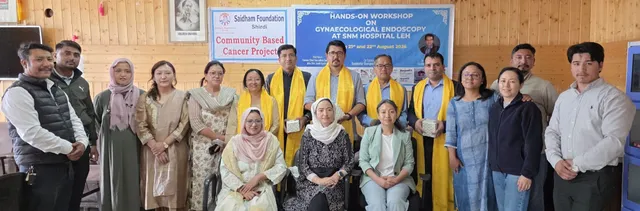
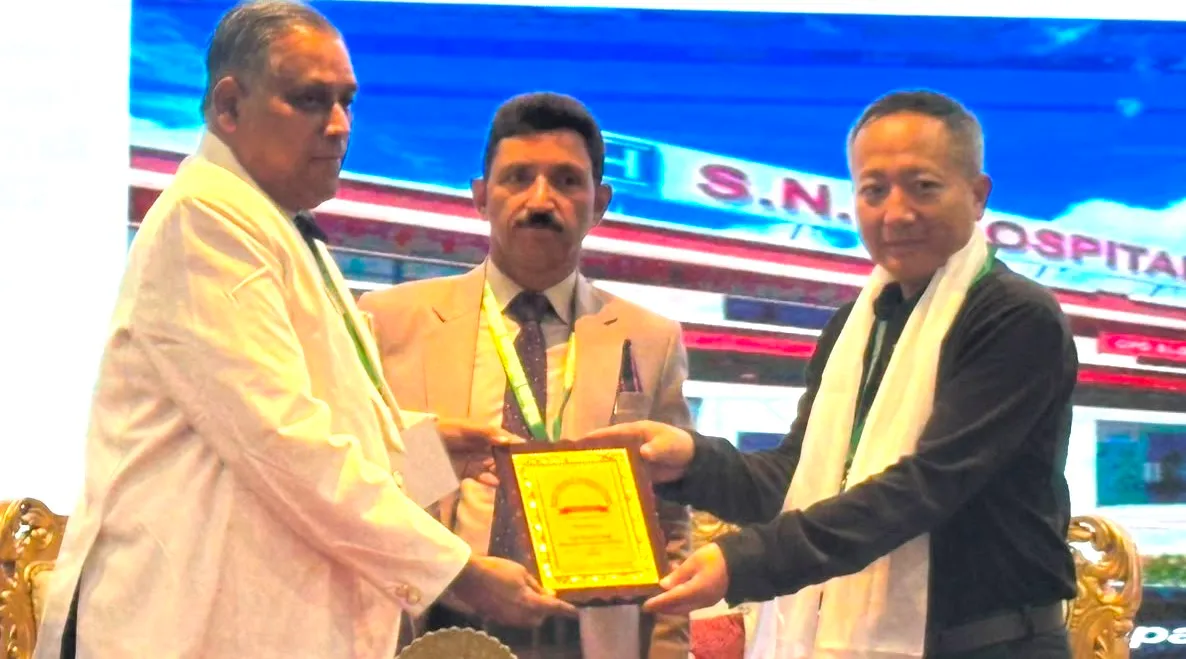
Dr Shah was speaking on “Violence Against Healthcare Workers and Hospitals” during the Mid-Term Conference 2026 of the Jammu & Kashmir State Chapter of the Association of Surgeons of India (JAKASI), held here, under the leadership of Dr Tashi Motup of S.N.M. Hospital, Leh.
The prestigious medical conference was inaugurated by Dr Laltinkhuma Franklin, IAS, Health Secretary, UT Ladakh, and brought together eminent healthcare professionals and surgeons from Ladakh, Jammu and Kashmir, Mumbai, Delhi and Ahmedabad.
Among those participating were Prof. Nazir A. Wani, Vice President, J&K Chapter of ASI; Dr Shams ul Bari, Secretary, J&K Chapter of ASI; Prof. Dr Rajesh Shah, Founder President, FILMEI; Dr Tashi Motup; and Dr Padma Diksit of S.N.M. Hospital, Leh.
The conference provided a significant platform for deliberations on contemporary medical and surgical issues, with Dr Shah’s lecture bringing the increasingly serious issue of violence in healthcare settings into sharp focus.
Dr Shah described workplace violence against healthcare personnel as a growing global crisis that goes far beyond isolated incidents of assault. Physical attacks, threats, intimidation and verbal abuse, he said, are increasingly becoming occupational hazards for medical professionals, particularly those working in high-pressure environments.
Citing World Health Organization-related data, he highlighted the substantial prevalence of violence against healthcare workers, noting that the proportion rises significantly when verbal abuse, threats and harassment are included.
The problem is particularly acute in emergency departments, intensive care units and other high-stress clinical settings, where healthcare professionals routinely deal with distressed patients and anxious family members.
He pointed out that nurses, paramedics, younger and less experienced healthcare workers and women professionals can be particularly vulnerable.
The issue assumes added significance in Ladakh, where healthcare institutions operate under unique geographical and logistical constraints. Hospitals and health facilities in the Union Territory serve populations spread across vast mountainous areas, with harsh winters, difficult terrain and long travel distances often limiting access to alternative medical facilities.
In such an environment, the safety and retention of doctors, nurses, paramedics and other healthcare personnel is critical. Any disruption caused by violence or intimidation can have consequences that extend well beyond an individual hospital.
Dr Shah’s emphasis on Ladakh underlined that protecting healthcare workers must be treated as an integral component of strengthening the Union Territory’s healthcare system.
For a region where attracting and retaining specialised medical professionals can itself be challenging, ensuring a secure working environment is essential to sustaining and expanding medical services.
He stressed that the consequences of workplace violence are not limited to physical injuries. Healthcare workers exposed to repeated threats and aggression can experience burnout, anxiety, depression and post-traumatic stress, potentially affecting their professional performance and long-term commitment to the healthcare sector.
Fear of violence can also contribute to premature resignations and career changes, further intensifying shortages of trained medical personnel. Such pressures can ultimately affect patients, as an exhausted or psychologically distressed workforce may face greater difficulty maintaining the quality and efficiency of healthcare delivery.
Dr Shah argued that simply displaying “zero tolerance” notices in hospitals cannot adequately address the problem. He called for a comprehensive strategy combining institutional security, staff training, incident reporting and legal enforcement.
He advocated stronger security arrangements in vulnerable hospital areas, including surveillance systems, panic alarms and other mechanisms that can enable rapid intervention when situations escalate. Healthcare personnel should also receive training in de-escalation and conflict management, enabling them to recognise warning signs and handle volatile situations before they turn violent.
Another important aspect highlighted during the lecture was the under-reporting of incidents. Dr Shah stressed the need for simple and accessible reporting systems that encourage healthcare workers to report violence without fear of administrative repercussions.
Accurate reporting, he noted, is essential to identifying patterns, determining high-risk areas and developing effective preventive strategies.
Dr Shah also drew attention to the legal framework applicable to healthcare workers in Ladakh, noting that the Union Territory does not have a standalone law specifically dealing with violence against healthcare workers.
He discussed the protection available under applicable central laws, including provisions of the Bharatiya Nyaya Sanhita and other relevant legal frameworks, and emphasised the importance of ensuring that healthcare professionals and hospital administrations understand the legal remedies available in cases of assault, threats or intimidation. He also advocated stronger and more comprehensive legislative safeguards to ensure uniform protection for healthcare professionals across the country.
For Ladakh, such protection could assume particular importance because the region’s healthcare infrastructure and human resources are still developing, while medical personnel often work under demanding conditions.
Dr Shah also stressed that preventing violence requires addressing the circumstances that can trigger confrontation. Grief, anxiety, panic, long waiting periods, communication gaps and misunderstandings between patients’ families and healthcare personnel can contribute to escalation.
Better communication, transparent hospital procedures, trained staff and clear grievance-redressal mechanisms can therefore play an important role in preventing disputes from turning violent.
His approach called for a shift from a predominantly reactive response to a preventive model of hospital safety, in which institutions identify potential risks and establish protocols before incidents occur. The discussion is particularly relevant as Ladakh continues to strengthen its healthcare infrastructure and expand access to specialised medical services.
Dr Shah’s lecture placed the safety of healthcare workers within the broader context of healthcare development in the Union Territory, stressing that buildings, equipment and technology alone cannot create a resilient healthcare system.
For Ladakh, where medical facilities are separated by considerable distances and access can be affected by geography and weather, the availability of trained and motivated healthcare professionals is itself a critical healthcare asset.
The Mid-Term Conference 2026 of JAKASI provided an important forum for bringing this issue before the region’s medical fraternity. The two-day conference, bringing together leading surgeons and healthcare experts from Ladakh, Jammu and Kashmir, Mumbai, Delhi and Ahmedabad, reflected the growing importance of professional medical exchanges in strengthening healthcare services in the Union Territory.
Dr Shah’s lecture added a crucial public-interest dimension to the scientific proceedings by highlighting that a healthcare system cannot function effectively if those providing care do not feel safe.
For Ladakh, he suggested, safeguarding healthcare workers must therefore be viewed not merely as a security or legal issue, but as a fundamental requirement for ensuring continuity, quality and resilience of medical care across the Union Territory.