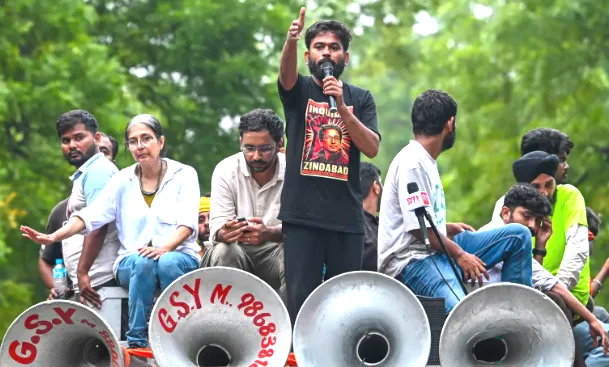
NEW DELHI: The Supreme Court on Tuesday quashed all FIRs registered against students who participated in the Cockroach Janta Party-led protests between July 20 and 25 across the country, prompting the group to call off its September 5 march in the national capital.
A bench headed by Chief Justice of India Surya Kant also directed the Centre to provide within three months compensation to families of students who ended their lives over the NEET paper leak.
Closing the criminal proceedings against the protesters, the bench said, “Keeping in view the future prospects of the young protesters, we invoke our powers under Article 142 of the Constitution to do complete justice.”
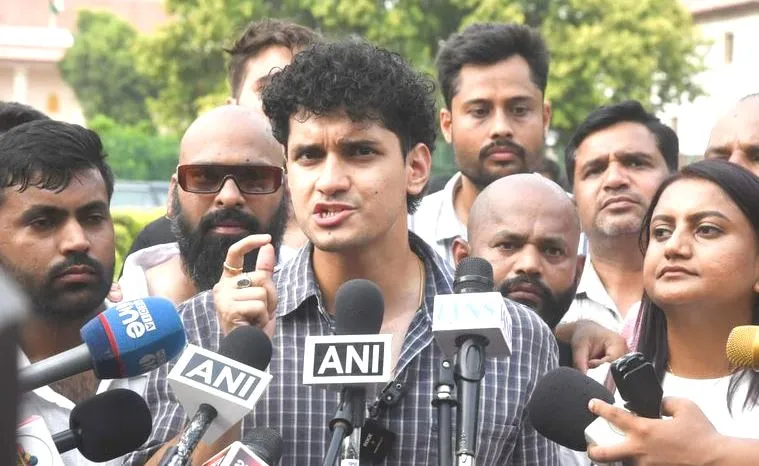
CJP leader Saurav Das told the Supreme Court that the organisation had withdrawn its call for a protest on September 5. Das read out a statement before a three-judge Bench led by Chief Justice of India Surya Kant after Solicitor General Tushar Mehta said the government was committed to the assurances given to CJP leaders in July, when they called off their 36-day protest over alleged malpractices in NEET and other examinations.
“I am just here to read out a statement. As co-convener of CJP, I want to state that in view of positive statement of Government of India and the judicial sanctity bestowed upon them today and in view of the order being passed by this honourable court, the CJP deems it appropriate to withdraw the call for the march on 5th September and looks forward for the compliance of today’s order.
I also thank the court for this decision and the learned counsels on both sides — Ms Vrinda Grover Ji and the Solicitor General – for their efforts,” Saurav Das told the Bench which also included Justice Joymalya Bagchi and Justice V Mohana. Solicitor General Tushar Mehta said, “That satisfies… and I trust him (Das).”
Mehta said the Centre and the governments of Maharashtra, Bihar, West Bengal and Assam were ready to withdraw cases against the protesters, except those against individuals already named in cases involving heinous crimes.
The Solicitor General urged the Supreme Court to invoke its extraordinary powers under Article 142 of the Constitution and direct that the cases against the protesters be treated as closed. Mehta also said the government would work out the modalities within three months for payment of compensation to the families of students who died by suicide.
The Centre had on Monday urged the Supreme Court to quash FIRs registered against student protesters by invoking its extraordinary powers under Article 142. Article 142 empowers the Supreme Court to pass any order necessary to ensure “complete justice” in a matter pending before it.
Solicitor General Tushar Mehta had mentioned the matter before the three-judge Bench led by CJI Surya Kant on Monday, shortly before the court was to rise. “We want to move an IA (interlocutory application). It’s regarding that (CJP) protest… For quashing FIRs… We are invoking Article 142,” Mehta told the Bench, seeking an urgent hearing on Tuesday.
“All right, you file. If the parties are reconciling, we have no difficulty,” the CJI said, agreeing to hear the matter on Tuesday. The development came after the CJP accused the Centre of failing to honour assurances given on July 25 to persuade protesters to withdraw their 36-day agitation against alleged irregularities in NEET and other examinations.
The CJP had subsequently announced a protest march on September 5 from India Gate to the Police Headquarters. Withdrawal of cases against student protesters was one of the key demands of the CJP when it called off its agitation over alleged malpractices in NEET and other examinations.
The Solicitor General urged the Bench to enlarge the scope of the order to include all FIRs against student protesters from any part of the country. Some advocates, including Vrinda Grover, pointed out that cases had also been registered against student protesters in Kerala, Madhya Pradesh and Uttar Pradesh.
The Bench ordered that all such cases in Delhi or any other part of the country registered between July 20 and 25, 2026, be treated as closed. At the end of the hearing, Das termed the order as “historic”.