Nidhi seeks market linkages for recyclable materials
LEH: Administrative Secretary, Rural Development Department, UT Ladakh, Nidhi Malik (IAS) has called for strengthening recycling mechanisms, enhancing scientific waste processing infrastructure and creating market linkages for recyclable materials during an extensive review of rural waste management facilities in Chuchot, asserting that sustainable resource recovery must become central to Ladakh’s decentralised waste management strategy.
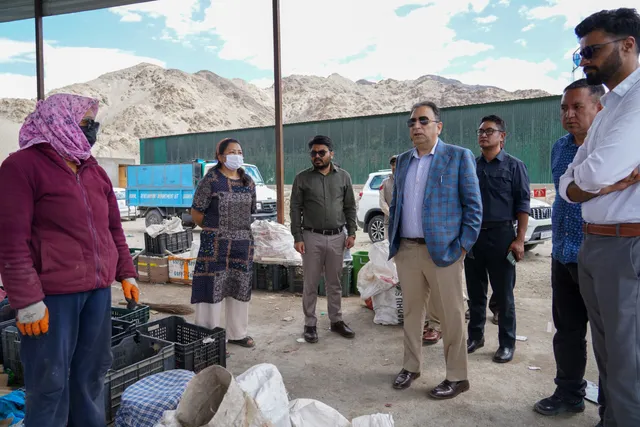
During her inspection of Solid Resource Management Centres (SRMCs) at Chuchot Yokma and Chuchot Gongma, Ms. Malik directed officials to identify opportunities for value addition through recycling and ensure that segregated recyclable waste is channelled into appropriate markets to minimise accumulation and maximise resource utilisation.
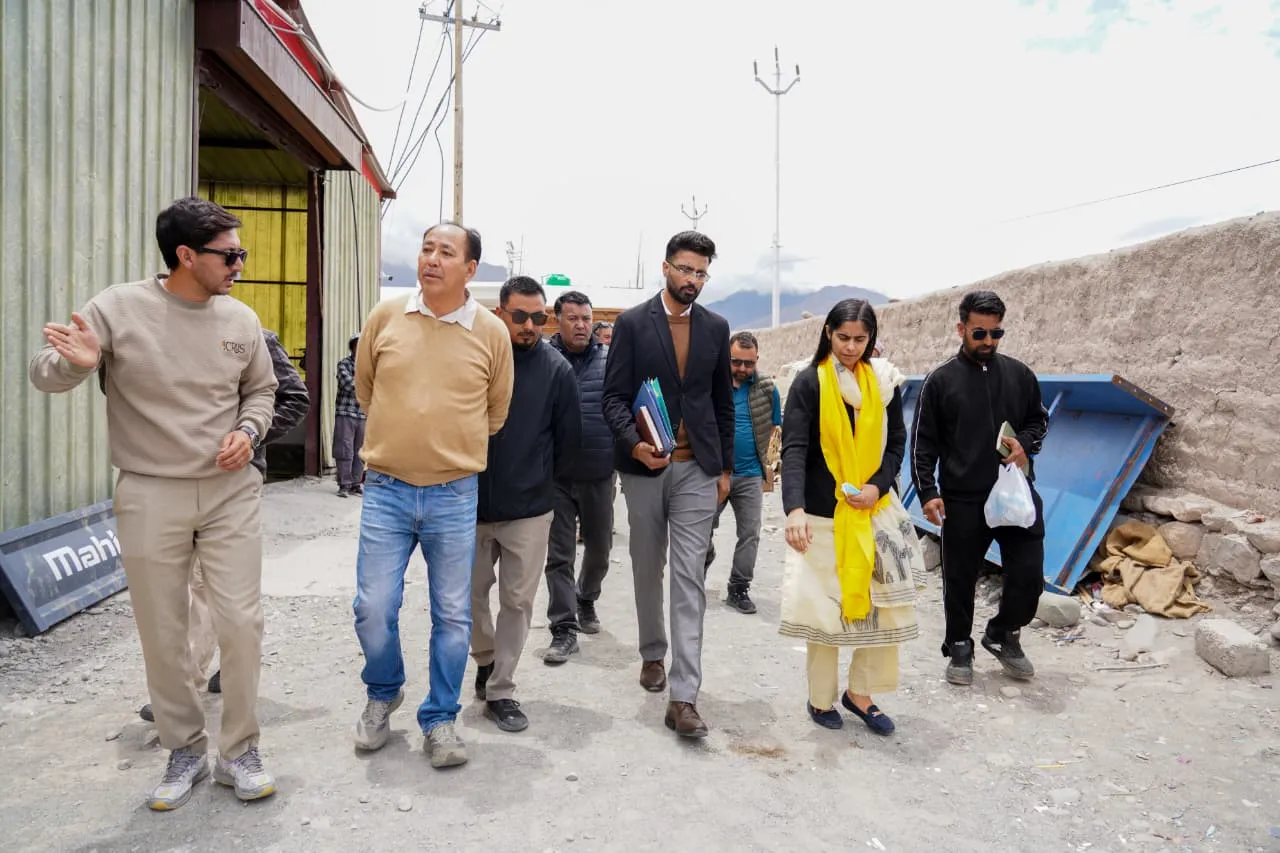
The review focused on assessing infrastructure, operational efficiency, waste segregation systems, processing mechanisms and future requirements under rural sanitation and waste management initiatives. At the SRMC located within the Block Development Office complex at Chuchot Yokma, the Administrative Secretary examined waste collection, segregation, storage and processing arrangements catering to multiple villages in the area.
Interacting with officials and workers, she sought details regarding daily waste inflow, manpower deployment, operational challenges, infrastructure gaps and expansion requirements. She also reviewed existing facilities and discussed measures aimed at improving processing efficiency and strengthening operational capacity.
At the Swachh Bharat Mission-Gramin-supported SRMC in Chuchot Gongma, Ms. Malik inspected systems for handling biodegradable, recyclable and non-recyclable waste streams. She reviewed disposal mechanisms and stressed the importance of adopting environmentally sound and scientifically managed waste treatment practices.
Emphasising the principles of a circular economy, the Secretary underscored that waste management should increasingly focus on resource recovery rather than disposal alone. She directed concerned departments to explore innovative approaches for recycling and value addition while ensuring that operational systems remain efficient and accountable.
Reviewing service delivery mechanisms, Ms. Malik instructed officials to undertake a comprehensive assessment of vendors engaged in waste transportation and processing activities. She emphasised the need for periodic performance reviews to improve accountability, operational efficiency and timely waste disposal.
The Secretary also directed the concerned departments to expedite pending infrastructure requirements, including the procurement of baling machines, waste processing equipment and other facilities required for scientific management of solid waste. Strengthening infrastructure, she observed, would substantially improve the effectiveness of rural sanitation systems and further the objectives of the Swachh Bharat Mission.
Highlighting the broader environmental imperative, Ms. Malik reiterated the importance of source-level segregation, community participation and efficient resource management. She noted that robust waste management systems are essential not only for maintaining sanitation standards and protecting public health but also for safeguarding Ladakh’s ecologically sensitive landscape.