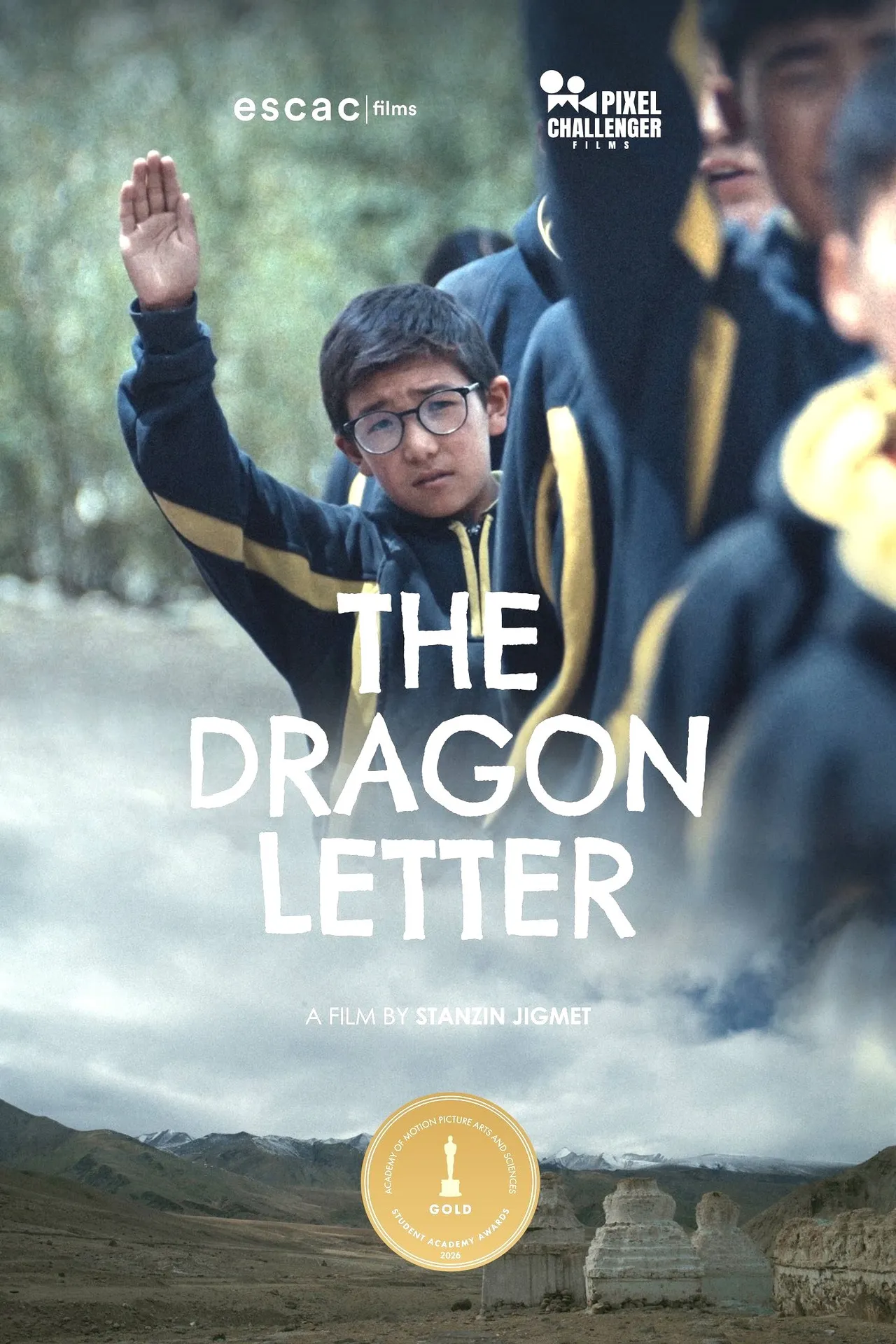
LEH: Ladakh’s emerging presence on the international cinematic map has received a major boost, with Academy Award-winning producers Guneet Monga Kapoor and Achin Jain joining Ladakhi filmmaker Stanzin Jigmet’s short film The Dragon Letter as executive producers.
The development marks a significant milestone for Jigmet, whose film has already won the Gold Award in the Narrative category at the 53rd Student Academy Awards 2026 and has now been submitted for consideration in the Live Action Short Film category at the 99th Academy Awards.
The association with Sikhya Entertainment, the production house led by Monga Kapoor and Jain and a Jio Studios company, brings experienced Oscar-winning film producers behind a story rooted in Ladakh’s social and cultural landscape. It also gives the independent production greater visibility as it pursues recognition on one of the world’s most prominent cinematic platforms.
For Ladakh, the development is particularly noteworthy because the film’s journey represents more than an individual filmmaker’s achievement. It brings a story emerging from the Himalayan region into the international film industry, demonstrating the potential of local narratives to connect with audiences far beyond their geographical origins.
Jigmet hails from Mulbekh village in Kargil district and is a self-taught filmmaker who began learning filmmaking through YouTube tutorials and practical experience before securing a fully funded scholarship to pursue a Master’s degree in Film Directing at the Escola Superior de Cinema i Audiovisuals de Catalunya (ESCAC) in Barcelona, Spain.
The Dragon Letter is a 14-minute narrative short film and a co-production between Barcelona-based ESCAC Films and Ladakh-based Pixel Challenger Films, founded by Jigmet.
Set in a strict Ladakhi boarding school, the film follows Skarma, a shy 10-year-old boy who struggles to write a letter to his sponsor abroad. While other children follow a prescribed format, Skarma attempts to express his own thoughts and feelings, bringing out the tension between obedience and individuality.
Drawing inspiration from his own childhood experiences in Ladakh, Jigmet uses this seemingly simple situation to explore childhood, kindness, self-expression and the courage to remain true to oneself.
Explaining his creative vision, the filmmaker said he wanted to explore the quiet conflict between obedience and individuality and the courage it takes for a child to find his own voice. He described the film as a story about the beauty of imperfection and the importance of being honest with oneself.
Monga Kapoor and Jain, in their joint statement, said there was something special about a filmmaker who had overcome significant challenges to tell his stories creating a film filled with warmth, empathy and humanity. They expressed pride in supporting Jigmet and his ambition to take the story to audiences across the world.
The involvement of Sikhya Entertainment is particularly significant given Monga Kapoor’s track record in international awards campaigns. The Dragon Letter marks her fifth Oscar campaign, following Kavi (2010), End of Sentence (2019), The Elephant Whisperers (2023) and Anuja (2025).
Her previous productions have brought international recognition to Indian stories, with Period: End of Sentence and The Elephant Whisperers winning Academy Awards.
The film’s Gold Award at the 53rd Student Academy Awards, presented during the Toronto International Film Festival on September 14, had already established its international credentials. The 2026 competition received 2,972 entries from students representing 894 colleges and universities worldwide.
Importantly, winning the Student Academy Award makes the film eligible to compete for the 99th Academy Awards. Its submission in the Live Action Short Film category marks another step in that journey, although it does not mean that the film has secured an Oscar nomination.
For Ladakh, The Dragon Letter represents an encouraging development for a region whose stories, landscapes and cultural experiences remain relatively underrepresented in mainstream international cinema.
Jigmet’s achievement also highlights the importance of creating opportunities for young filmmakers from remote regions, where creative talent often has to overcome geographical, institutional and financial barriers to access professional filmmaking platforms.
With an internationally recognised production house now joining the project, the film’s journey from Mulbekh to the global cinematic arena has entered an exciting new phase.
The larger significance lies in the fact that a story emerging from a small Himalayan village is now competing for attention on a global platform—not through spectacle, but through an intimate portrayal of childhood, identity and the universal human desire to find one’s own voice.