LEH: The historic Thiksey Monastery came alive with sacred Buddhist rituals, colourful masked dances and traditional ceremonial music as the annual Thiksey Gustor Festival entered its concluding day on Thursday, drawing devotees and visitors to one of Ladakh’s most prominent monastic centres.
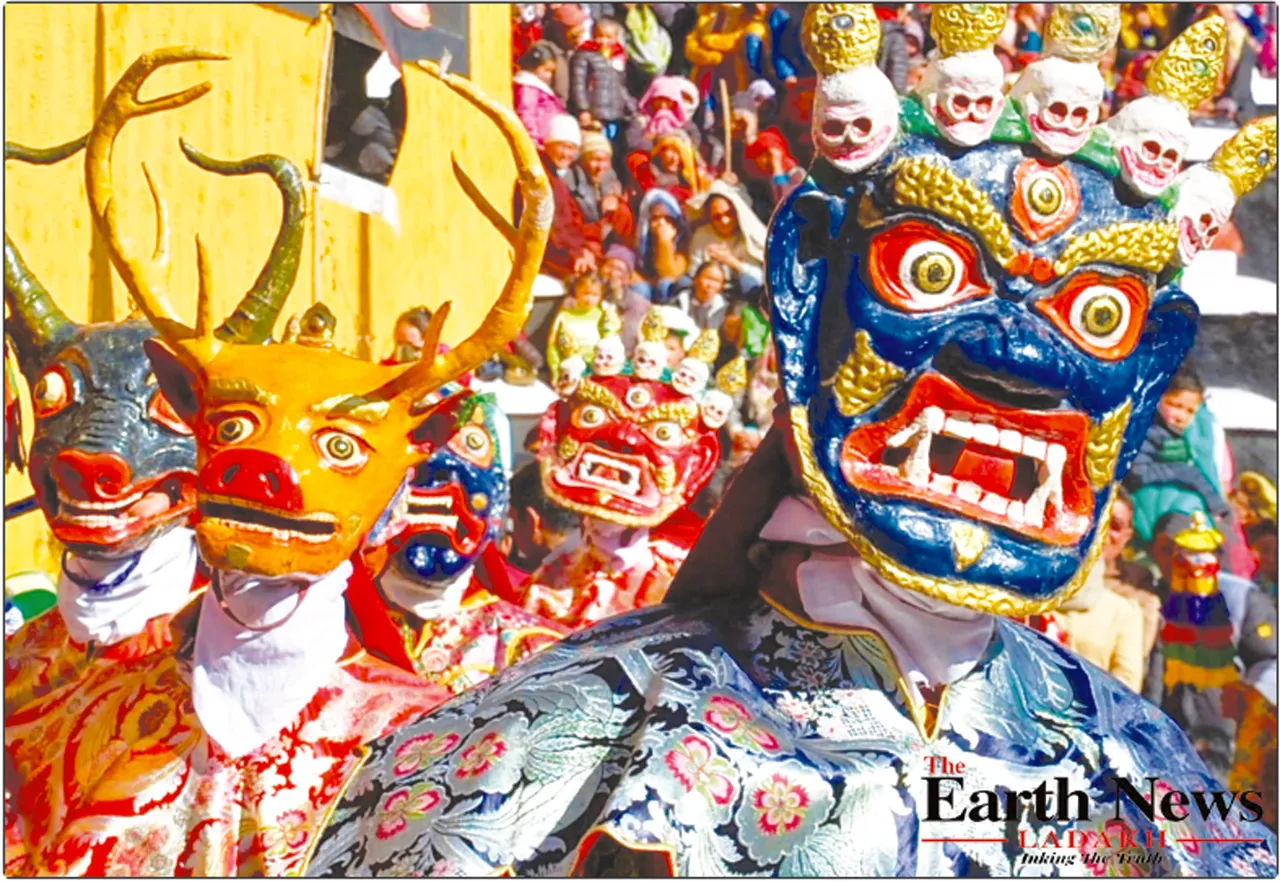
Observed on October 28 and 29 this year, the two-day festival showcased the region’s rich Tibetan Buddhist heritage, with monks performing the traditional Cham dance in elaborate ceremonial costumes and masks representing different religious figures. The second day also featured the participation of an oracle in traditional ceremonial attire, while monks played long ceremonial horns as part of the religious observances.
The festival, an important annual event associated with the Gelug school of Tibetan Buddhism, combines prayer, ritual performances and symbolic ceremonies that reflect the Buddhist understanding of overcoming negative forces and obstacles. Its concluding rituals carry particular religious significance, representing the removal of adverse influences and the invocation of blessings for the year ahead.
The traditional Cham dance remained one of the principal attractions of the festival. Performed by monks wearing intricately crafted masks and colourful robes, the ritual dance is an integral part of the monastery’s religious tradition rather than merely a cultural performance.
The movements, costumes and ceremonial music form part of a symbolic religious enactment associated with the triumph of good over evil and the dispelling of negative forces. The performances offer devotees an opportunity to witness a living tradition that has been preserved through generations of monastic practice.
The Gustor observance includes prayers and ritual offerings, culminating in the ceremonial dispersal of a Torma, a ritual cake symbolising the removal of negative influences and obstacles.
The concluding ceremony is associated with the triumph of good over evil and the Buddhist tradition of confronting destructive forces. The annual observance is also understood as a prayer for an auspicious beginning and protection from misfortune in the coming year.