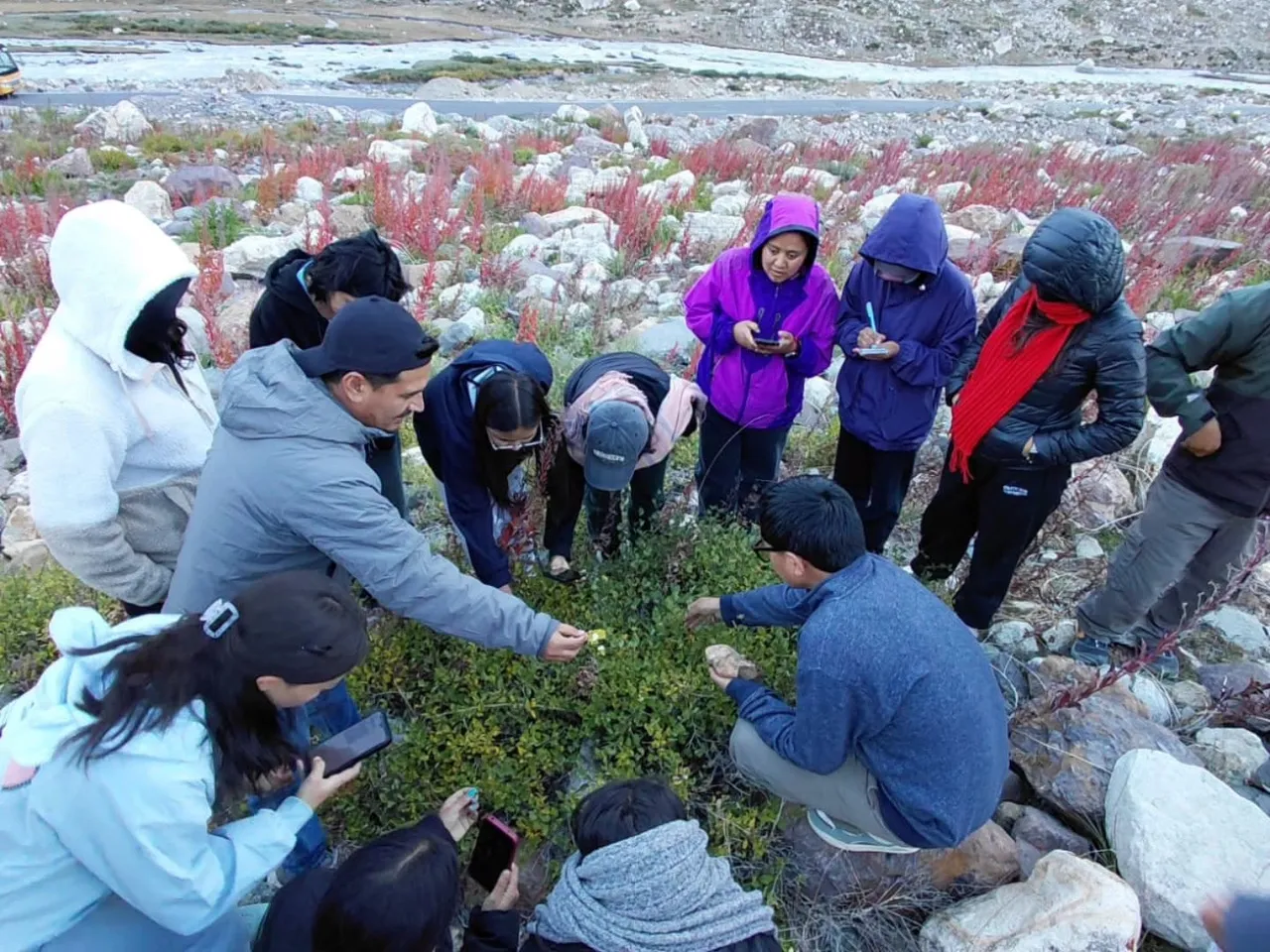
LEH: A group of Botany students from the University of Ladakh, Leh Campus, completed a three-day field visit to Zanskar, undertaking botanical observations and documentation across diverse high-altitude habitats while studying plant species, ecological characteristics and traditional plant knowledge.
The Exposure-Cum-Educational Tour, conducted from September 12 to 14, was organised by the Department of Botany to provide students with practical exposure to botanical diversity, natural ecosystems and the cultural landscape of Zanskar and adjoining areas.
The group comprised 10 students and four non-teaching staff members and was accompanied by Dr Konchok Dorjey, Coordinator, Department of Botany and Dean, School of Sciences, and Dr Mohd Shabir, Assistant Professor, Department of Botany.
The team left the Leh Campus on September 12 and travelled to Padum through the Chilling route. After reaching Padum, students visited locations including Shilla Waterfall, where they carried out field observations and documented botanical specimens from different habitats.
The team subsequently travelled towards Gonbo Rangjon, stopping at several locations considered relevant for botanical study. During the field exercises, Dr Dorjey and Dr Shabir guided students in identifying plant species and understanding their diagnostic characteristics, ecological significance, identification features and botanical and traditional uses.
The fieldwork allowed students to apply classroom knowledge under natural conditions, particularly in plant identification and botanical documentation.
At Gonbo Rangjon, the students also visited historical and religious sites and observed the region’s distinctive natural and cultural setting. The group stayed overnight at Neraks in tents.
On the second day, the students undertook an approximately 3–4 km trek to Phuktal Monastery, observing the vegetation and landscape along the route before returning towards Padum.
The team then proceeded towards Kargil, conducting additional botanical observations and specimen collection in and around Panzila Top.
The department said the field visit was intended to strengthen experiential learning by exposing students to plant diversity and ecological conditions in their natural habitats, while also familiarising them with field-based methods of botanical study and documentation.