KARGIL: The University of Ladakh’s Kargil Campus has organised a two-day workshop on snow leopard conservation, bringing together students, wildlife experts and educators to explore habitat protection, human–wildlife coexistence and the use of artificial intelligence in wildlife monitoring.
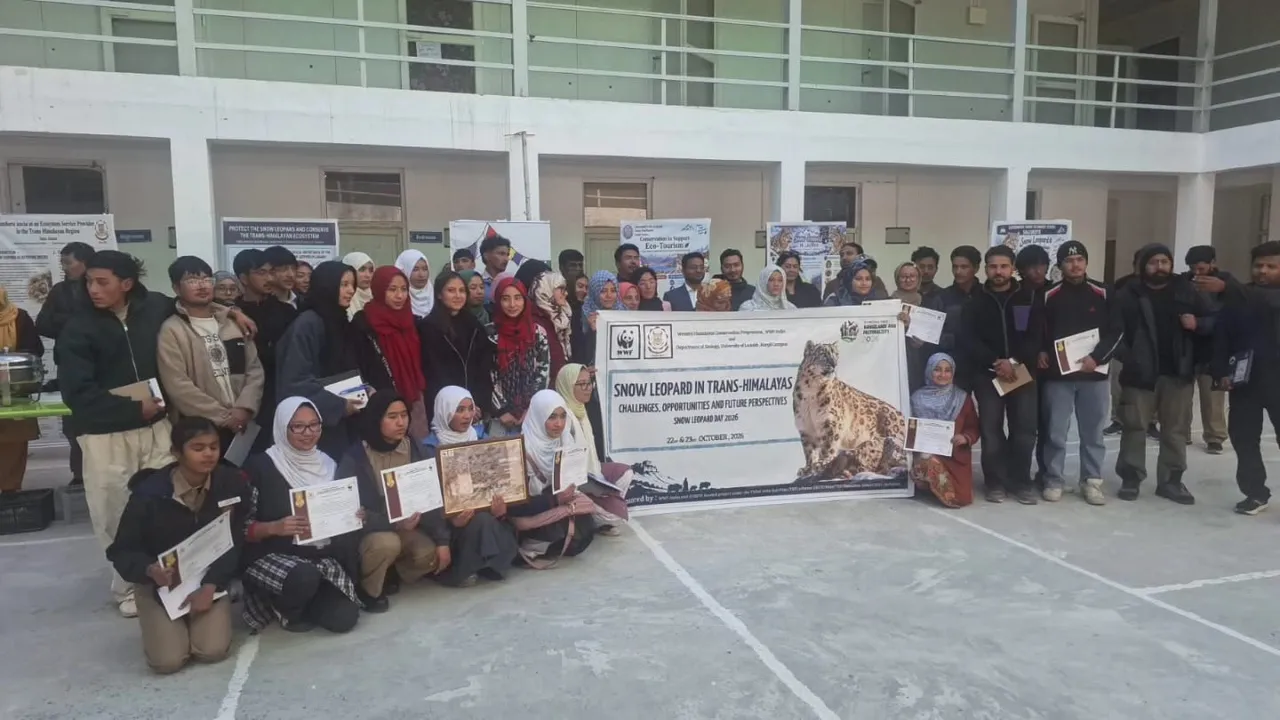
Organised by the Department of Zoology in collaboration with WWF-India’s WHL initiative, the workshop titled “Snow Leopard in the Trans-Himalaya: Challenges, Opportunities and Future Perspectives” was held on October 22 and 23 to mark International Snow Leopard Day 2026.
Around 80 students from the Departments of Zoology, Life Science and Forensic Science, along with students from six higher secondary schools, participated in the second day’s programme, which featured expert lectures, a poster exhibition and a presentation competition.
The first day included a field visit to Sangrah Ridge, attended by 20 students, three faculty members and field experts from WWF-India’s WHL initiative. The visit offered practical exposure to snow leopard habitats and wildlife field signs, highlighting the role of field-based learning in conservation research.
Preet Sharma, Senior Project Officer, WHL–WWF India, delivered a technical lecture on safeguarding the shared future of snow leopards and people in Asia’s high-mountain rangelands. He highlighted habitat conservation, community participation and coexistence between local communities and wildlife.
Dr Mehboob Ali, In-Charge Administration at the Kargil Campus, spoke on the application of artificial intelligence (AI) and machine learning (ML) in wildlife conservation, outlining their potential in research, monitoring and conservation management.
A poster exhibition and presentation competition featured 15 posters on snow leopard ecology, giving students a platform to demonstrate their scientific understanding and communication skills.
Wildlife Warden Kargil Ankit Sinha, IFS, attended the valedictory session as chief guest and distributed certificates to participants. Dr Ali presented an overview of the workshop, while WHL–WWF India Project Officer Mohd Kazim delivered the vote of thanks. The technical sessions were moderated by Dr Ahsan Ali of the Department of Zoology.
The workshop was supported by WWF-India’s WHL initiative and Dr Ali, principal investigator of an AI- and IoT-based project aimed at protecting livestock-dependent communities and supporting snow leopard conservation in Ladakh. The project is funded under the Tribal Area Sub Plan scheme of IBITF.
The programme highlighted the role of scientific research, emerging technology and community participation in protecting snow leopards and their fragile Trans-Himalayan habitat.