Move comes amid intensified scrutiny of budget utilisation, unspent funds and equitable resource allocation; departments asked to submit scheme-wise details of allocations, actual receipts and expenditure
LEH: Strengthening financial accountability and development planning, the Union Territory Administration of Ladakh has sought a comprehensive seven-year account of funds allocated, released, received and spent by various departments since Ladakh attained Union Territory status in 2019.
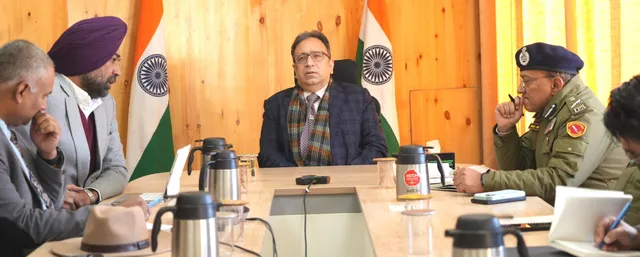
The exercise assumes particular significance in the backdrop of repeated reviews by Chief Secretary Ashish Kundra, who has been stressing improved utilisation of public funds, identification of unspent balances, timely execution of development projects and equitable distribution of resources among different regions and local bodies of Ladakh.
Through an Office Memorandum issued on November 18, the Planning, Development and Monitoring Department has directed all Administrative Secretaries to furnish detailed, year-wise and scheme-wise financial information covering Centrally Sponsored Schemes (CSS), Central Sector Schemes, UT Sector Schemes and other relevant schemes being implemented by their respective departments from 2019-20 onwards.
Departments have been asked to provide details of funds allocated or released, amounts actually received during each financial year, expenditure incurred against the funds received and unspent balances, if any. The information must be separately compiled for every scheme and financial year and duly verified by the concerned departments.
The directive comes against the backdrop of the Chief Secretary’s recent emphasis on examining the gap between budgetary allocations and actual expenditure. During a review meeting on October 19, he called for a comprehensive assessment of financial utilisation under Special Development Packages and stressed that expenditure figures must be examined alongside the physical progress of projects to ensure that spending translates into tangible development outcomes.
Earlier, on October 28, while reviewing the Planning, Development and Monitoring Department, the Chief Secretary directed the preparation of a time-bound framework for equitable allocation of resources among the Hill Development Councils and local bodies in coordination with the Finance Department.
Similarly, during a budget expenditure review in July, he had expressed concern over low fund utilisation in certain departments and directed the Finance and Planning Departments to identify funds remaining unutilised for prolonged periods, seek explanations from departments with unsatisfactory spending and explore their reallocation to projects capable of utilising them effectively within the financial year.
Against this background, the latest directive is important as it seeks to establish a consolidated historical financial record that can help the administration assess how effectively funds have been channelled into development activities since the formation of the UT.
The exercise could also help identify differences between approved allocations, actual fund releases and receipts, and expenditure across departments and schemes. Such an assessment would provide a clearer understanding of fund utilisation patterns, unspent balances and potential bottlenecks affecting implementation of development programmes.
As per the prescribed formats, Annexure A seeks financial details under Centrally Sponsored and Central Sector Schemes, covering Letter of Authority (LoA) amounts and expenditure from 2020-21 to 2026-27.
Annexure B seeks details under the Special Development Package (SDP) and State Sector schemes, including Budget Estimates, Revised Estimates and actual expenditure for each financial year from 2020-21 to 2026-27.
The Planning Department has stated that the information is required to facilitate effective planning, monitoring and assessment of the financial progress of various schemes in the Union Territory.
The consolidated figures, once compiled, could provide an important basis for future budget planning, financial monitoring and assessment of the extent to which public resources allocated to Ladakh have translated into development works and services on the ground.