Decision aimed at ensuring democratic participation in framing policy on over 60,000 acres of Nautor land; consultations with newly elected Panchayats and local bodies to precede finalisation
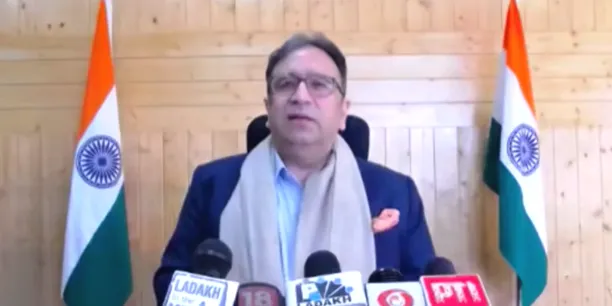
LEH: Amid the ongoing Panchayat and local body election process in Ladakh, the UT Administration has put on hold the finalisation of the proposed Nautor Land Regularisation Rules, 2026, until the newly elected democratic institutions assume office.
The decision, announced through an official communication from Lok Niwas Ladakh, is aimed at ensuring that the proposed policy on a sensitive land-related issue is finalised after consultations with elected representatives rather than being concluded while the electoral process is underway.
The Administration has clarified that although the draft Ladakh Autonomous Hill Development Councils (Nautor Regularisation) Rules, 2026, have already been placed in the public domain and public feedback has been invited, the process of finalising the rules has now been paused. Further steps will be taken only after the newly elected Panchayats and local bodies formally take charge and their views are incorporated through detailed consultations.
The move assumes significance given the longstanding sensitivity surrounding Nautor land in Ladakh, an issue that has implications for land ownership, agricultural livelihoods, local rights and the protection of community and public land.
The proposed framework seeks to establish a uniform mechanism for regularising eligible historical Nautor land holdings and providing legal certainty to genuine occupants.
Under the draft rules, eligible occupants may be granted proprietary rights over up to 10 acres of Nautor land, while holdings exceeding this limit may be considered for leasehold rights in accordance with the prescribed provisions.
The proposed mechanism is a one-time exercise and covers eligible occupation existing before October 27, 2020, the date associated with the repeal of the Jammu and Kashmir Tenancy Act, 1980. Possession acquired after the stipulated cut-off date would not qualify for regularisation.
The draft also provides for verification of eligible holdings, payment of prescribed charges, safeguards against encroachment and provisions governing land use and subsequent transfers. The proposed rules have generated considerable discussion and divergent opinions among political organisations, civil society groups and other stakeholders in Ladakh.
The Kargil Democratic Alliance (KDA), among others, had raised objections to the proposed framework, expressing apprehensions over its financial implications for economically weaker landholders and questioning whether the proposed mechanism adequately protects people who had historically occupied and developed land but whose claims might not be properly reflected in revenue records.
Concerns were also raised over the need for wider consultations before introducing changes concerning a subject as sensitive as land rights in Ladakh.
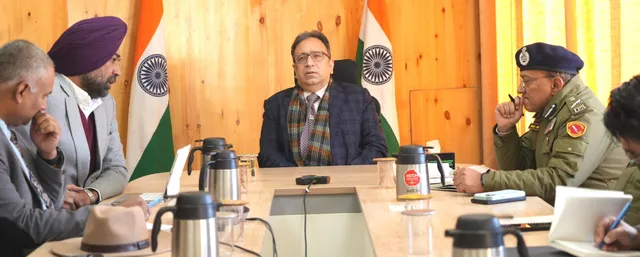
On September 16, Chief Secretary Ashish Kundra chaired a consultative meeting in Leh involving prominent citizens, former public representatives, religious leaders, subject experts and representatives of socio-religious organisations and political groups.
The discussions covered historical occupation, tenancy and proprietary rights, agricultural and pastoral land, land-use regulations, eligibility criteria, field verification and the role of the Ladakh Autonomous Hill Development Councils.
Subsequently, on October 1, the Administration extended the public consultation period by another 30 days, allowing stakeholders to submit their comments and suggestions until November 1, 2026, following representations from organisations including the Ladakh Buddhist Association, Ladakh Gonpa Association and Anjuman Imamia Leh.
The latest decision to defer finalisation until the newly elected local bodies take office adds another dimension to the consultation process.
By involving the incoming democratic institutions, the Administration intends to ensure that the proposed framework takes into account local requirements, ground realities and the concerns of communities across different parts of Ladakh.
The decision is particularly important because Nautor land-related issues vary across regions and involve different historical patterns of allotment, occupation, cultivation and revenue documentation.
The Administration’s latest position indicates that the public consultation exercise will not be treated merely as a procedural formality, and that the views of elected grassroots representatives will also be considered before the draft rules are finalised.
The deferment also provides an opportunity for the incoming Panchayati Raj and local body representatives to examine the proposed provisions and place the concerns of their respective areas before the Administration.