LEH: The Voice of Buddhist Ladakh (VBL) has launched a sharp attack on the Leh Apex Body (LAB) over its recent protest programmes and padyatra, questioning the rationale behind the mobilisation and strongly objecting to remarks by LAB member Sonam Wangchuk comparing the situation in Ladakh with that of Tibet.
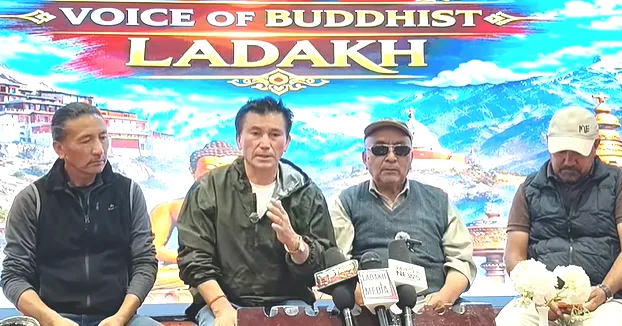
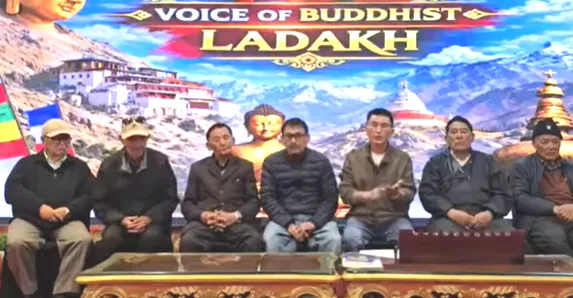
Addressing a press conference, VBL Convenor Skarma Namtak accused the Apex Body of pursuing an agitation-oriented approach that, according to him, was neither in the larger interest of Ladakh nor conducive to maintaining peace and social harmony in the Union Territory.
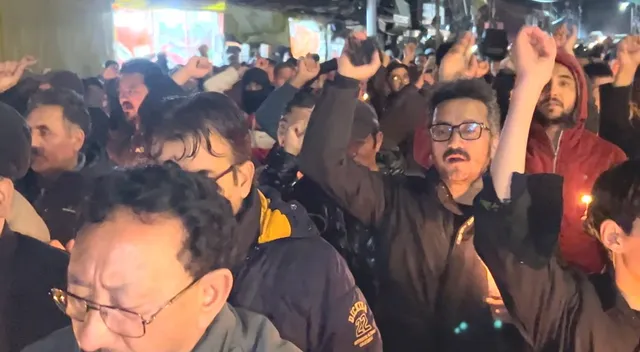
Namtak and other VBL leaders criticised the LAB’s recent mobilisation, including the padyatra and programmes organised around the first anniversary of the September 24, 2025 violence, and questioned the messaging being conveyed through such public protests.
The VBL particularly objected to Wangchuk’s remarks at the September 24 gathering at NDS Ground in Leh, where he compared the situation in Ladakh with conditions in Tibet under Chinese rule. Wangchuk had said that Ladakh had chosen India because of its democratic system and the expectation of living with dignity, but alleged that the situation in Ladakh had deteriorated to such an extent that, in his words, even China was not doing what was being done in Ladakh to Tibet.
The remarks subsequently triggered a response from the Central Tibetan Administration (CTA), which described the comparison as “misplaced and inaccurate” and said it did not reflect the situation faced by Tibetans under Chinese rule.
Wangchuk later clarified and apologised for causing concern among his Tibetan friends, saying that his remarks were intended to refer to a particular incident and were not meant as a comparison with the decades of suffering experienced by Tibetans.
The VBL, however, maintained that such comparisons were highly inappropriate and could have wider implications for Ladakh’s image, particularly given the region’s historical, cultural and religious links with Tibet.
Namtak questioned whether repeated protests, marches and confrontational political rhetoric could provide a sustainable solution to Ladakh’s long-standing concerns. According to the VBL leadership, issues such as protection of land, culture, employment, environment and political representation require sustained institutional engagement with the Centre rather than repeated street mobilisation.
The organisation argued that Ladakh’s political discourse should remain rooted in the region’s distinct constitutional, cultural and demographic circumstances and should not, in its view, be framed through comparisons with situations elsewhere.
The VBL has previously maintained that it seeks a more direct representation of Buddhist concerns in the dialogue with the Union Government. The organisation was formed in January 2026 under Namtak’s convenorship, with its stated objective of placing the concerns of the Buddhist community before the Centre.
The VBL also strongly condemned what it described as derogatory remarks made by LAB Co-Chairman Chering Dorje Lakruk against the organisation and its leadership. Namtak said disagreement over political strategy should not be allowed to degenerate into personal attacks or attempts to discredit a section of Ladakh’s society.
The VBL leadership maintained that it had a legitimate right to question the approach and demands being pursued by the LAB and KDA and to present an alternative view on Ladakh’s political future.
The organisation has previously faced criticism from LAB and KDA leaders, who have questioned its representational credentials and accused it of creating divisions within Ladakh. The LAB has also alleged that the VBL was seeking to create divisions among Buddhists and between Leh and Kargil—claims that the VBL has rejected.
The VBL leaders also took aim at the recent padyatra organised by the Apex Body, questioning its political purpose and the manner in which the mobilisation was projected. The LAB had organised the September 23 march from Kharu towards Leh as part of its wider agitation programme, while the subsequent September 24 gathering at NDS Ground was organised to mark the first anniversary of last year’s violence.
The Ladakh Police had separately disputed some of the claims made by protest leaders regarding restrictions on participation and security arrangements. Police said the September 24 gathering at NDS Ground had been permitted and that fewer than 800 people attended, while maintaining that barricading and deployment were part of routine traffic and crowd-management arrangements.
The VBL argued that political organisations should exercise greater responsibility while planning mass programmes in a region where public order and social harmony remain sensitive issues.
The VBL has consistently argued that the Buddhist community requires a more distinct voice in the Centre-Ladakh dialogue.
The VBL maintained that differences of opinion should be addressed through democratic dialogue and that Ladakh’s political future should be discussed without rhetoric that, in its view, could damage the region’s social cohesion or its relationship with the rest of the country.